


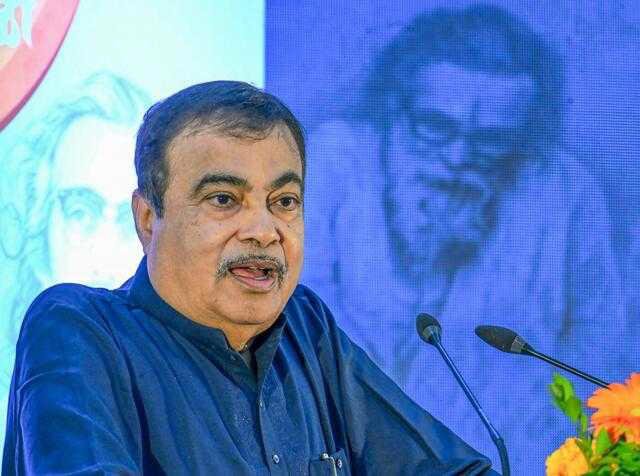
Union Minister for Road Transport and Highways Nitin Gadkari has responded to criticism surrounding India’s ethanol-blended fuel programme, asserting that consumers remain free to purchase 100% petrol if they choose. Addressing allegations of a conflict of interest linked to his family’s business, Gadkari also clarified that ethanol accounts for only a small part of his sons’ business activities.
His remarks come amid an ongoing debate over the rollout of E20 fuel, a blend containing 20% ethanol and 80% petrol. While the government has promoted ethanol blending as a way to reduce dependence on imported crude oil and cut carbon emissions, some critics have questioned its impact on vehicles and raised concerns over the interests of companies involved in ethanol production.
Gadkari rejected the allegations and defended the government’s ethanol policy, describing it as a national initiative aimed at benefiting farmers, consumers, and the country’s energy security.
Gadkari Says Consumers Still Have a Choice
Responding to the controversy, Gadkari said consumers are not compelled to purchase E20 fuel and can continue buying 100% petrol if they prefer.
He stressed that the government has not removed conventional petrol from the market and that people retain the freedom to choose the fuel suitable for their vehicles.
According to the minister, the debate should focus on the broader benefits of ethanol blending rather than creating unnecessary confusion among consumers.
He said the government’s objective is to provide alternatives while encouraging cleaner and more sustainable fuel options.
Clarifies Remarks on Sons’ Business
Addressing allegations regarding his family’s business interests, Gadkari said ethanol represents only a small portion of his sons’ business operations.
He rejected suggestions that government policies on ethanol blending were influenced by personal business interests.
The minister maintained that the ethanol programme serves the national interest and has been designed to reduce India’s dependence on imported fossil fuels while creating additional income opportunities for farmers.
He said attempts to link the government’s fuel policy with his family’s business were politically motivated and did not reflect the facts.
Government Defends Ethanol Blending Programme
The Centre has consistently promoted ethanol blending as a key element of India’s energy strategy.
Officials say blending ethanol with petrol reduces crude oil imports, lowers greenhouse gas emissions, and supports domestic agriculture by creating additional demand for crops used in ethanol production, such as sugarcane and maize.
The government has also argued that increased ethanol production helps improve farmers’ incomes while strengthening the country’s energy security.
According to Gadkari, the policy represents a long-term investment in cleaner and more self-reliant energy.
Understanding the E20 Fuel Programme
E20 fuel contains 20% ethanol blended with 80% petrol. The government has been gradually expanding its availability across the country as part of its ethanol blending targets.
Officials say the programme aims to reduce India’s dependence on imported crude oil while promoting renewable fuel sources.
Automobile manufacturers have also introduced vehicles designed to operate efficiently on E20 fuel, and many existing vehicles are considered compatible with lower ethanol blends.
The government has encouraged gradual adoption while working with fuel retailers and vehicle manufacturers during the transition.
Environmental and Economic Benefits
Supporters of ethanol blending argue that the programme offers both environmental and economic advantages.
Using ethanol reduces carbon emissions compared with conventional fossil fuels and supports cleaner transportation.
At the same time, ethanol production creates an additional market for agricultural produce, benefiting farmers and rural industries.
Officials believe these combined benefits make ethanol blending an important component of India’s broader energy transition strategy.
Critics Continue Raising Concerns
Despite the government’s support for E20 fuel, some critics have expressed concerns regarding its impact on older vehicles, fuel efficiency, and maintenance costs.
Others have questioned the pace of implementation and sought greater public awareness about vehicle compatibility.
The latest controversy also included allegations regarding potential conflicts of interest involving individuals associated with ethanol production.
Gadkari rejected these claims and reiterated that the policy is based on national priorities rather than private interests.
Government Promotes Energy Independence
The minister said India spends substantial amounts on importing crude oil every year, making alternative fuels increasingly important.
According to him, expanding ethanol production can help reduce import dependence while improving the country’s energy security.
He said the government remains committed to encouraging renewable fuels that are environmentally sustainable and economically beneficial.
The broader objective, Gadkari added, is to create a diversified energy ecosystem that reduces reliance on conventional fossil fuels.
Farmers Stand to Benefit
The ethanol blending programme is also expected to generate additional income opportunities for farmers by increasing demand for agricultural feedstocks.
Officials say the policy supports rural economies by encouraging investment in ethanol production facilities and related industries.
Greater demand for crops used in ethanol manufacturing can contribute to more stable agricultural markets and higher value addition.
The government has repeatedly highlighted these rural economic benefits while promoting the programme.
Debate Over E20 Continues
The discussion surrounding E20 fuel is expected to continue as India expands ethanol blending across the country.
While the government maintains that the programme strengthens energy security, supports farmers, and reduces emissions, critics continue seeking greater clarity on implementation and vehicle compatibility.
Gadkari’s latest remarks sought to address concerns by emphasising that consumers can still purchase 100% petrol if they wish and by dismissing allegations linking the government’s ethanol policy to his family’s business interests.
As India advances its clean energy goals, the debate over ethanol blending is likely to remain an important part of discussions on the country’s future fuel strategy.