


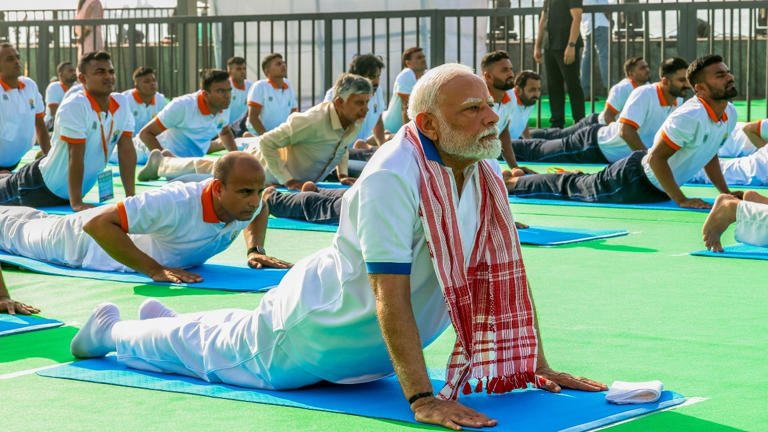
A court has raised questions over the week-long closure of Kolkata’s iconic Red Road ahead of Prime Minister Narendra Modi’s participation in the International Yoga Day celebrations scheduled to be held in the city. The observations came during proceedings concerning traffic restrictions and public inconvenience resulting from the extended closure of one of Kolkata’s most important arterial roads.
The issue has sparked considerable public discussion, with concerns being raised about traffic congestion, commuter inconvenience, and the impact on daily movement across central Kolkata. While authorities have defended the closure on grounds of security arrangements, event preparations, and logistical requirements, the court sought explanations regarding the necessity and duration of the restrictions.
The matter highlights the challenge of balancing security and organizational requirements for high-profile public events with the need to minimize disruption to the lives of ordinary citizens.
Red Road’s Importance to Kolkata
Red Road is among Kolkata’s most significant thoroughfares and serves as a major transportation corridor connecting several important parts of the city. The broad avenue, located near the Maidan area, is frequently used by thousands of commuters, office-goers, public transport vehicles, and emergency services every day.
Given its strategic location, any prolonged restriction on movement along Red Road often has ripple effects across the wider traffic network of Kolkata. Diversions can lead to increased travel times, congestion on alternative routes, and operational challenges for transport authorities.
The road is also known for hosting major public events, ceremonial functions, and national celebrations. However, its role as a key transportation route means that closures often attract public attention and scrutiny.
The latest restrictions were introduced as part of preparations for the International Yoga Day event expected to be attended by Prime Minister Narendra Modi and other dignitaries.
Court Seeks Justification for Extended Closure
During the hearing, the court reportedly questioned the rationale behind keeping Red Road closed for nearly a week before the scheduled event. The judges sought clarification from authorities regarding the necessity of such an extended period of restriction and whether alternative arrangements could have reduced inconvenience to the public.
The court observed that while security considerations for a high-profile event are important, authorities must also take into account the impact on citizens who rely on the road for daily travel.
Questions were raised about whether preparations could have been completed within a shorter timeframe and whether a less disruptive approach could have been adopted. The court emphasized the importance of maintaining a balance between security requirements and public convenience.
The observations reflected broader concerns about urban mobility and the management of large-scale events in densely populated cities.
Authorities Cite Security and Logistical Requirements
In response to concerns regarding the closure, authorities reportedly pointed to extensive security arrangements associated with the Prime Minister’s visit and the International Yoga Day celebrations.
Major events involving senior political leaders typically require detailed security planning, venue preparation, crowd management measures, emergency response systems, and logistical coordination. Officials indicated that the restrictions were intended to facilitate these activities and ensure the smooth conduct of the event.
Security agencies often undertake advance inspections, route planning exercises, equipment deployment, and rehearsal activities before high-profile gatherings. Such measures are considered necessary to mitigate risks and maintain public safety.
Authorities argued that the preparations required sufficient time to ensure that all operational aspects were addressed effectively.
Impact on Commuters and Daily Life
The prolonged closure of Red Road has generated concerns among commuters and residents who depend on the route for daily travel. Traffic diversions have reportedly resulted in congestion on adjoining roads and increased travel times in several parts of the city.
Office-goers, students, transport operators, and local businesses have all been affected by the restrictions. Many commuters have had to alter their travel schedules and rely on alternative routes to reach their destinations.
Traffic experts note that when a major artery such as Red Road is closed, pressure is often transferred to surrounding roads, which may already be operating near capacity during peak hours. This can lead to delays and increased traffic density across the network.
The issue has reignited discussions about how cities can better manage large public events while minimizing inconvenience for residents.
International Yoga Day and Its Significance
International Yoga Day is observed annually on June 21 and has become one of the largest public wellness events in the world. The initiative, which promotes the practice of yoga as a means of improving physical and mental well-being, has gained significant international recognition.
India hosts large-scale Yoga Day celebrations each year, often attended by senior government leaders, public representatives, yoga practitioners, and citizens from diverse backgrounds. Prime Minister Narendra Modi has regularly participated in these events and has played a prominent role in promoting yoga globally.
The upcoming celebration in Kolkata is expected to attract substantial public participation and media attention. Authorities have therefore been making extensive preparations to ensure the event’s successful execution.
Officials believe that hosting such a prominent national event can also enhance the city’s visibility and promote awareness about health and wellness.
Balancing Security and Public Convenience
The court’s observations have brought attention to the broader challenge faced by urban administrators when organizing large public events. Security arrangements are often non-negotiable, particularly when high-profile dignitaries are involved. However, prolonged restrictions can create significant disruptions for residents and commuters.
Urban planning experts suggest that authorities should continuously explore ways to optimize event management while reducing the impact on transportation networks. Better coordination, advanced planning, and targeted restrictions may help achieve this balance.
The court’s remarks indicate that public convenience should remain an important consideration alongside security requirements. Authorities may be expected to provide detailed justifications when imposing restrictions that affect large sections of the population.
The discussion reflects the increasing emphasis on citizen-centric governance and the need to minimize disruptions in urban environments.
Traffic Management Measures Under Scrutiny
The case has also drawn attention to traffic management practices adopted during major events. Courts and civic groups have frequently stressed the importance of ensuring that restrictions are proportionate and based on clear operational requirements.
Traffic diversions, road closures, and security perimeters can be necessary in certain circumstances, but authorities are often expected to assess their broader impact before implementation. Effective communication with the public is also considered essential for minimizing confusion and inconvenience.
In the present case, the court’s questions suggest a desire for greater transparency regarding the planning process and decision-making behind the week-long closure.
Observers believe that the outcome of the proceedings could influence future approaches to traffic management for large-scale events in Kolkata and other cities.
Public Interest and Administrative Accountability
The issue has highlighted the role of judicial oversight in ensuring that administrative decisions remain proportionate and responsive to public concerns. Courts often intervene when questions arise regarding the balance between governmental actions and the rights or convenience of citizens.
The observations made during the hearing underscore the expectation that authorities should carefully evaluate the consequences of major decisions affecting public infrastructure and mobility.
While recognizing the importance of security and event management, the court appears to have emphasized the need for accountability and justification when imposing restrictions with widespread implications.
Such scrutiny is considered an important aspect of democratic governance and administrative transparency.
Looking Ahead
As preparations continue for the International Yoga Day event in Kolkata, attention is likely to remain focused on the management of traffic restrictions and public convenience. The court’s questions regarding the week-long closure of Red Road have sparked important discussions about urban governance, event planning, and the balance between security and accessibility.
Authorities are expected to provide further explanations regarding the necessity of the restrictions and the measures taken to mitigate inconvenience. The outcome of these discussions may help shape future policies related to major public events and traffic management.
The case also serves as a reminder of the complexities involved in organizing large-scale national events in densely populated urban centers. While ensuring security and successful event execution remains essential, maintaining public convenience and minimizing disruption are equally important considerations.
As Kolkata prepares to host the International Yoga Day celebrations, the focus will remain on achieving a balance that accommodates both operational requirements and the everyday needs of the city’s residents.