


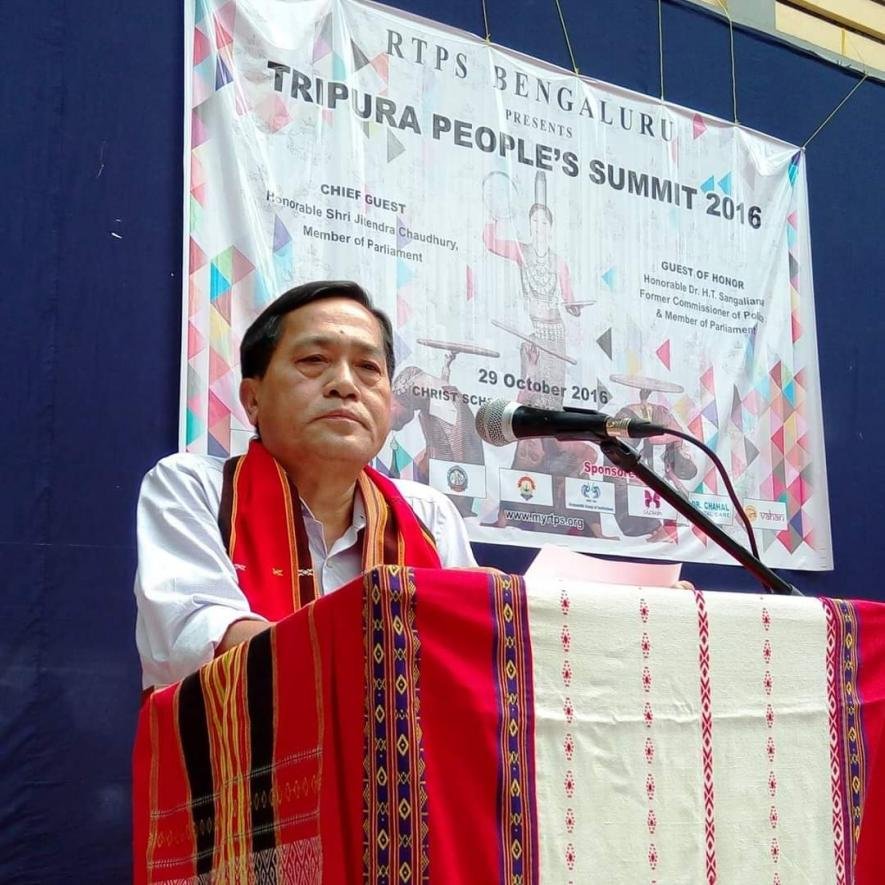
The Tripura Blockade Political Criticism intensified after CPI(M) leader Jitendra Chaudhury accused the ruling government of mishandling the concerns of surrendered militants and allowing the situation to escalate into widespread transportation disruptions. According to the opposition leader, the administration failed to adequately address the grievances of the returnees, resulting in public inconvenience and transit chaos. Moreover, the remarks have added a political dimension to the debate surrounding rehabilitation policies and governance in Tripura.
Centre Appoints New Interlocutor for Tiprasa Accord Peace Talks
Tripura Zoo Authority Proposal Gains Conservation Support
Tripura Blockade Political Criticism Intensifies
The Tripura Blockade Political Criticism gained momentum after CPI(M) leader Jitendra Chaudhury publicly attacked the government’s handling of the crisis.
Moreover, he argued that administrative failures contributed to the disruptions caused by the blockade.
Jitendra Chaudhury Targets Government Response
The veteran CPI(M) leader alleged that the ruling party failed to properly address the concerns of surrendered cadres.
Consequently, he claimed that unresolved grievances eventually led to the protest and caused hardship for ordinary citizens.
Public Inconvenience Highlighted
The Tripura Blockade Political Criticism focused heavily on the impact of the agitation on commuters and transportation networks.
Furthermore, Chaudhury stated that the public was forced to bear the consequences of what he described as poor governance and delayed action.
Rehabilitation Issues Return to Spotlight
The controversy has once again brought attention to the rehabilitation and reintegration of former militants.
Therefore, opposition leaders have argued that timely implementation of commitments could have prevented the crisis from escalating.
Moreover, rehabilitation policies remain a sensitive issue with long-term implications for peace and stability.
Political Debate Deepens
The Tripura Blockade Political Criticism has added a new political dimension to the controversy following the withdrawal of the blockade.
Consequently, differences between the ruling party and opposition have become more pronounced regarding responsibility for the situation.
Government Pursued Dialogue
Authorities had earlier managed to secure the withdrawal of the blockade after negotiations led by Tribal Welfare Minister Bikash Debbarma and senior security officials.
Additionally, government assurances helped restore normal transportation and prevent prolonged disruptions.
Opposition Demands Greater Accountability
The Tripura Blockade Political Criticism also included calls for greater accountability and more effective management of rehabilitation issues.
Furthermore, opposition leaders maintained that proactive measures should have been taken before the protest affected the public.
Governance and Stability Under Discussion
The developments have triggered wider discussions about governance, policy implementation, and the importance of maintaining stability.
Therefore, stakeholders are expected to continue debating the effectiveness of the government’s approach.
Focus Shifts to Implementation
Attention is now likely to move toward whether the assurances provided to surrendered cadres will be fulfilled.
Meanwhile, political parties are expected to continue presenting differing perspectives on the issue.
Moreover, the Tripura Blockade Political Criticism reflects the broader challenges involved in balancing rehabilitation commitments with public interests.
Conclusion
The Tripura Blockade Political Criticism has introduced a fresh political debate following the resolution of the blockade launched by surrendered NLFT and ATTF members. CPI(M) leader Jitendra Chaudhury accused the ruling government of failing to adequately address the concerns of returnees and allowing the situation to evolve into a crisis that disrupted transportation and inconvenienced the public. His remarks have intensified scrutiny of the administration’s approach to rehabilitation and governance.
Moreover, the criticism highlights the continuing significance of reintegration policies in maintaining peace and stability in Tripura. Opposition parties have emphasized the importance of timely interventions and accountability, while the government has pointed to successful negotiations that resulted in the withdrawal of the protest. The differing narratives are likely to shape political discourse in the coming weeks.
Furthermore, the Tripura Blockade Political Criticism underscores the importance of effective policy implementation and sustained engagement with stakeholders. As discussions continue over the promises made to surrendered cadres, the issue remains closely linked to broader questions of governance and development. Overall, the episode demonstrates how rehabilitation concerns can quickly become subjects of political contestation.
FAQs
Q1. What is the Tripura Blockade Political Criticism?
The Tripura Blockade Political Criticism refers to the opposition’s attack on the government’s handling of the blockade and rehabilitation concerns.
Q2. Who criticized the government?
CPI(M) leader Jitendra Chaudhury publicly criticized the ruling party’s response.
Q3. What did the opposition leader allege?
He alleged that the government failed to address the concerns of surrendered militants and allowed the public to suffer from transportation disruptions.
Q4. Was the blockade eventually withdrawn?
Yes. The blockade was called off after negotiations and government assurances.
Q5. Why is the Tripura Blockade Political Criticism significant?
The Tripura Blockade Political Criticism is significant because it highlights political differences over governance, rehabilitation policies, and accountability.