


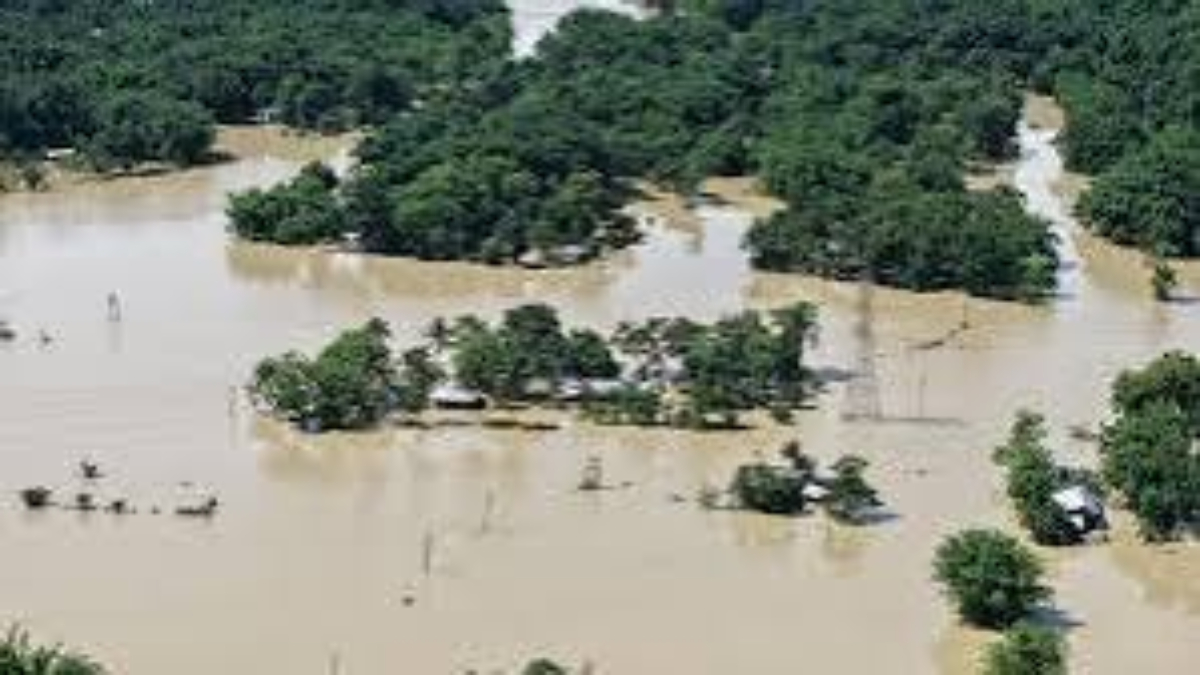
The Assam flood situation has worsened significantly, with the death toll rising to 47 and more than 7.21 lakh people affected across 11 districts. Continuous heavy rainfall and overflowing rivers have inundated vast areas, disrupting daily life, damaging infrastructure, and forcing thousands to seek shelter in relief camps. The state government, National Disaster Response Force (NDRF), State Disaster Response Force (SDRF), Indian Army, and other agencies are carrying out extensive rescue and relief operations as authorities remain on high alert.
Assam Flood Situation Worsens Across 11 Districts
The Assam flood situation remains critical as incessant rainfall over the past several days has led to severe flooding in multiple districts. According to the Assam State Disaster Management Authority (ASDMA), more than 7.21 lakh people have been affected, while the death toll has increased to 47.
Several major rivers, including the Brahmaputra and its tributaries, continue to flow above the danger level, leading to widespread inundation of villages, agricultural land, and urban settlements. District administrations have intensified evacuation efforts as fresh areas continue to be submerged.
Authorities have urged residents living in vulnerable and low-lying regions to remain cautious and follow official advisories to ensure their safety.
Rescue Operations Continue in Flood-Hit Areas
Rescue teams from the NDRF, SDRF, Indian Army, and local administration are working around the clock to evacuate stranded residents. Hundreds of boats have been deployed to transport people to safer locations while emergency services are delivering food, drinking water, medicines, and other essential supplies.
Relief camps and distribution centres have been established across the affected districts to accommodate displaced families. Medical teams are also conducting health camps to prevent outbreaks of waterborne diseases and provide immediate treatment to flood victims.
The state government has instructed all district officials to ensure uninterrupted relief measures until floodwaters recede.
Impact of the Assam Flood Situation on Infrastructure
The Assam flood situation has caused extensive damage to roads, bridges, embankments, schools, and public infrastructure. Several stretches of highways remain submerged, affecting transportation and disrupting the movement of essential goods.
Rail services in some flood-affected regions have also been impacted due to waterlogging and track damage. Authorities are closely monitoring railway infrastructure and restoring connectivity wherever possible.
Educational institutions in several districts have remained closed as floodwaters continue to affect campuses and surrounding areas.
Agriculture Suffers Heavy Losses
The flood has dealt a severe blow to Assam’s agriculture sector. Thousands of hectares of standing crops have been submerged, causing significant losses to farmers. Paddy fields, vegetable farms, and other cultivated land have been damaged by prolonged waterlogging.
Livestock losses have also been reported from several districts, adding to the financial burden on rural communities. Agriculture officials are assessing the extent of the damage to prepare compensation and rehabilitation measures for affected farmers.
Experts warn that the impact on agricultural production could continue even after floodwaters recede due to soil erosion and crop destruction.
Government Intensifies Relief Measures
Chief Minister Himanta Biswa Sarma has directed all departments to remain on the highest alert and ensure timely relief reaches every affected family. The government is continuously reviewing the flood situation through district administrations and disaster management agencies.
Rescue operations have been strengthened with additional personnel, while health departments have been instructed to monitor sanitation and prevent disease outbreaks in relief camps.
Authorities are also coordinating with central agencies to provide additional assistance wherever required as weather forecasts indicate the possibility of more rainfall in the coming days.
Wildlife and Environment Also Affected
Floodwaters have also affected wildlife habitats across Assam. Reports indicate that animals from protected areas have moved towards higher ground as water levels continue to rise. Forest officials are monitoring wildlife movement and taking necessary measures to reduce human-animal conflict during the floods.
Environmental experts note that annual flooding is a natural phenomenon in Assam, but increasing rainfall intensity and changing weather patterns have made recent floods more destructive.
Challenges Ahead for Recovery
Although rescue operations continue, rehabilitation will remain a major challenge once floodwaters recede. Restoration of damaged infrastructure, rebuilding homes, compensating affected families, and reviving agricultural activities will require substantial financial and administrative support.
Officials are preparing long-term recovery plans while continuing immediate relief efforts. Community participation, voluntary organisations, and local volunteers have also played a significant role in assisting flood-affected residents throughout the crisis.
The Assam flood situation continues to demand urgent attention as authorities strive to minimise further loss of life and property. With over 7.21 lakh people affected and 47 lives lost, the state’s focus remains on rescue, relief, healthcare, and rehabilitation. Continued coordination between government agencies, disaster response teams, and local communities will be essential in overcoming the immediate crisis and supporting long-term recovery for thousands of affected families.
Crucial Bangladesh Air Force C-130 Maintenance Contract Renewal Could Strengthen Fleet Readiness