


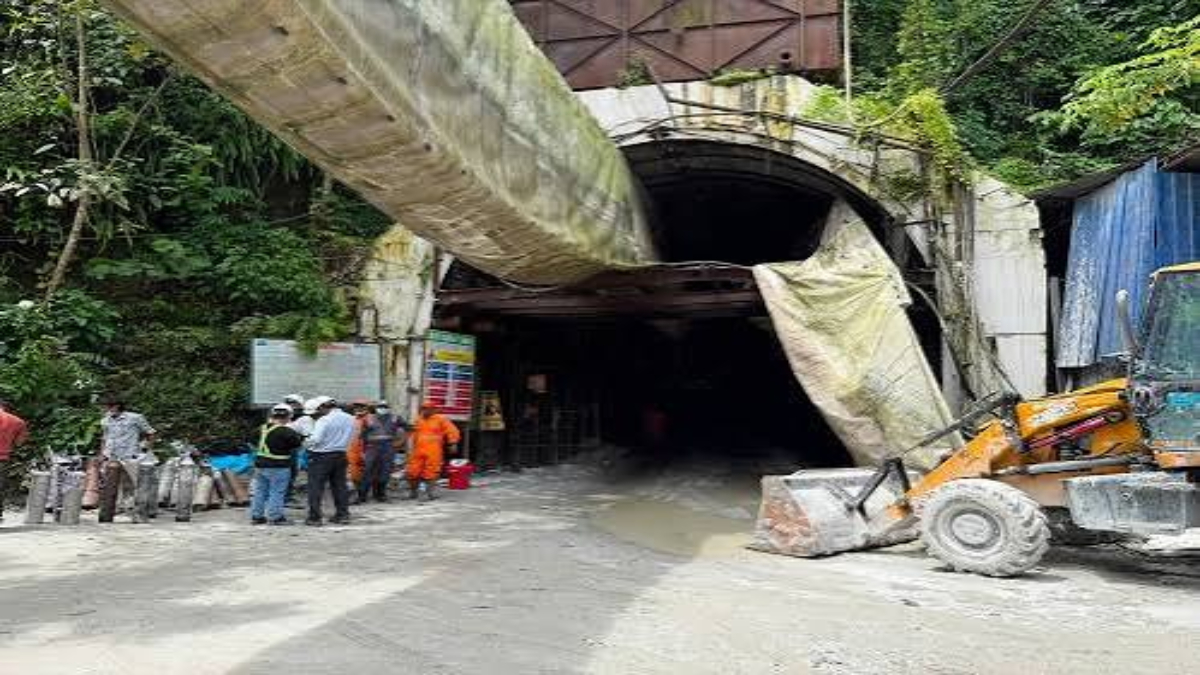
The NHPC Teesta VI tunnel search operation in Sikkim has officially concluded after rescue teams recovered all 25 bodies of workers who were trapped following a devastating incident at the under-construction hydropower project. The completion of the recovery effort marks the end of an intensive multi-day operation involving multiple agencies, while authorities have pledged a thorough investigation into the circumstances surrounding the tragedy.
The incident occurred at the NHPC Teesta VI Hydroelectric Project in Sikkim, where workers became trapped inside the tunnel after a sudden collapse and flooding triggered by heavy rainfall. Rescue teams worked around the clock under extremely hazardous conditions, navigating debris, unstable tunnel sections, and water accumulation. Officials confirmed that all 25 missing workers have now been recovered, bringing the difficult search operation to a close.
Rescue Teams Overcame Challenging Conditions
The recovery mission at the NHPC Teesta VI tunnel involved personnel from the National Disaster Response Force (NDRF), State Disaster Response Force (SDRF), local police, fire services, the Indian Army, NHPC officials, and technical experts. Heavy machinery, specialized excavation equipment, dewatering pumps, and advanced monitoring systems were deployed to assist in the operation.
Rescuers faced significant obstacles throughout the mission. Continuous rainfall, unstable geological conditions, and restricted access to several tunnel sections slowed progress. Safety remained the highest priority, with engineers regularly assessing structural stability before allowing rescue teams to proceed deeper into the tunnel.
Authorities stated that despite these challenges, the coordinated effort ensured that the search continued without interruption until every missing worker had been located.
NHPC Teesta VI Tunnel Search Officially Concludes
Officials announced that the search operation has now ended after the recovery of all 25 bodies. The confirmation brought closure to days of uncertainty for families who had been waiting anxiously for updates.
State authorities expressed condolences to the families of the deceased and assured them that all necessary assistance would be provided. Arrangements have been made for the identification of the victims, post-mortem examinations where required, and the transportation of bodies to their respective hometowns.
The state government also acknowledged the dedication of rescue personnel who worked continuously in dangerous conditions to complete the operation.
Investigation into the Incident Begins
With the recovery phase completed, attention has shifted toward determining the exact cause of the disaster. Officials have indicated that a detailed technical investigation will examine the sequence of events leading to the tunnel collapse and flooding.
The inquiry is expected to assess construction practices, geological conditions, weather-related factors, safety protocols, and emergency preparedness at the project site. Experts will also evaluate whether additional preventive measures could have reduced the risks faced by workers inside the tunnel.
The findings are expected to play an important role in improving safety standards for future infrastructure and hydropower projects in mountainous regions.
Families Receive Government Support
The Sikkim government has expressed deep sympathy for the victims’ families and assured them of every possible support. Authorities have coordinated with district administrations and employers to facilitate compensation, documentation, and transportation arrangements.
Senior officials have also interacted with the bereaved families, promising transparent communication throughout the investigation. Counseling and other forms of assistance are expected to be made available to those affected by the tragedy.
The incident has once again highlighted the risks associated with large-scale infrastructure projects in the Himalayan region, where unpredictable weather and fragile terrain can create dangerous working conditions.
Importance of Safety in Hydropower Projects
The tragedy has renewed discussions about workplace safety at major hydropower construction sites across India. Experts have emphasized the need for continuous geological monitoring, stronger emergency evacuation plans, improved drainage systems, and advanced early warning mechanisms for workers operating in underground tunnels.
Hydropower projects in mountainous states such as Sikkim contribute significantly to regional energy generation and economic development. However, engineers stress that safety measures must evolve alongside increasingly complex construction activities and changing climatic conditions.
Industry observers believe that the lessons learned from this incident could lead to stronger regulatory oversight and updated operational guidelines for similar projects nationwide.
Arunachal CM Expresses Solidarity With People Affected by Assam Floods
Rescue Operation Demonstrates Multi-Agency Coordination
One of the defining aspects of the operation was the coordination among multiple government agencies and technical teams. Rescue personnel maintained constant communication while engineers, medical teams, and disaster response specialists worked together to overcome difficult conditions inside the tunnel.
Authorities praised the commitment of everyone involved in the operation, noting that the recovery mission required patience, technical expertise, and careful planning to ensure the safety of rescue workers while continuing the search.
The successful completion of the recovery effort also reflected the importance of coordinated disaster response in challenging mountainous environments.
Moving Forward After the Tragedy
The completion of the recovery mission marks a solemn milestone for Sikkim and the families affected by the disaster. While the search operation has ended, the focus will now remain on supporting the victims’ families, completing the investigation, and implementing measures to strengthen worker safety at infrastructure projects across the region.
The NHPC Teesta VI tunnel tragedy serves as a reminder of the immense challenges involved in underground construction in the Himalayas. As authorities work to uncover the causes of the incident, there is growing hope that meaningful improvements in safety practices will help prevent similar tragedies in the future while ensuring that development projects proceed with greater protection for workers.