


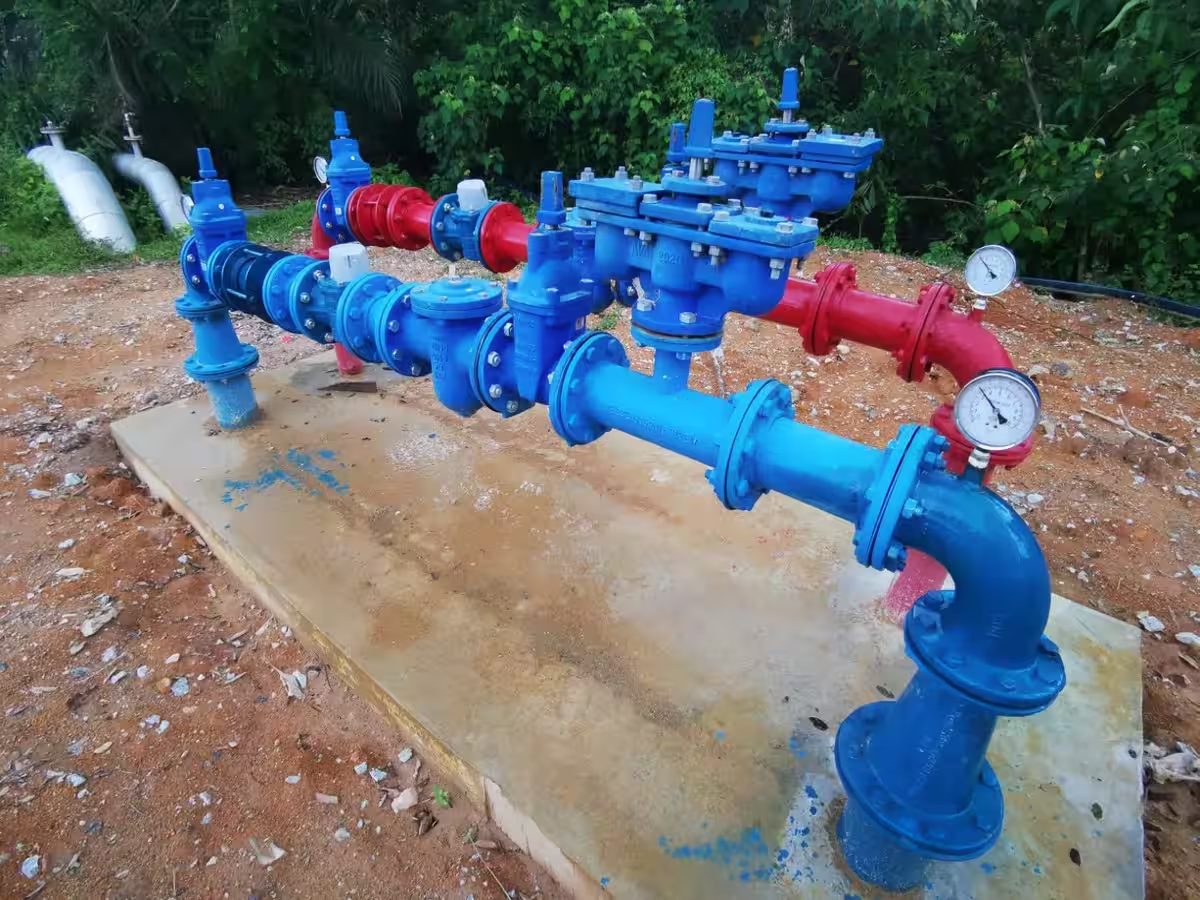
The Dimapur Water Supply initiative has moved forward with the Public Health Engineering Department initiating a ₹45 crore project to develop an urban clean drinking water pipeline network. The project aims to strengthen water distribution and improve access to reliable drinking water for residents across Dimapur.
The planned pipeline layout represents an investment in essential urban infrastructure. Moreover, a stronger distribution network can help address supply gaps and improve the movement of treated water to residential and other urban areas.
The project could also support the city’s long-term water infrastructure needs as its population and service requirements grow. However, the available information does not specify the project’s exact coverage area, completion timeline, or the number of households expected to benefit.
Fuel Strike in Mon: Petrol Pump Dealers Union Begins Indefinite Protest Over Tax Extortion
Dimapur Water Supply Project Targets Urban Infrastructure
The Dimapur Water Supply project carries an estimated investment of ₹45 crore and focuses on expanding the city’s drinking water pipeline network.
Urban water infrastructure requires reliable pipelines to move treated water from supply facilities to consumers. Furthermore, properly planned distribution networks can help reduce interruptions and improve the efficiency of water delivery.
The latest initiative therefore focuses on strengthening a key component of Dimapur’s civic infrastructure.
However, the available information does not identify the specific neighbourhoods included in the initial pipeline layout.
Therefore, the project’s precise geographical coverage remains unclear.
Dimapur Water Supply Expansion Could Improve Access
The Dimapur Water Supply project could improve access to clean drinking water for urban residents.
A wider pipeline network can connect more households and communities to organized water distribution systems. Additionally, improved infrastructure can reduce dependence on less reliable local sources where piped supply remains limited.
The ₹45 crore investment demonstrates a significant focus on expanding urban water infrastructure.
However, the available information does not provide estimates for the number of new connections planned under the project.
Consequently, the expected household-level impact cannot yet be quantified.
Dimapur Water Supply Project Focuses on Clean Drinking Water
The Dimapur Water Supply initiative places clean drinking water at the centre of the infrastructure project.
Reliable access to safe water plays an important role in household health, sanitation, and daily activities. Moreover, consistent water supply can support schools, healthcare facilities, businesses, and other urban institutions.
A modern pipeline network can therefore provide benefits beyond individual households.
However, the available information does not specify the source of the water or the treatment facilities connected to the proposed network.
Therefore, the complete water-supply chain remains unclear.
Dimapur Water Supply Requires Efficient Pipeline Planning
The Dimapur Water Supply project will depend on careful planning and construction of the new pipeline layout.
Urban pipeline projects often require coordination around existing roads, drainage systems, electricity lines, buildings, and other infrastructure. Furthermore, proper engineering can help reduce leakage, pressure problems, and disruptions during future maintenance.
The planning stage can therefore determine the reliability of the completed network.
However, the available information does not provide technical specifications such as pipeline length, diameter, material, or planned capacity.
Consequently, the engineering scope remains unspecified.
Dimapur Water Supply Investment Could Support Urban Growth
The Dimapur Water Supply project comes as urban areas continue to require stronger basic services.
Population growth and expanding commercial activity can increase demand for dependable water infrastructure. Additionally, new residential and business areas may require extensions to existing distribution networks.
The ₹45 crore project could help authorities prepare for these growing requirements.
However, the available information does not provide current water-demand figures or future demand projections for Dimapur.
Therefore, the project’s capacity relative to long-term demand remains unclear.
Dimapur Water Supply Project May Reduce Distribution Gaps
The Dimapur Water Supply network could help address areas that currently experience limited or inconsistent access to piped drinking water.
Extending pipelines can improve distribution coverage when authorities connect underserved areas to reliable supply systems. Moreover, better network planning can help balance water distribution across different parts of the city.
However, the available information does not identify the areas currently facing the greatest supply shortages.
Consequently, the project’s expected impact on existing distribution gaps requires further details.
Dimapur Water Supply Requires Long-Term Maintenance
The Dimapur Water Supply project will require regular maintenance after construction.
Pipelines can develop leaks, pressure problems, or other faults over time. Furthermore, timely maintenance can protect water quality and prevent service disruptions.
Authorities will therefore need to maintain the network after completing the planned infrastructure.
However, the available information does not specify the maintenance framework, monitoring system, or operating budget for the new pipeline network.
Therefore, long-term management details remain unclear.
Dimapur Water Supply Could Benefit Public Institutions
The Dimapur Water Supply project could also strengthen water access for public institutions located within the project area.
Schools, healthcare facilities, government offices, and community buildings require dependable water supplies for sanitation and daily operations. Additionally, improved urban water infrastructure can support local businesses and commercial establishments.
The project’s broader benefits could therefore extend beyond residential connections.
However, the available information does not specify whether public institutions form a separate priority category under the project.
Dimapur Water Supply Project Reflects Urban Service Priorities
The Dimapur Water Supply initiative highlights the importance of basic infrastructure in urban development.
Clean drinking water remains a fundamental requirement for growing cities. Moreover, investment in reliable water networks can support broader goals related to sanitation, public health, and sustainable urban planning.
The ₹45 crore allocation indicates a significant commitment to improving water distribution infrastructure.
However, the project’s long-term outcomes will depend on timely construction, appropriate engineering, adequate water availability, and effective maintenance.
Conclusion
The Dimapur Water Supply initiative has moved forward after the Public Health Engineering Department initiated a ₹45 crore urban drinking water pipeline project. The investment aims to strengthen water distribution infrastructure and improve access to clean drinking water across Dimapur.
Moreover, the new network could support households, institutions, businesses, and future urban growth by improving the reliability of piped water services. However, the available information does not specify the pipeline length, coverage area, number of beneficiaries, water source, or completion timeline.
Overall, the Dimapur Water Supply project represents a significant investment in Dimapur’s essential urban infrastructure. Effective construction, quality control, regular maintenance, and adequate water availability will remain important for delivering lasting benefits to residents.
FAQs
1. What is the Dimapur Water Supply project?
The Dimapur Water Supply project is a ₹45 crore initiative to develop an urban clean drinking water pipeline network.
2. Which department initiated the project?
The Public Health Engineering Department initiated the pipeline project.
3. How much will the project cost?
The project carries an announced investment of ₹45 crore.
4. Who could benefit from the project?
Urban households, public institutions, businesses, and other establishments within the project’s coverage area could benefit from improved piped water access.
5. When will the project be completed?
The available information does not provide a confirmed completion date.