


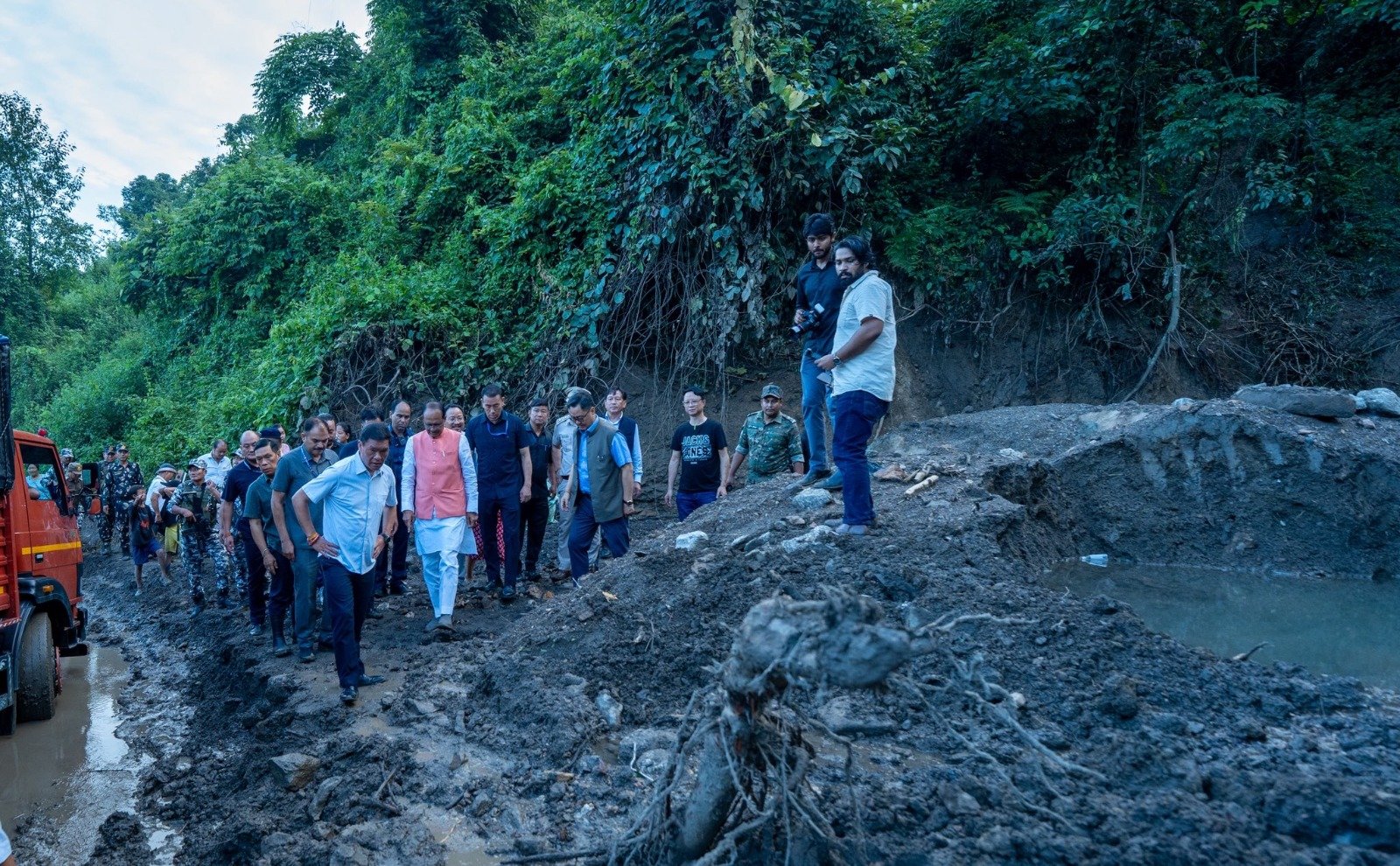
Union Minister for Development of North Eastern Region (DoNER), Jyotiraditya Scindia, conducted extensive telephonic reviews with state governments and cabinet representatives across the Northeast on June 30 to assess the evolving flood situation and coordinate immediate central assistance. The high-level consultations focused on evaluating the extent of damage, identifying urgent requirements, and ensuring rapid deployment of central resources to affected areas. Moreover, the review reflects the Centre’s efforts to strengthen coordination during the ongoing monsoon emergency across multiple northeastern states.
Power Theft Crackdown Leads to Disconnection of Illegal Grid Connection in Gandhigram
Shillong Traffic Havoc After Heavy Rain
High-Level Consultations Held to Assess Flood Impact
Union Minister reviews floods across the Northeast through a series of telephonic discussions with state administrations and disaster management authorities. Consequently, a comprehensive assessment of flood conditions, relief requirements, and emergency preparedness measures was undertaken.
The consultations reportedly covered flood-hit regions experiencing severe rainfall, rising river levels, and disruptions to transport and public infrastructure. Moreover, state authorities briefed the Union Minister on ongoing rescue operations, relief camp management, and immediate logistical needs. Therefore, the review process aimed to facilitate faster decision-making and coordinated action.
Officials emphasized that continuous communication between the Centre and states remains essential during large-scale disasters. Furthermore, real-time information sharing improves emergency response efficiency. As a result, central agencies remain prepared for rapid intervention where necessary.
Meanwhile, monitoring of weather developments and flood conditions continues across affected regions. Consequently, response strategies are being updated regularly.
Focus on Immediate Central Assistance and Resource Deployment
Union Minister reviews floods with the objective of ensuring timely deployment of central resources and support mechanisms. Moreover, severe monsoon conditions have increased pressure on state disaster response systems. Therefore, coordination with central agencies has become particularly important.
During the discussions, attention was given to the availability of rescue teams, relief materials, medical assistance, and logistical support. Consequently, authorities have been working to identify areas requiring immediate intervention. Such measures are critical during emergency situations.
Furthermore, officials reviewed the status of relief camps, evacuation operations, and essential public services. As a result, preparedness levels have been strengthened across multiple states.
Meanwhile, communication channels between state governments and central ministries remain active. Similarly, emergency response agencies continue to maintain operational readiness.
Strengthening Coordination During the Monsoon Emergency
The Union Minister reviews floods as part of broader efforts to strengthen intergovernmental coordination during the ongoing monsoon season. Moreover, the Northeast region often experiences severe weather-related challenges requiring coordinated action. Therefore, regular consultations remain essential.
Officials highlighted that integrated disaster management frameworks improve response effectiveness and reduce delays. Consequently, coordination between ministries, state governments, and disaster management authorities has been intensified. Such cooperation supports faster implementation of relief measures.
Furthermore, authorities are monitoring infrastructure impacts, including roads, bridges, and public utilities. As a result, restoration plans can be activated more efficiently.
Meanwhile, district administrations continue to provide field-level updates to higher authorities. Similarly, emergency preparedness measures are being reviewed continuously.
Emphasis on Public Safety and Disaster Preparedness
The review process also focused on protecting vulnerable populations and strengthening disaster preparedness mechanisms. Moreover, effective planning helps reduce the impact of floods on communities. Therefore, preventive and precautionary measures remain a priority.
Officials stated that relief operations, emergency shelters, and medical assistance systems are being monitored closely. Consequently, authorities aim to ensure uninterrupted support for affected populations. Such efforts contribute to minimizing humanitarian impacts.
Furthermore, weather forecasts and hydrological data continue to be analyzed to anticipate future risks. As a result, response agencies remain prepared for changing conditions.
Meanwhile, public advisories are being disseminated regularly through official channels. Similarly, emergency communication systems are being maintained to support rapid response.
Conclusion
The telephonic review conducted by DoNER Minister Jyotiraditya Scindia on June 30 underscores the importance of coordinated action during the ongoing flood emergency affecting Northeast India. Moreover, the consultations demonstrate the Centre’s focus on ensuring timely assistance, efficient resource deployment, and effective disaster response.
The initiative highlights the critical role of continuous monitoring and intergovernmental cooperation during natural disasters. Therefore, ongoing coordination efforts remain essential in safeguarding lives and supporting affected communities.
As flood conditions continue to evolve across the region, authorities at both the state and central levels remain focused on strengthening response mechanisms and minimizing the impact of the monsoon crisis.
FAQs
1. Who conducted the flood review meeting?
Union Minister for DoNER, Jyotiraditya Scindia.
2. When were the consultations held?
The telephonic reviews were conducted on June 30.
3. What was the purpose of the review?
To assess flood conditions and coordinate immediate central assistance.
4. Who participated in the consultations?
State governments, cabinet representatives, and disaster management authorities.
5. What was the main outcome of the review?
Enhanced coordination and preparedness for rapid deployment of relief and rescue resources.