


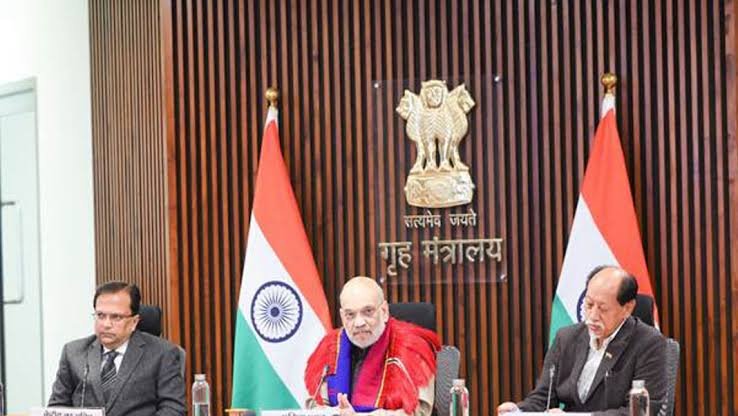
Eastern Nagaland FNTA Development has entered a significant new phase after Chief Minister Neiphiu Rio said the revised Frontier Nagaland Territorial Authority Bill, 2026, fulfils the framework established through the February 5 Memorandum of Agreement. The FNTA covers Tuensang, Mon, Longleng, Kiphire, Noklak and Shamator. Rio said the arrangement aims to address long-standing developmental deficits and promote decentralised governance within Nagaland.
North Tripura water conservation gets major boost at India Water Week 2026
Eastern Nagaland FNTA Development Follows February MoA
The FNTA process stems from the Memorandum of Agreement signed on February 5, 2026, between the Government of India, the Nagaland Government and the Eastern Nagaland Peoples’ Organisation. The agreement provided for the creation of the FNTA through special state legislation in consultation with the Ministry of Home Affairs.
Moreover, the agreement emerged after years of concerns over developmental disparities in Eastern Nagaland. Rio said historical factors, difficult geography and limited state resources had contributed to the region’s continuing developmental deficits.
Therefore, the FNTA has been designed as a special institutional mechanism rather than simply another administrative arrangement. The proposed authority seeks to bring decision-making and development planning closer to communities in the eastern districts.
The legislative process, however, required several rounds of consultation. An earlier version of the Bill faced questions about its proposed powers and was subsequently withdrawn before the revised legislation was introduced.
Consequently, the revised Bill incorporated changes following consultations with the Centre, ENPO, the Eastern Nagaland Legislators Union and other stakeholders. Rio said the government also obtained legal advice while preparing the revised legislation.
Six Districts Form the FNTA Region
The proposed FNTA covers six eastern districts: Tuensang, Mon, Longleng, Kiphire, Noklak and Shamator. These districts will remain part of Nagaland while receiving the proposed decentralised institutional framework.
Furthermore, the FNTA is intended to address social, economic, educational, cultural and linguistic aspirations across the region. Rio described it as a unique self-governing territorial authority operating within Nagaland.
The revised Bill proposes a 62-member authority with powers covering 46 subjects. The structure includes 40 directly elected members, two Governor-nominated members and 20 ex-officio MLAs without voting rights.
Additionally, one-third of the directly elected seats will be reserved for women. The elected members will serve five-year terms, while an Executive Council headed by a Chief Executive Member will exercise executive authority under the proposed framework.
However, the creation of the authority does not mean that Eastern Nagaland will separate from the state. Government representatives have repeatedly described the FNTA as a decentralised arrangement within Nagaland.
Therefore, the model seeks to combine greater regional participation with the continued territorial and constitutional integrity of Nagaland.
Eastern Nagaland FNTA Development Targets Infrastructure Gaps
Development remains at the centre of the FNTA proposal. Rio said the six districts have historically lagged behind other parts of Nagaland because of geographical constraints, historical factors and limited resources.
Moreover, the proposed authority would have its own planning and financial mechanisms. It would prepare annual plans and formulate development programmes based on grassroots requirements.
The state government would allocate funds to the FNTA based on population and geographical size. Meanwhile, the Centre would provide Special Development Grants in consideration of the region’s infrastructure and development needs.
Rio also said the state had requested an increase in the proposed special development grant from ₹5,000 crore to at least ₹10,000 crore. The additional funding would support infrastructure, economic growth and wider development in Eastern Nagaland.
Consequently, implementation will depend heavily on how effectively these financial and planning mechanisms operate after the legislative process advances.
The focus on grassroots planning could also allow local priorities to receive greater attention. Roads, schools, healthcare, employment opportunities and other infrastructure requirements remain important components of the region’s development needs.
Constitutional Safeguards Remain Central to FNTA
The FNTA process has also involved significant constitutional and legal scrutiny. Rio reiterated that the safeguards provided under Article 371(A) would remain protected and unaffected.
Earlier, the Centre had sought additional time to examine questions surrounding the proposed legislative powers of the authority. The government subsequently revised the Bill after further consultations and legal examination.
Therefore, the revised legislation represents the outcome of an extended effort to balance regional aspirations with constitutional requirements.
The Nagaland Legislative Assembly subsequently passed the revised FNTA Bill unanimously on September 3, marking a major legislative milestone.
Furthermore, Rio described the FNTA as more than an administrative arrangement. He said it represents a commitment to equitable development, inclusive governance and progress across Nagaland.
The next phase will focus on translating the legislative framework into functioning institutions, development plans and financial mechanisms. Consequently, the practical impact of the FNTA will depend on its implementation across the six districts.
Conclusion
Eastern Nagaland FNTA Development is now entering a new phase following the unanimous passage of the revised FNTA Bill. Chief Minister Neiphiu Rio has linked the legislation to the February 5 MoA with the Centre and ENPO, saying the arrangement will address developmental deficits across Tuensang, Mon, Longleng, Kiphire, Noklak and Shamator. The framework aims to combine decentralised governance, stronger regional planning and additional development funding while preserving Nagaland’s constitutional framework.
FAQs
1. What is the FNTA intended to achieve?
The FNTA is intended to address developmental disparities and provide decentralised governance for six eastern districts of Nagaland.
2. Which districts will come under the FNTA?
The six districts are Tuensang, Mon, Longleng, Kiphire, Noklak and Shamator.
3. When was the MoA for the FNTA signed?
The tripartite Memorandum of Agreement was signed on February 5, 2026, between the Government of India, the Nagaland Government and ENPO.
4. Does the FNTA separate the six districts from Nagaland?
No. The FNTA is proposed as a self-governing territorial authority operating within Nagaland.
5. How will the FNTA receive development funding?
The state government plans to allocate funds based on population and geographical size, while the Centre is expected to provide Special Development Grants for development and infrastructure.