


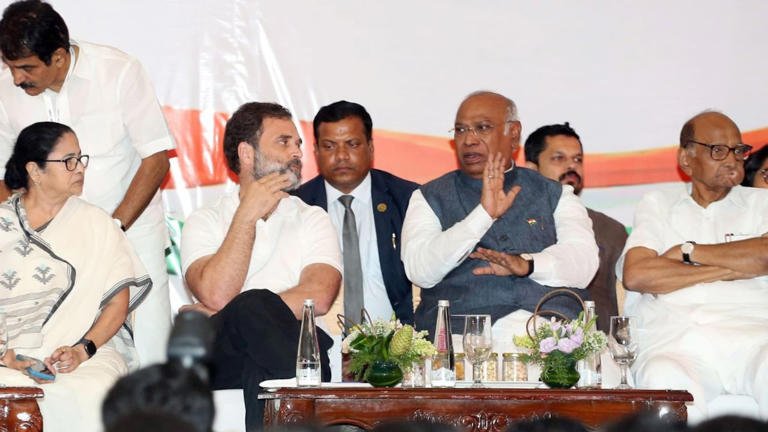
Calls for an “Akhand Congress” or a united Congress ecosystem have gained renewed attention in political circles, with several leaders advocating greater opposition unity ahead of future electoral battles. The discussion has brought prominent opposition figures such as West Bengal Chief Minister Mamata Banerjee and veteran leader Sharad Pawar into focus, as political observers assess the prospects of broader opposition cooperation.
The concept of an “Akhand Congress” is being interpreted by many as an effort to reunite or coordinate political forces that historically emerged from the Congress tradition but now operate as separate regional or national entities. Supporters of the idea argue that greater unity could strengthen the opposition’s ability to challenge the ruling National Democratic Alliance (NDA) in upcoming elections.
The debate has triggered discussions about leadership, strategy, and the future direction of opposition politics in India.
Growing Calls for Opposition Consolidation
Political leaders advocating the concept of an “Akhand Congress” have emphasized the need for stronger coordination among parties that share common ideological roots or political objectives.
Supporters argue that fragmentation within the opposition often benefits the ruling alliance by dividing votes and weakening electoral competitiveness. Therefore, they believe that closer cooperation among opposition parties could create a more effective political alternative.
The idea has generated interest because several influential regional parties, including those led by Mamata Banerjee and Sharad Pawar, trace their origins to leaders who were once associated with the Congress.
Political observers note that discussions around opposition unity often intensify ahead of major elections as parties explore strategies for maximizing their collective strength.
Mamata Banerjee’s Role Under Scrutiny
Mamata Banerjee remains one of the most influential opposition leaders in India. As the head of the All India Trinamool Congress and a dominant political force in West Bengal, she is often viewed as a key player in any discussion involving opposition realignment.
Political analysts believe that her position will be crucial in determining the feasibility of broader opposition cooperation. Over the years, Banerjee has emerged as one of the strongest critics of the BJP-led NDA government and has frequently advocated unity among opposition parties on various national issues.
At the same time, her party’s independent political identity and regional strength mean that any discussions regarding closer coordination would involve complex political calculations.
Observers suggest that Banerjee’s stance could significantly influence the direction of future opposition strategies.
Sharad Pawar Seen as Consensus Builder
Sharad Pawar, widely regarded as one of India’s most experienced political leaders, has also become central to conversations surrounding opposition unity.
Known for his ability to build alliances and maintain relationships across political divides, Pawar is often viewed as a consensus-builder capable of facilitating dialogue among different opposition groups.
Throughout his long political career, Pawar has played important roles in coalition-building efforts at both state and national levels. Political observers believe his experience could prove valuable in any attempt to bring together diverse opposition forces.
Supporters of greater opposition coordination argue that leaders such as Pawar can help bridge differences and create common ground on key political issues.
His involvement in discussions related to opposition strategy continues to attract considerable attention.
Historical Context of the ‘Akhand Congress’ Idea
The concept of an “Akhand Congress” has historical significance because many regional and national parties were originally formed by leaders who once belonged to the Congress.
Over the decades, ideological differences, leadership disputes, and regional aspirations led to the emergence of numerous political formations outside the Congress framework. Despite these separations, many of these parties continue to share certain political traditions and policy perspectives.
Advocates of the idea argue that the opposition can draw strength from these shared roots. They believe that greater coordination among such parties could create a more unified political platform.
However, political analysts note that historical connections do not automatically translate into electoral alliances, as regional interests and party identities remain important considerations.
Challenges to Opposition Unity
While calls for an “Akhand Congress” have generated interest, several challenges remain. Opposition parties often compete against one another in state elections, making alliance-building a complex process.
Leadership questions, seat-sharing arrangements, and regional political dynamics frequently influence decisions regarding cooperation. Different parties also have distinct organizational structures and strategic priorities.
Political observers note that achieving meaningful unity would require extensive negotiations and a willingness to accommodate diverse interests.
Despite these challenges, supporters of opposition consolidation argue that shared concerns regarding governance, democracy, and economic issues could provide a basis for cooperation.
The success of any such initiative would depend on the ability of leaders to balance regional ambitions with broader national objectives.
Congress and Regional Parties
The Congress continues to remain a significant national political force despite facing challenges in recent elections. Discussions surrounding an “Akhand Congress” often raise questions about how the party would interact with regional allies and former Congress-linked organizations.
Some leaders believe that stronger collaboration between Congress and regional parties could improve opposition performance in key states. Others argue that regional parties must retain their independent identities while coordinating on selected issues.
Political analysts suggest that future opposition strategies may involve a combination of electoral alliances, issue-based cooperation, and parliamentary coordination.
The evolving relationship between Congress and regional parties is likely to remain an important factor in shaping India’s political landscape.
Implications for Future Elections
The renewed discussion about opposition unity comes at a time when political parties are increasingly looking ahead to future electoral contests. Both national and regional leaders recognize the importance of strategic planning and coalition-building.
Supporters of the “Akhand Congress” concept argue that a united opposition could provide voters with a stronger alternative and create more competitive elections. They believe that collaboration can help opposition parties pool resources, coordinate campaigns, and avoid fragmentation.
However, critics point out that unity alone may not be sufficient without a clear policy agenda and effective organizational structures.
Political observers note that electoral success depends on multiple factors, including leadership, public perception, governance records, and grassroots mobilization.
National Political Significance
The discussions surrounding Mamata Banerjee, Sharad Pawar, and the idea of an “Akhand Congress” highlight broader questions about the future of opposition politics in India.
As political parties assess changing voter preferences and emerging challenges, debates over unity and coordination are likely to continue. The involvement of influential leaders from different regions adds significance to these discussions.
Whether or not a formal political arrangement emerges, the conversation itself reflects ongoing efforts within the opposition to redefine strategies and strengthen collective influence.
Analysts believe that developments in this area could have important implications for parliamentary politics and electoral competition in the years ahead.
Looking Ahead
The renewed push for an “Akhand Congress” has brought attention to the roles of Mamata Banerjee, Sharad Pawar, and other senior opposition leaders as discussions on political unity gain momentum.
Supporters view the concept as an opportunity to strengthen opposition cooperation and create a broader platform capable of challenging the ruling alliance. At the same time, significant political and organizational challenges remain.
As opposition parties continue to evaluate their strategies, the positions taken by key leaders will likely shape the future course of these discussions. Whether the idea evolves into a formal political framework or remains a broader aspiration, it has already sparked an important debate about the future of opposition politics in India.