


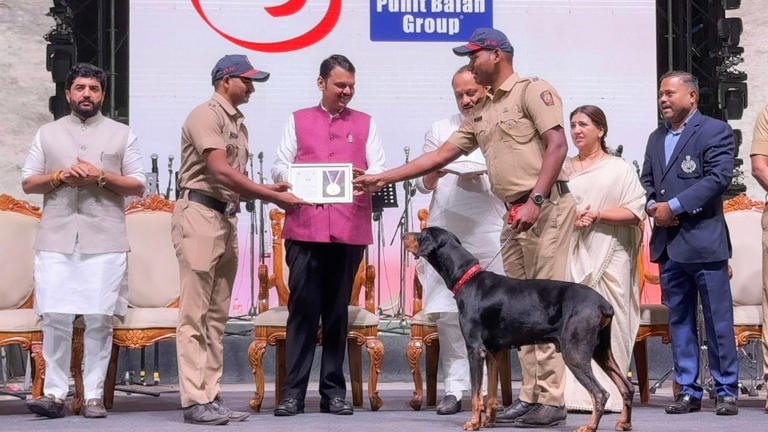
Maharashtra Chief Minister Devendra Fadnavis has announced a major welfare decision for the state’s police dogs, allowing them to remain with their handlers after retirement while the government bears the cost of their food, medical treatment and other post-retirement needs.
Under the new arrangement, police dogs will retire from active duty after completing 10 years of service. However, unlike the earlier system under which retired dogs could be placed for adoption with third parties, they will now be allowed to continue living in a familiar environment with the handlers they worked alongside for years.
The Maharashtra Home Department will take responsibility for meeting the expenses associated with their care, including food, healthcare and other daily requirements. The move has been welcomed as an important step towards recognising the contribution of service animals to policing and ensuring their welfare after they are no longer fit for active duty.
Retired Dogs Will Not Be Separated From Their Handlers
The key feature of the new policy is that retired police dogs will no longer have to be separated from their long-time handlers.
Police dogs and their handlers often spend years training and working together, developing a close professional and emotional bond. The animals become familiar with their handler’s voice, commands and daily routine.
According to reports, separating retired service dogs from their handlers and placing them in unfamiliar homes had sometimes created difficulties for the animals. Some reportedly struggled to adjust to their new surroundings and routines after retirement.
The new policy aims to prevent such disruption by allowing the dogs to spend their post-service years with the people they know best.
State Government to Cover Food and Medical Expenses
While retired police dogs will no longer perform operational duties, the Maharashtra government will continue supporting their care.
The Home Department will bear the expenses related to their food, medical treatment and other living requirements.
This means that handlers who continue caring for their retired canine partners will not have to bear the full financial responsibility for their upkeep.
The decision effectively creates a state-backed post-retirement care system for Maharashtra Police dogs, ensuring that their welfare remains supported even after their active service ends.
Fadnavis Highlights Contribution of Police Dogs
Fadnavis said that animals which have spent around a decade serving the police force should not be made to suffer after retirement.
Police dogs perform a range of specialised duties that are crucial to law enforcement and public security.
They are trained to track suspects, detect explosives and narcotics, locate evidence and assist specialised police units, including bomb detection and disposal squads.
Their work requires extensive training, discipline and a close working relationship with their handlers. The state government’s decision acknowledges this contribution and seeks to provide the animals with a secure and comfortable life after their operational service comes to an end.
Earlier System Allowed Adoption After Retirement
Before this decision, retired police dogs could be placed for adoption once they were no longer considered fit for active service.
Under the earlier arrangement, the animals could be handed over to screened adopters or moved away from the police environment in which they had spent much of their lives.
While adoption was intended to ensure that retired dogs received care, it could also result in their separation from the handlers and routines they had known for years.
The new policy represents a clear shift from that model.
Instead of being rehomed with unfamiliar adopters, eligible retired police dogs will remain with their handlers, while the state takes responsibility for their continued care.
A Strong Bond Between Handler and Service Dog
The relationship between a police dog and its handler is built over years of training and service.
Handlers learn to understand the behaviour, responses and working patterns of their canine partners, while the dogs become accustomed to specific commands and routines.
This bond can be especially important for service animals that have spent their working lives in demanding and highly structured environments.
A sudden move to an unfamiliar household after retirement can require significant adjustment.
By allowing the dogs to stay with their handlers, the Maharashtra government’s new rule aims to provide continuity and a familiar environment during their later years.
The decision also recognises that retirement from service does not mean that the animal’s care requirements disappear. Older dogs may require continued veterinary attention, proper nutrition and regular supervision.
Maharashtra Joins Other States With Similar Measures
Maharashtra is not the first state to introduce provisions aimed at supporting retired police dogs.
Other states have also explored arrangements that allow service dogs to remain with familiar handlers or receive departmental support after retirement.
However, policies can differ in terms of adoption, financial assistance and long-term responsibility for the animals.
Maharashtra’s latest decision places the responsibility for post-retirement care formally on the state, with the Home Department funding the dogs’ food, healthcare and other needs while allowing them to remain with their handlers.
Policy Recognises Service Beyond Active Duty
The decision has wider significance because it recognises that service animals require care and protection even after their working years are over.
Police dogs play an important role in security operations but have a limited period of active service. Once they retire, they may continue to need specialised care, particularly as they grow older.
By taking responsibility for these expenses, the Maharashtra government has created a system that seeks to ensure the animals do not lose support simply because they are no longer operational.
The policy also provides recognition to the handlers, who can continue caring for the dogs without being left solely responsible for the financial costs.
A More Secure Retirement for Maharashtra Police Dogs
The new retirement rule announced by Chief Minister Devendra Fadnavis marks a significant change in the way Maharashtra will care for its police dogs after active service.
After completing 10 years of duty, the animals will retire from operational responsibilities but remain with their long-time handlers in a familiar environment.
The Maharashtra Home Department will cover their food, medical treatment and other lifetime care expenses, replacing the earlier practice of moving retired dogs to third-party adoption.
The move reflects a growing recognition of the contribution made by police dogs and the strong bond they develop with their handlers. For Maharashtra’s canine officers, retirement will now mean the end of active duty—but not the end of the care, companionship and security they have known throughout their years of service.