


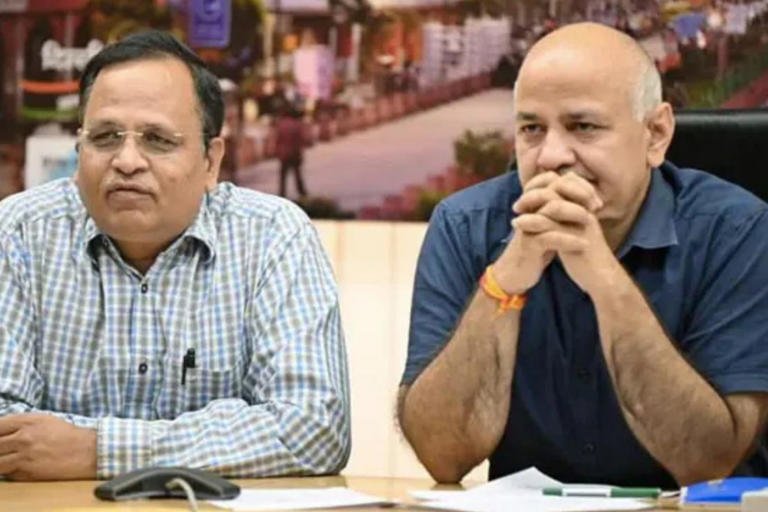
An FIR has been filed against senior Aam Aadmi Party (AAP) leaders Manish Sisodia and Satyendar Jain in connection with an alleged Rs 2,000 crore classroom construction scam. The case, which involves large-scale corruption in the construction of classrooms in Delhi government schools, has once again brought AAP’s transparency claims under sharp scrutiny.
The Central Bureau of Investigation (CBI) has initiated the investigation following a complaint by the Delhi government’s Vigilance Department, which found glaring irregularities in the construction costs of classrooms. According to the report, the cost of building 12,000 classrooms across Delhi schools was inflated manifold, resulting in a suspected scam of nearly Rs 2,000 crore.
Background of the Allegations
The alleged scam dates back to when Manish Sisodia held the Education portfolio in the Delhi government, and Satyendar Jain was overseeing the Public Works Department (PWD). The Vigilance Department’s findings suggest that instead of following proper tender procedures, contracts were awarded to a select group of contractors at inflated rates. Moreover, in several cases, multiple payments were allegedly made for the same work.
The complaint states that Sisodia and Jain, along with senior officials of the Education and PWD departments, were involved in approving excessive expenditures, bypassing standard protocols. The report also highlights that the construction quality was substandard despite the inflated costs.
CBI Registers FIR Based on Vigilance Report
Acting on the complaint, the CBI registered an FIR under sections of the Indian Penal Code (IPC) related to criminal conspiracy, cheating, and corruption. The FIR includes unnamed officials from the Delhi government and contractors who were allegedly involved in the scam.
This comes as a fresh blow to AAP, which has often claimed a clean governance record. Both Sisodia and Jain are already facing charges in separate cases—Sisodia in the Delhi Excise Policy case and Jain in a money laundering case. This new FIR further complicates their legal troubles.
Political Reactions and Public Response
The Bharatiya Janata Party (BJP) and Congress have strongly criticized AAP following the filing of the FIR. BJP spokespersons have accused the AAP leadership of massive financial mismanagement and questioned Delhi Chief Minister Arvind Kejriwal’s silence on the issue.
“The so-called education revolution of Delhi was nothing but a well-orchestrated scam. The people of Delhi deserve to know how public money was looted in the name of classrooms,” said a BJP leader in a press conference.
Congress, too, demanded a fair probe and asked for a CBI-monitored investigation to ensure transparency and accountability.
On the other hand, AAP has dismissed the allegations as “politically motivated,” claiming that their leaders are being targeted because of the party’s rising popularity in other states. Party spokespersons have stated that all construction work was audited and approved by government agencies.
Impact on AAP’s Image and Future Prospects
This FIR against top AAP leaders comes at a critical time, especially when the party is trying to expand its footprint beyond Delhi. The scam has raised serious concerns about the party’s internal functioning and financial integrity.
Moreover, it may affect AAP’s public perception, especially among voters who once hailed the party as a symbol of clean and honest politics. With elections in several key states approaching, this controversy could become a major talking point for opposition parties.
The Rs 2,000 crore classroom scam and the subsequent FIR against Manish Sisodia and Satyendar Jain mark a troubling chapter for the Aam Aadmi Party. As the investigation unfolds, more revelations are expected to surface, potentially implicating more officials and exposing deeper layers of corruption.
Whether this case proves to be a turning point in Delhi politics or another addition to India’s long list of political scandals remains to be seen. However, it undeniably casts a long shadow over AAP’s claims of ethical governance.