


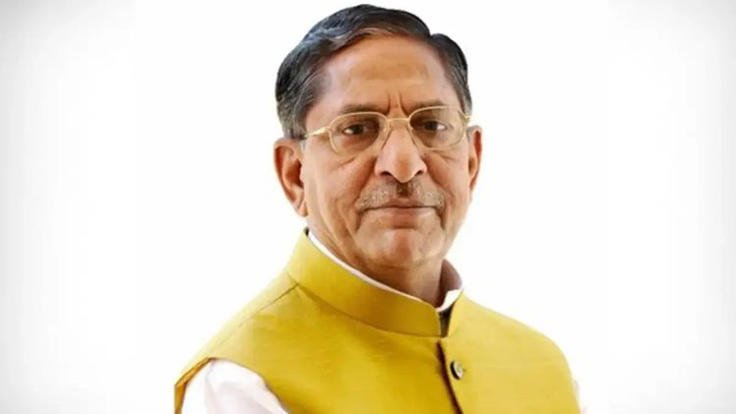
The Frontier Nagaland Territorial Authority (FNTA) agreement represents an important milestone for the people of Eastern Nagaland, Governor Nand Kishore Yadav has said, highlighting the significance of the agreement for the region’s development and future governance.
Yadav made the remarks while speaking about the agreement and the aspirations of communities in the eastern districts of Nagaland. The development comes after years of demands for greater administrative and economic attention to the region.
FNTA Agreement Addresses Eastern Nagaland’s Aspirations
The agreement is linked to the long-standing demand for greater autonomy and a dedicated administrative arrangement for Eastern Nagaland.
The region comprises six districts — Mon, Tuensang, Longleng, Kiphire, Noklak and Shamator — which have historically raised concerns over development gaps and limited access to infrastructure and economic opportunities.
The FNTA framework is intended to provide greater institutional attention to the region while keeping Eastern Nagaland within the state of Nagaland.
For communities in the area, the agreement has been viewed as an important step towards addressing their demands for more focused development and governance.
Governor Highlights Need for Inclusive Development
Governor Yadav stressed that the agreement should contribute to inclusive development and improve opportunities for people living in Eastern Nagaland.
He emphasised the importance of ensuring that the benefits of development reach communities across the region.
Infrastructure, education, healthcare, employment and connectivity remain key areas where greater investment is expected to make a difference.
The Governor also highlighted the importance of cooperation between the Centre, state government and local communities in implementing the provisions associated with the agreement.
Eastern Nagaland’s Long-Standing Development Concerns
Eastern Nagaland has for years faced concerns over inadequate infrastructure and economic opportunities compared with other parts of the state.
Poor connectivity in several areas has affected access to markets, healthcare and educational institutions. The region’s difficult terrain has also made infrastructure development challenging.
The demand for a separate administrative arrangement emerged partly from these concerns.
The Eastern Nagaland Peoples’ Organisation (ENPO), which represents several tribes from the region, has been at the forefront of the movement seeking greater administrative and developmental arrangements.
From Separate State Demand to Territorial Arrangement
The demand for greater autonomy in Eastern Nagaland has evolved over several years.
At various stages, organisations in the region had called for a separate state. The discussions later shifted towards an alternative administrative arrangement that would provide greater control over development and local governance while keeping the region within Nagaland.
The FNTA proposal emerged from this process of negotiations between the Centre, the Nagaland government and representatives from Eastern Nagaland.
The agreement is therefore significant because it attempts to address the region’s aspirations through an institutional framework rather than territorial separation.
Implementation Will Be Crucial
While the agreement marks an important political development, its effectiveness will depend on how its provisions are implemented.
Questions surrounding the authority’s powers, financial resources, administrative responsibilities and relationship with the existing state government will be important in determining how the arrangement functions.
Adequate funding and clearly defined responsibilities will also be necessary if the FNTA is to deliver improvements in infrastructure and public services.
The participation of local communities will remain important throughout the implementation process.
Focus on Infrastructure and Employment
Development expectations in Eastern Nagaland are particularly high in areas such as roads, telecommunications, education, healthcare and employment.
Improved connectivity could help local producers access wider markets and encourage private investment.
The region also has potential in sectors including agriculture, horticulture, tourism and traditional handicrafts. Targeted investment could create new employment opportunities for young people and reduce the need for migration in search of work.
A New Chapter for Eastern Nagaland
Governor Nand Kishore Yadav’s description of the FNTA agreement as an important milestone reflects the broader significance attached to the arrangement.
For Eastern Nagaland, the agreement represents an attempt to address longstanding concerns over development and representation through a new administrative framework.
The next stage will be translating the agreement into functioning institutions, adequate funding and visible improvements on the ground.
If implemented effectively, the FNTA could provide a new framework for development in the region while strengthening cooperation between the Centre, Nagaland government and communities of Eastern Nagaland.