


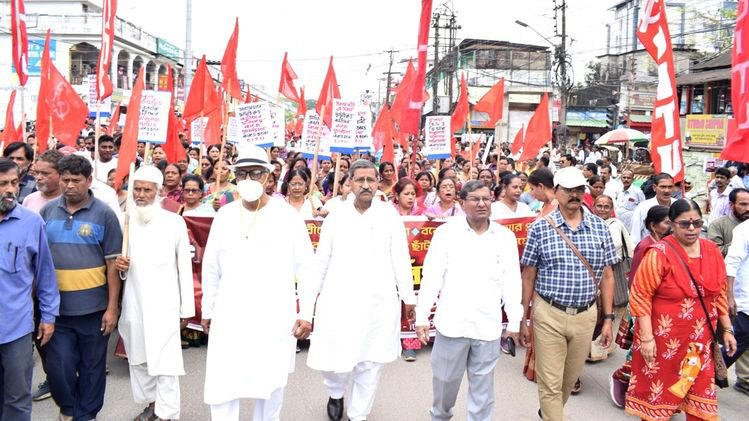
A former Chief Minister of Tripura has accused the Bharatiya Janata Party (BJP) of attempting to replicate its political strategy from Tripura in West Bengal. The leader claimed that the party is trying to influence voters through similar methods, which he described as an attempt to “trap the public” ahead of upcoming elections.
The remarks have added a new dimension to the ongoing political discourse in West Bengal. Moreover, they come at a time when political parties have intensified their campaigns and sharpened their narratives.
According to the former Tripura CM, the BJP’s approach in Bengal reflects patterns seen during its rise to power in Tripura.
Read More: Sherman Ali Ahmed gets TMC ticket from Mandia after Raijor Dal exit
Allegations of repeating Tripura model
The former Chief Minister stated that the BJP is using tactics in West Bengal that closely resemble its earlier campaign strategies in Tripura. He alleged that these methods include aggressive outreach, targeted messaging, and strategic alliances aimed at expanding voter support.
Furthermore, he argued that such strategies often create a perception of rapid change while masking deeper political objectives. He warned voters to remain cautious and evaluate promises carefully.
He also claimed that the BJP Tripura strategy Bengal approach focuses heavily on influencing public sentiment through large-scale campaigns and narratives.
Claims of “trapping” the public
A key point in the former CM’s statement was his claim that the BJP is attempting to “trap the public.” He suggested that the party presents attractive promises to gain support but may not deliver fully on them.
In addition, he emphasised the need for voters to critically assess political messages. He urged people to look beyond slogans and examine past performance.
According to him, understanding the broader implications of political strategies is essential for making informed decisions.
Therefore, his remarks aimed to raise awareness among voters as the election season progresses.
BJP’s response and counterarguments
The BJP has strongly rejected these allegations. Party leaders stated that their campaign in West Bengal focuses on development, governance, and public welfare.
They argued that comparing different states oversimplifies political realities. Moreover, they highlighted their achievements in Tripura and other states as evidence of effective governance.
BJP leaders also accused opposition parties of spreading misinformation to weaken their campaign. They maintained that their approach prioritises transparency and accountability.
As a result, the exchange of statements has intensified political debates in the region.
Political context in West Bengal
West Bengal remains one of the most politically dynamic states in India. Multiple parties continue to compete for influence, and election campaigns have become increasingly competitive.
The BJP has been working to expand its presence in the state, while the ruling party aims to retain its stronghold. Therefore, allegations and counter-allegations have become a common feature of the political landscape.
The statement by the former Tripura CM adds to this evolving narrative. It also reflects the broader strategy of opposition leaders to challenge the BJP’s expansion.
Importance of voter awareness
The remarks have once again highlighted the importance of voter awareness in a democratic system. Political analysts believe that informed voters play a crucial role in shaping election outcomes.
Therefore, citizens must evaluate policies, track records, and campaign promises carefully. Engaging in discussions and seeking reliable information can help voters make better choices.
Moreover, awareness initiatives and public debates contribute to a more transparent electoral process.
As the elections approach, voter engagement is expected to increase further.
Campaign strategies take centre stage
Campaign strategies have become a central aspect of modern elections. Parties use various tools, including rallies, digital campaigns, and grassroots outreach, to connect with voters.
The BJP Tripura strategy Bengal allegation highlights how political approaches can influence public perception. However, each state presents unique challenges and opportunities.
Therefore, parties must adapt their strategies to local conditions. At the same time, they must address key issues such as employment, development, and governance.
The effectiveness of these strategies will become clearer as the campaign progresses.
Challenges and political competition
The political battle in West Bengal is expected to remain intense. Parties will continue to compete for voter support through different narratives and promises.
Challenges such as economic concerns, infrastructure development, and social welfare remain key issues. Therefore, candidates must present clear plans to address these areas.
In addition, maintaining credibility and trust will be crucial for all parties. Voters are likely to scrutinise claims and demand accountability.
Thus, the competition is likely to intensify in the coming weeks.
Conclusion
The accusation by a former Tripura Chief Minister that the BJP is repeating its Tripura strategy in West Bengal has added a fresh dimension to the political discourse. While the BJP has dismissed these claims, the debate highlights the importance of campaign strategies in shaping voter perceptions.
As West Bengal moves closer to elections, political narratives will continue to evolve. Ultimately, the decision will rest with the voters, who will assess competing claims and choose their representatives.
The coming weeks will determine how these strategies and narratives influence the electoral outcome in one of India’s most closely watched political contests.
Read More: Manik Saha Backs Jahar Chakraborty Nomination for Dharmanagar