


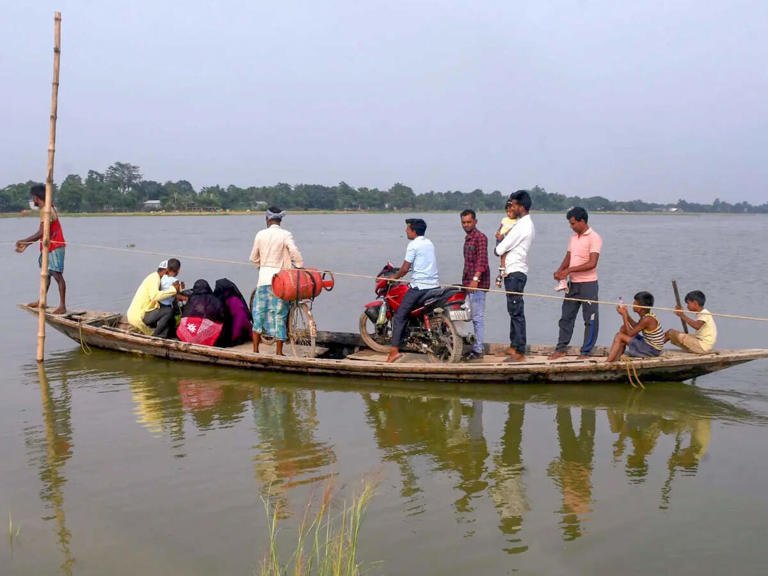
Four people were rescued after a raft capsized in a swollen river in Arunachal Pradesh amid heavy monsoon rains, while neighbouring Assam continued to battle widespread flooding that has disrupted normal life across several districts. The twin incidents underscore the challenges posed by relentless rainfall across the Northeast, where rising river levels, flash floods, and waterlogging have affected transportation, livelihoods, and public infrastructure.
The rescue operation in Arunachal Pradesh was carried out swiftly by local authorities and emergency responders after the raft overturned in the fast-flowing river. At the same time, Assam remained on high alert as floodwaters continued to inundate villages, agricultural land, and road networks, prompting ongoing rescue and relief operations by government agencies and the armed forces.
Officials in both states have appealed to residents to remain cautious, avoid venturing into swollen rivers, and strictly follow advisories issued by local administrations as the monsoon continues to impact the region.
Raft Capsizes in Overflowing River
The incident occurred when a raft carrying four individuals capsized while attempting to cross an overflowing river in Arunachal Pradesh. Continuous rainfall over the past several days had significantly increased the river’s water level and strengthened its current, making river crossings particularly hazardous.
According to officials, the raft lost balance in the turbulent waters before overturning, throwing all four occupants into the river. Witnesses immediately alerted local authorities, prompting a rapid emergency response.
Rescue personnel, assisted by local residents, launched an operation to locate and safely retrieve those who had fallen into the water.
The swift response proved crucial in preventing the situation from turning into a tragedy.
Successful Rescue Operation
Emergency teams managed to rescue all four individuals from the swollen river without any loss of life.
Officials stated that rescue personnel navigated the challenging water conditions using available rescue equipment while coordinating closely with local volunteers familiar with the river.
The rescued individuals were brought safely to shore and provided immediate medical examinations to ensure they had not sustained serious injuries during the incident.
Authorities confirmed that none of the rescued persons suffered life-threatening injuries, though they remained under observation as a precautionary measure.
The successful rescue highlighted the importance of timely emergency response and community cooperation during natural disasters.
Heavy Rainfall Increases River Levels
The incident comes amid persistent rainfall across Arunachal Pradesh, where several rivers and streams have experienced a sharp rise in water levels.
Meteorological conditions over recent days have contributed to strong river currents and increased the risk of flash floods in several districts.
Officials warned that continuous rainfall may further elevate river levels, making crossings increasingly dangerous for residents living in remote areas.
District administrations have urged people to avoid crossing rivers using temporary boats or rafts during periods of heavy rainfall and instead wait until water levels subside.
Authorities continue to monitor weather conditions closely while issuing regular advisories to vulnerable communities.
Assam Continues to Face Severe Flooding
While the rescue operation unfolded in Arunachal Pradesh, neighbouring Assam remained affected by one of the season’s most severe flood situations.
Heavy rainfall in upstream catchment areas and rising river levels have inundated numerous villages across several districts, affecting thousands of residents and disrupting daily life.
Floodwaters have submerged homes, roads, agricultural fields, educational institutions, and public infrastructure, forcing many families to move to relief camps established by the government.
Officials continue to monitor major rivers closely as fluctuating water levels remain a cause for concern across multiple districts.
The flood situation has also affected transportation and communication in several low-lying areas.
Rescue and Relief Operations Continue in Assam
State authorities, along with the National Disaster Response Force (NDRF), State Disaster Response Force (SDRF), Indian Army, and local administration, have intensified rescue and relief operations across flood-affected regions.
Boats have been deployed to evacuate stranded residents from inundated villages, while relief camps continue to provide temporary shelter, food, drinking water, medical assistance, and other essential services.
Special attention is being given to vulnerable groups, including children, elderly persons, pregnant women, and individuals requiring medical care.
Authorities have also positioned rescue teams strategically to respond quickly in case river levels rise further.
The coordinated efforts aim to minimise loss of life and ensure timely assistance to affected communities.
Agriculture and Infrastructure Hit by Floods
The ongoing floods have caused considerable damage to agricultural land across several districts in Assam.
Large areas of standing crops remain submerged, raising concerns about losses faced by farmers and the potential impact on rural livelihoods.
Roads, bridges, embankments, and public utilities have also suffered damage due to prolonged flooding and erosion.
Government departments have initiated preliminary assessments to evaluate the extent of damage and prepare rehabilitation plans for affected communities once floodwaters recede.
Officials stated that restoration of damaged infrastructure will remain a priority during the recovery phase.
Authorities Issue Safety Advisories
With rainfall expected to continue in parts of the Northeast, authorities in both Arunachal Pradesh and Assam have urged residents to exercise extreme caution.
People have been advised to avoid crossing swollen rivers, stay away from fast-flowing streams, and refrain from travelling through flood-affected areas unless absolutely necessary.
District administrations are continuously disseminating weather updates and flood warnings through various communication channels to ensure public awareness.
Emergency response teams remain on standby to address any additional incidents arising from deteriorating weather conditions.
Officials emphasised that public cooperation is essential for ensuring safety during the ongoing monsoon season.
Continuous Monitoring of Weather and River Levels
Government agencies are maintaining close surveillance over rainfall patterns, river levels, and flood-prone locations throughout the Northeast.
Disaster management authorities are working in coordination with meteorological agencies to monitor developments and issue timely alerts whenever necessary.
Rescue equipment, boats, emergency supplies, and response personnel have been strategically deployed to ensure rapid intervention in areas facing heightened flood risks.
Authorities stated that preparedness measures will continue to be strengthened as weather conditions evolve over the coming days.
Government Focuses on Public Safety
Both the Arunachal Pradesh and Assam governments have reaffirmed their commitment to safeguarding lives and providing all necessary assistance during the ongoing monsoon season.
Officials have instructed district administrations to remain vigilant, maintain emergency response readiness, and ensure uninterrupted relief operations wherever required.
The successful rescue in Arunachal Pradesh and the continued relief efforts in Assam demonstrate the coordinated response of government agencies, emergency personnel, and local communities in addressing weather-related emergencies.
Authorities have also stressed the importance of community awareness and adherence to official advisories in preventing avoidable accidents.
Vigilance Remains Key During the Monsoon
The rescue of four individuals from an overflowing river in Arunachal Pradesh serves as a timely reminder of the dangers posed by swollen rivers during the monsoon. At the same time, Assam’s continuing battle against widespread flooding highlights the broader challenges confronting the Northeast as heavy rainfall persists across the region.
With emergency services remaining on high alert, authorities continue to prioritise rescue operations, humanitarian assistance, and disaster preparedness. As weather conditions remain unpredictable, sustained coordination among government agencies, disaster response forces, and local communities will be essential to protecting lives, reducing risks, and supporting affected populations until normal conditions are restored.