

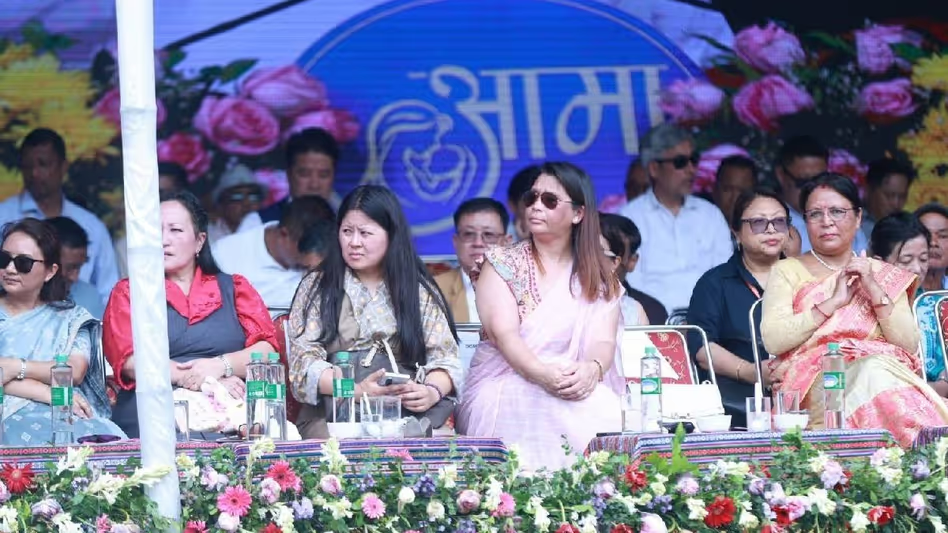
On Sikkim Aama Samman Diwas, 210 women were honoured for their contributions, while the state launched Nari Adalat to champion gender justice and empower women across Sikkim.
Sikkim Aama Samman Diwas Celebrates Women, Launches Nari Adalat for Gender Justice
In a remarkable step towards acknowledging women’s contribution to society and ensuring their legal empowerment, the state of Sikkim celebrated Aama Samman Diwas with grandeur and purpose. Held in the state capital, the event honoured 210 outstanding women from across districts, recognising their roles in community building, cultural preservation, education, and social service.
The highlight of the day was the launch of Nari Adalat, a women-led judicial platform designed to address gender-based issues, promote justice, and provide a safe space for women to resolve disputes.
Aama Samman Diwas: A Tribute to the Backbone of Sikkim
Sikkim Aama Samman Diwas — literally “Mother’s Honour Day” — is an initiative of the state government to publicly acknowledge the hard work, sacrifices, and achievements of women, particularly mothers, in the community.
At the ceremony, Chief Minister [Name] addressed the gathering, noting that “the progress of any state is deeply tied to the empowerment and recognition of its women.” He stressed that Sikkim Aama Samman Diwas is not just a symbolic gesture, but a call to create opportunities for women to thrive in every sector.
Each of the 210 awardees was presented with a certificate of honour, a cash incentive, and a shawl, symbolising respect and gratitude. The women hailed from varied backgrounds — farmers, teachers, self-help group leaders, health workers, artisans, and social activists.
The Launch of Nari Adalat: A Game-Changer for Gender Justice
The second major announcement of the day was the inauguration of Nari Adalat. This initiative aims to decentralise access to justice for women, particularly in rural and remote areas.
Key objectives of Nari Adalat include:
- Offering free legal advice to women facing domestic violence, workplace harassment, property disputes, and other gender-related cases.
- Creating a panel of trained women mediators from local communities.
- Collaborating with police, legal services authorities, and women’s rights organisations.
- Ensuring culturally sensitive conflict resolution while protecting women’s dignity and safety.
Officials explained that the Nari Adalat will operate at the panchayat level, enabling swift, empathetic, and community-driven justice.
Empowerment Through Recognition
Recognition can be a powerful motivator. For many of the honourees, Sikkim Aama Samman Diwas was the first time their work had been celebrated on such a public stage.
Take, for example, Maya Tamang, a farmer from East Sikkim who has been promoting organic agriculture for over 15 years. She expressed her gratitude, saying, “This recognition is not just for me — it’s for every woman who works quietly behind the scenes. Today, I feel seen.”
Similarly, Anita Lepcha, a primary school teacher in a remote village, said that the award reinforced her belief that small contributions matter in building a stronger Sikkim.
Linking Cultural Pride with Gender Equality
Sikkim Aama Samman Diwas also served as a platform to highlight the role of women in preserving the state’s rich cultural heritage. Many of the awardees are custodians of traditional crafts like Lepcha weaving, Bhutia textile art, and Limboo folk singing.
By honouring these women, the government signaled that cultural preservation is an equally important aspect of empowerment. In fact, Nari Adalat panels are expected to include cultural leaders to ensure that dispute resolutions respect local traditions while upholding women’s rights.
Policy Backing for Women’s Empowerment
The event was not merely ceremonial — it was also policy-oriented. Alongside the awards and Nari Adalat launch, the government announced several women-focused initiatives:
- Expanding skill development programs for rural women.
- Providing financial support to women entrepreneurs through low-interest loans.
- Integrating gender sensitivity training into all government departments.
The Chief Minister assured that Sikkim Aama Samman Diwas will be an annual event, and the Nari Adalat framework will expand to every block within the next two years.
Public Response and Future Expectations
The celebration was widely welcomed by community members, activists, and civil society organisations. Women’s rights advocates hailed Sikkim Aama Samman Diwas as a step towards changing public perception about women’s roles.
However, some also urged the government to ensure that Nari Adalat is not just symbolic but is given the resources and authority needed to be effective. Transparency in case handling, proper training for mediators, and regular monitoring were highlighted as crucial.
The Broader Impact of Sikkim Aama Samman Diwas
The significance of the day extends beyond individual recognition. By combining Sikkim Aama Samman Diwas with the launch of Nari Adalat, the state government tied celebration to systemic reform.
This dual approach — honour plus empowerment — could serve as a model for other states aiming to address gender inequality at both societal and institutional levels.
A Vision for Gender-Just Sikkim
The Chief Minister concluded his speech by stating that the government’s vision is for Sikkim to be a model state for gender equality in India. With Sikkim Aama Samman Diwas celebrating women’s achievements and Nari Adalat safeguarding their rights, the state hopes to inspire similar initiatives nationwide.
For now, the smiling faces of 210 honoured women, holding their certificates with pride, are a testament to the fact that recognition and justice can go hand in hand.
Read More: Citizen Action Party in Sikkim Grapples with Sudden Leadership Vacuum