


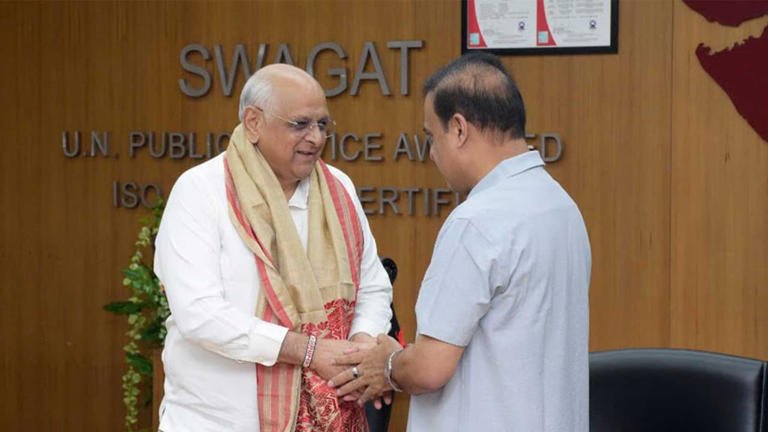
Gujarat Chief Minister has briefed Assam Chief Minister Himanta Biswa Sarma on the state’s SWAGAT Online system, highlighting the e-governance platform’s role in strengthening public grievance redressal and improving communication between citizens and the government.
The interaction focused on Gujarat’s experience with the SWAGAT Online initiative and the manner in which technology has been used to make grievance redressal more accessible, transparent and efficient.
Himanta Biswa Sarma was briefed on the functioning of the system and the processes involved in receiving, monitoring and addressing grievances through the digital platform.
Gujarat CM Explains SWAGAT Online System
The Gujarat Chief Minister provided an overview of the SWAGAT Online system and its use as a technology-driven mechanism for handling public grievances.
The platform is designed to enable citizens to submit grievances and allow authorities to track and address them through an organised digital process. The system also aims to improve coordination between different levels of the administration.
By bringing grievance-related information onto a digital platform, the initiative seeks to make the process more transparent and enable closer monitoring of cases.
The discussion with the Assam Chief Minister focused on how the system could help improve governance and strengthen direct engagement between the administration and citizens.
Focus on Technology-Driven Governance
The exchange between the two chief ministers highlighted the growing importance of technology in public administration.
Digital platforms are increasingly being used by governments to improve service delivery, streamline administrative processes and provide citizens with easier access to government services.
The SWAGAT Online system represents Gujarat’s approach to using digital technology for public grievance redressal and administrative monitoring.
During the interaction, attention was given to the potential benefits of technology-based systems in ensuring that public grievances are recorded, tracked and addressed in a structured manner.
Himanta Biswa Sarma Learns About Gujarat’s Model
Assam Chief Minister Himanta Biswa Sarma was briefed on Gujarat’s experience in implementing and managing the online grievance redressal mechanism.
The discussion could help facilitate the exchange of best practices between the two states in areas related to e-governance and public service delivery.
State governments have increasingly looked at successful governance models adopted elsewhere as they explore ways to improve administrative efficiency and citizen services.
The interaction between the Gujarat and Assam leadership reflects this broader trend of sharing experiences and innovations across states.
SWAGAT Online and Public Grievance Redressal
Public grievance redressal remains an important component of effective governance, with citizens often relying on government mechanisms to raise concerns related to public services and administration.
Technology-driven platforms can help streamline this process by allowing complaints to be recorded digitally and monitored at different administrative levels.
The SWAGAT Online system is aimed at providing such a structured mechanism, while also helping authorities track the status of grievances and ensure accountability.
The briefing highlighted the role such systems can play in improving transparency and making the government more responsive to public concerns.
Scope for Sharing E-Governance Best Practices
The interaction between the Gujarat Chief Minister and Himanta Biswa Sarma could contribute to a wider exchange of governance practices between Gujarat and Assam.
As state governments continue to expand the use of digital platforms, successful models of grievance redressal and service delivery may offer useful lessons for other administrations.
The discussion on SWAGAT Online underlined the potential of technology to improve administrative systems and strengthen citizen-government interaction.
With both states continuing to focus on digital governance, the exchange of ideas and best practices could support further innovation in public administration and help improve the delivery of government services.