


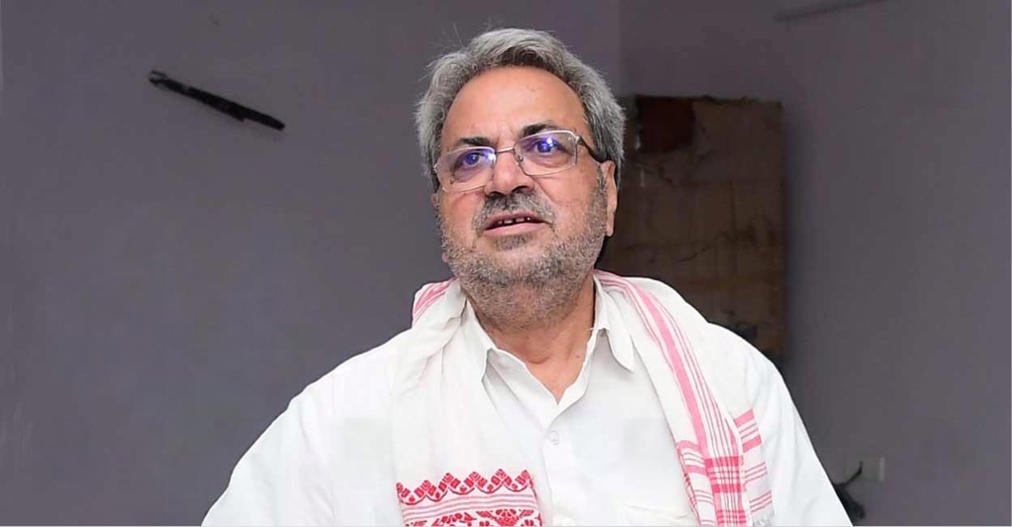
Former Kerala Chief Electoral Officer Teeka Ram Meena has alleged that Chief Election Commissioner Gyanesh Kumar acted unilaterally while making changes to the electoral-roll process. Meena also said Kumar should resign if he has lost the public’s trust.
The remarks come amid a growing controversy over the functioning of the three-member Election Commission of India. The dispute centres on reported objections raised by Election Commissioners Sukhbir Singh Sandhu and Vivek Joshi over several decisions linked to electoral rolls and the Special Intensive Revision (SIR).
Former Kerala CEO Questions Unilateral Decisions
Meena, who served as Kerala’s Chief Electoral Officer, said the Election Commission is a multi-member body and should take decisions collectively.
According to him, the Chief Election Commissioner does not have the authority to take unilateral decisions on matters that fall within the Commission’s statutory framework. He argued that the majority view should prevail when the three members disagree.
Therefore, Meena said the manner in which some decisions were allegedly taken raises questions about the functioning of the poll panel.
Dispute Over Form 6 Changes
One of the key issues raised by Meena concerns Form 6, which is used by citizens to apply for inclusion in electoral rolls.
Meena alleged that changes were introduced to the form without following the required legal procedure. He claimed that the changes had statutory implications and could not simply be introduced through an executive order.
According to Meena, changes to the prescribed form require the appropriate legal process under the Representation of the People Act, 1950, and the Registration of Electors Rules, 1960.
Meena Had Earlier Written to Gyanesh Kumar
Meena also said he had written to Gyanesh Kumar last year after concerns emerged about the Election Commission’s functioning.
He said he subsequently wrote to Election Commissioners Sukhbir Singh Sandhu and Vivek Joshi as well. Meena claimed that the two commissioners later began formally questioning some of Kumar’s decisions.
These claims come against reports that Sandhu and Joshi recorded objections on multiple occasions over decisions involving voter registration, electoral-roll data and other procedures.
Former CEO Calls for Kumar’s Resignation
Meena has also called for Kumar’s resignation.
He said that if the Chief Election Commissioner has lost public confidence, he should not continue in office. At the same time, Meena’s statement represents his assessment of the situation and does not itself establish that Kumar violated the law.
The question of resignation has also become a major political issue. Several opposition parties have separately demanded Kumar’s removal amid the controversy.
Demand to Review Kumar’s Earlier Decisions
Meena went further and called for the Election Commission to review decisions taken by Kumar in recent years.
He argued that decisions allegedly taken without proper consultation should be examined and, where necessary, invalidated.
He also said the Commission should follow a majority-based decision-making process. This point has gained attention because the current three-member structure allows decisions to be settled by majority when unanimity is not possible.
Election Commission’s Position
The Election Commission has maintained a different position regarding the reported disagreements.
According to the poll body, discussions and differences of opinion are part of deliberations within a constitutional body. It has said that final decisions of the Commission were approved unanimously by all three commissioners.
This creates an important distinction between internal objections and final Commission decisions. A recorded objection by an Election Commissioner, by itself, does not establish that a final decision was legally invalid.
Political Debate Intensifies
The controversy has now drawn criticism from several opposition leaders and former election officials.
The debate centres on how the Election Commission should exercise its powers and how disagreements between its members should be handled. It also involves questions about transparency in electoral-roll management and changes to voter-registration procedures.
Meanwhile, opposition parties are considering parliamentary action against Kumar. The government and the Election Commission have disputed allegations that the poll panel’s decisions were taken outside the established decision-making process.
Focus on Electoral Commission’s Decision-Making
Meena’s comments have added to the debate over the internal functioning of the Election Commission.
His allegations concerning Form 6 and other procedures will need to be assessed against the applicable election laws, official records and the Election Commission’s response. At present, the legality of the disputed actions remains a matter of contention rather than an established finding.
As the controversy continues, scrutiny is likely to remain focused on the role of the Chief Election Commissioner, the authority of the other Election Commissioners and the procedures followed while making decisions on electoral rolls.