


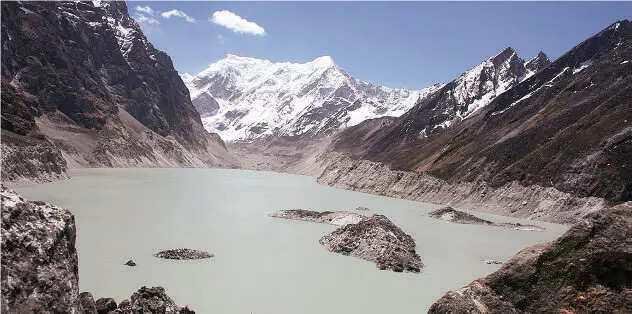
Growing concerns over climate change and the increasing vulnerability of the Himalayan ecosystem have brought renewed attention to high-risk glacial lakes in Arunachal Pradesh, with a recent assessment identifying several lakes that could pose a potential threat to downstream communities and infrastructure.
A study assessing 127 glacial lakes in the state has classified two lakes as being at high risk of a possible Glacial Lake Outburst Flood (GLOF), while 36 others have been categorised as medium-risk. The findings underline the growing need for continuous monitoring and stronger disaster preparedness in the ecologically sensitive Himalayan state.
Two Lakes Classified as High Risk
The assessment of glacial lakes in Arunachal Pradesh has raised concerns about the potential consequences of rapidly changing climatic conditions in the eastern Himalayas.
Of the 127 lakes assessed, two have been identified as high-risk, meaning they require close and sustained monitoring because of their potential vulnerability to an outburst. Another 36 lakes have been placed in the medium-risk category, indicating that a significant number of glacial water bodies could require further scientific assessment and risk mitigation measures.
A Glacial Lake Outburst Flood occurs when a natural barrier containing a glacial lake fails, resulting in the sudden release of a large volume of water, debris and sediment downstream. Such events can cause extensive destruction to villages, roads, bridges, hydropower projects and other infrastructure located along river valleys.
Climate Change Raises Himalayan Risks
Scientists and disaster management experts have increasingly warned that climate change is accelerating glacier retreat across the Himalayan region, contributing to the formation and expansion of glacial lakes.
Rising temperatures can increase glacier melting, causing more water to accumulate behind fragile natural barriers formed by ice, rocks or moraine. These barriers may become unstable due to heavy rainfall, avalanches, landslides, earthquakes or sudden inflows of water and debris.
A recent scientific assessment of the wider Himalaya-Karakoram region noted that warming temperatures are contributing to the formation and expansion of glacial lakes, increasing concerns over the risk of GLOFs. Extreme precipitation and ice or rock avalanches are among the major triggers that can lead to such disasters.
The latest findings in Arunachal Pradesh therefore add to wider concerns about the growing vulnerability of communities living in Himalayan river basins.
Vulnerable Downstream Communities Face Potential Threat
The danger posed by high-risk glacial lakes extends far beyond remote mountain areas. In the event of a sudden outburst, enormous volumes of water can travel rapidly through steep Himalayan valleys, posing a serious threat to settlements and infrastructure downstream.
Arunachal Pradesh’s mountainous terrain and extensive river systems make disaster preparedness particularly important. Roads, bridges, hydropower projects and remote communities situated along river valleys could be vulnerable to sudden flooding triggered by a glacial lake outburst.
The recent catastrophic flood disaster in the Himalayan region has further intensified discussions about the need for improved monitoring of glaciers and glacial lakes. International experts have warned that climate-driven changes could make glacial flood risks increasingly severe across the Himalayas in the coming years.
Need for Continuous Monitoring and Early Warning Systems
The identification of high-risk glacial lakes highlights the importance of combining scientific monitoring with effective early warning mechanisms.
Remote sensing, satellite observations and field assessments can help authorities track changes in lake size, glacier retreat and the stability of natural barriers. However, experts have stressed that monitoring alone may not be sufficient without reliable systems capable of warning downstream communities in the event of an emergency.
The Centre has already been working to strengthen early warning systems for vulnerable glacial lakes across the Indian Himalayan Region, with several high-risk lakes identified for enhanced disaster preparedness measures.
For Arunachal Pradesh, improved coordination between scientific agencies, disaster management authorities and local administrations will be crucial to reducing the potential impact of any future GLOF event.
Disaster Preparedness Becomes a Growing Priority
The latest assessment is a reminder that climate-related risks are becoming an increasingly important challenge for Himalayan states.
While the identification of a lake as high-risk does not necessarily mean that an outburst is imminent, it signals the need for greater vigilance, scientific assessment and preparedness. Regular field surveys and real-time monitoring could help authorities identify warning signs and take preventive measures where necessary.
Experts believe that strengthening early warning systems, improving evacuation plans and ensuring that vulnerable communities are aware of potential risks will be essential components of Arunachal Pradesh’s disaster management strategy.
Focus on Long-Term Climate Resilience
The identification of high-risk glacial lakes in Arunachal Pradesh comes amid wider concerns about the long-term effects of climate change on the Himalayas.
As glaciers continue to retreat and glacial lakes evolve, the challenge for governments and disaster management agencies will be to ensure that scientific warnings are translated into timely action.
With two lakes already classified as high-risk and 36 placed in the medium-risk category, the findings underline the importance of sustained monitoring and long-term climate resilience measures.
For Arunachal Pradesh, strengthening preparedness today could play a critical role in protecting lives, communities and vital infrastructure from the potentially devastating consequences of future glacial lake outburst floods.