


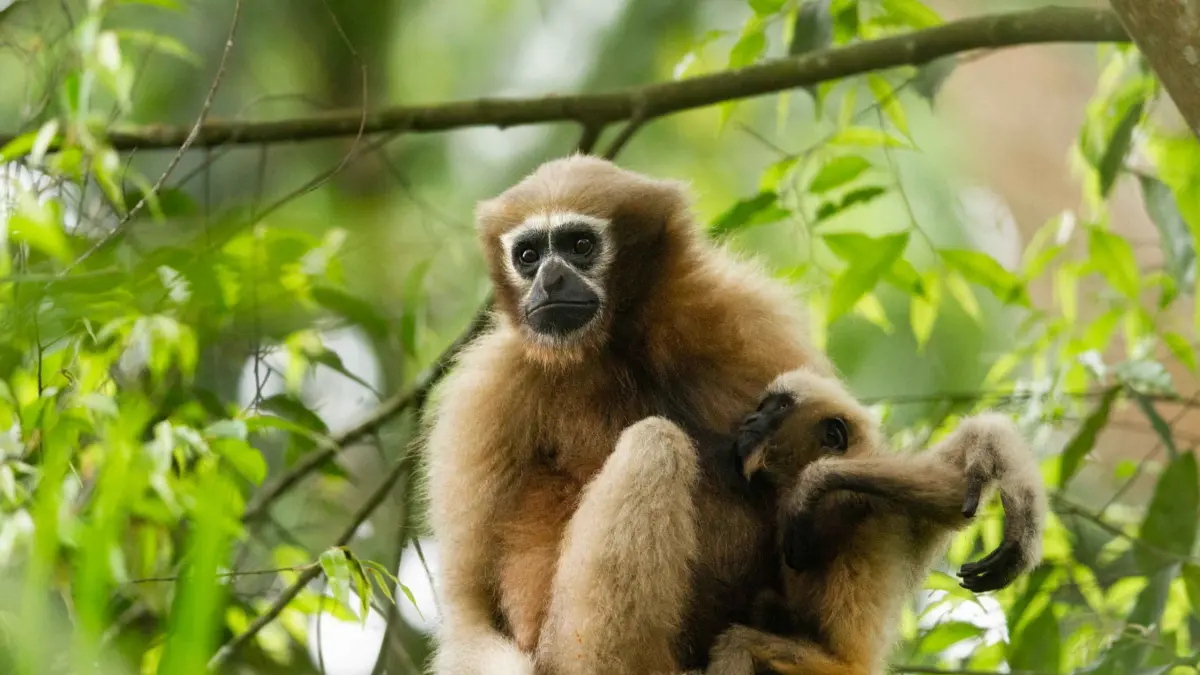
Hoolock Gibbons Cross Assam conservation canopy bridge in a significant wildlife protection breakthrough inside Hollongapar Gibbon Sanctuary. According to forest officials, endangered hoolock gibbons successfully used the newly constructed railway overpass canopy designed to protect the primates from electrocution and habitat fragmentation.
Meanwhile, wildlife conservationists described the development as a major success for biodiversity protection efforts in Assam. Consequently, environmental experts and forest authorities praised the innovative infrastructure project aimed at improving safe movement for endangered species within the sanctuary.
WBCHSE Declares Class Twelve Merit Results
Chandra Mohan Patowary Takes Pro Tem Oath
New Canopy Bridge Supports Wildlife Protection
According to officials, conservation authorities installed the canopy bridge above railway tracks passing through Hollongapar Gibbon Sanctuary to reduce risks faced by endangered primates.
Additionally, forest officials confirmed that hoolock gibbons recently used the overhead structure successfully during movement across forest sections. Consequently, the project achieved an important milestone in ongoing wildlife conservation efforts within the sanctuary.
Meanwhile, environmental experts noted that railway lines and electrical infrastructure often threaten arboreal species living in fragmented forest habitats.
Furthermore, conservation groups stated that safe canopy connectivity remains essential for protecting species that depend heavily on uninterrupted tree cover.
Sanctuary Holds Critical Ecological Importance
The Hoolock Gibbons Cross Assam development has drawn widespread attention because Hollongapar Gibbon Sanctuary remains one of the most important habitats for endangered hoolock gibbons in India.
According to wildlife researchers, the sanctuary supports diverse species of mammals, birds, reptiles, and forest vegetation. Additionally, hoolock gibbons represent India’s only ape species, making their conservation highly significant for regional biodiversity.
Consequently, authorities have increased focus on habitat protection and ecological restoration initiatives inside the sanctuary.
Meanwhile, conservationists emphasized that habitat fragmentation and infrastructure expansion continue creating serious risks for wildlife populations in several northeastern forest zones.
At the same time, researchers stressed the importance of balancing development projects with ecological sustainability measures.
Officials Highlight Conservation Innovation
According to forest department officials, the canopy overpass forms part of broader conservation strategies designed to reduce wildlife casualties near railway tracks and electrical systems.
Additionally, experts stated that arboreal bridges help primates move safely without descending to the ground, where they face threats from vehicles, predators, and human activity. Consequently, similar projects may receive consideration in other ecologically sensitive regions.
Meanwhile, wildlife organizations praised the collaborative efforts involving forest authorities, engineers, and conservation specialists.
Furthermore, environmental analysts observed that innovative conservation infrastructure has become increasingly important as transportation networks expand near protected forests.
Electrocution Risks Previously Raised Concerns
The Hoolock Gibbons Cross Assam success followed longstanding concerns regarding electrocution risks and habitat disruption affecting primates inside the sanctuary.
According to conservation reports, hoolock gibbons and other arboreal animals previously faced difficulties crossing fragmented forest patches separated by railway lines and utility infrastructure.
Additionally, wildlife activists repeatedly demanded stronger safety measures to reduce animal deaths and preserve natural movement corridors. Consequently, authorities accelerated efforts to introduce canopy connectivity systems within vulnerable areas.
Meanwhile, experts noted that habitat fragmentation remains one of the biggest threats facing endangered wildlife species worldwide.
At the same time, researchers stressed that preserving ecological corridors remains essential for long-term species survival and genetic diversity.
Conservationists Welcome Positive Development
According to environmental groups, the successful use of the canopy bridge represents an encouraging example of practical wildlife conservation in northeastern India.
Additionally, conservation experts stated that visible success stories can strengthen public awareness regarding biodiversity protection and habitat preservation. Consequently, the project has received praise from wildlife advocates and ecological researchers.
Meanwhile, local communities and environmental volunteers welcomed the development while urging continued protection of Assam’s forest ecosystems.
Furthermore, analysts observed that conservation projects often gain stronger public support when authorities demonstrate measurable positive outcomes for endangered species.
Assam Continues Wildlife Protection Efforts
The Hoolock Gibbons Cross Assam breakthrough highlights Assam’s continuing focus on wildlife conservation and ecological management.
According to forest officials, authorities are expanding monitoring systems and habitat protection measures across several protected zones in the state. Additionally, conservation departments continue coordinating with environmental organizations to improve biodiversity management strategies.
Consequently, wildlife protection initiatives involving endangered species, forest corridors, and habitat restoration have gained increasing administrative attention.
Meanwhile, experts emphasized that long-term conservation success depends on sustained funding, scientific monitoring, and public participation.
At the same time, researchers encouraged continued investment in innovative ecological solutions to reduce human-wildlife conflict and environmental risks.
Conclusion
Hoolock Gibbons Cross Assam canopy bridge in a major conservation achievement inside Hollongapar Gibbon Sanctuary, where endangered primates successfully used the newly installed railway overpass structure. Meanwhile, forest officials and wildlife experts described the project as an important step toward reducing electrocution risks and preserving natural habitat connectivity.
Furthermore, the development has strengthened discussions regarding sustainable infrastructure and biodiversity protection in ecologically sensitive regions. As conservation efforts continue across Assam, environmental groups and researchers are expected to closely monitor the long-term impact of the canopy bridge initiative.
FAQs
Where was the canopy bridge installed?
Authorities installed the bridge inside Hollongapar Gibbon Sanctuary.
Which animals used the conservation bridge?
Endangered hoolock gibbons successfully used the canopy structure.
Why was the bridge constructed?
Officials built the bridge to reduce electrocution risks and improve safe movement for primates.
Why are hoolock gibbons important?
Hoolock gibbons are India’s only ape species and remain endangered.
What threat did the primates face earlier?
Railway lines, electrical systems, and habitat fragmentation created major risks for the animals.
Why is the Hoolock Gibbons Cross Assam development significant?
The Hoolock Gibbons Cross Assam success highlights innovative wildlife conservation efforts in Assam.