


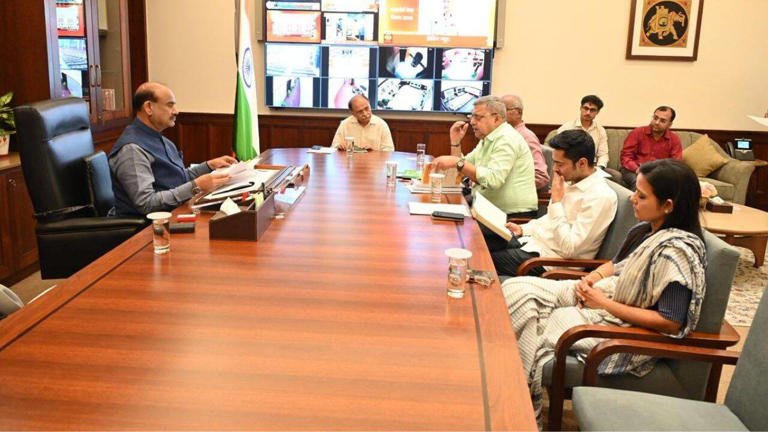
Trinamool Congress (TMC) national general secretary Abhishek Banerjee has filed disqualification petitions against rebel Members of Parliament, expressing confidence that the Speaker will take an impartial view of the matter and deliver justice in accordance with constitutional provisions. The move marks a significant escalation in the party’s response to the actions of lawmakers who have reportedly distanced themselves from the party’s official position and organizational structure.
Speaking on the issue, Banerjee stated that the party has followed the constitutional and legal route available under the anti-defection framework and now expects the competent authority to examine the matter. He emphasized that the petitions were filed to uphold democratic principles and party discipline.
The development has drawn considerable political attention, as it comes amid growing discussions regarding internal party unity, parliamentary accountability, and the application of anti-defection laws. Political observers believe the matter could have important implications for both the party and the lawmakers involved.
The petitions are expected to be examined through established parliamentary procedures, with the Speaker playing a key role in determining the course of action.
Disqualification Pleas Submitted Under Anti-Defection Provisions
The petitions filed by the TMC leadership are linked to provisions contained in the anti-defection law, which seeks to prevent elected representatives from switching political loyalties after securing election on a party ticket.
The anti-defection framework was introduced to maintain political stability and ensure that elected representatives remain accountable to the political parties under whose banner they were elected. The law provides mechanisms for examining cases where lawmakers are alleged to have voluntarily given up party membership or acted against official party directives.
According to party leaders, the petitions argue that the conduct of the rebel MPs warrants examination under these provisions. The matter will now proceed through the appropriate parliamentary process.
Legal experts note that disqualification cases often involve detailed examination of facts, political conduct, public statements, and organizational affiliations before any decision is reached.
The Speaker’s office is responsible for reviewing the petitions and taking action based on constitutional and legal considerations.
Abhishek Banerjee Expresses Confidence in Constitutional Process
While speaking about the issue, Banerjee expressed confidence in the parliamentary process and stated that the party expects a fair outcome. He remarked that the TMC has placed its concerns before the Speaker and hopes justice will be delivered in accordance with established rules.
The TMC leader emphasized that the party’s decision was guided by institutional mechanisms rather than political confrontation. According to him, democratic institutions exist to address disputes through lawful procedures, and the party remains committed to respecting those processes.
Banerjee reiterated that elected representatives are expected to uphold the mandate received from voters under a particular party symbol. He argued that adherence to party principles and commitments remains an important aspect of democratic accountability.
His comments reflected the party’s broader position that organizational discipline and constitutional procedures should guide the resolution of political disputes.
Internal Differences Come to the Forefront
The controversy has highlighted internal differences that have emerged within the party in recent months. Rebel lawmakers have reportedly taken positions that differ from the official stance adopted by the TMC leadership, leading to growing tensions within the organization.
Political parties often face challenges related to internal dissent, particularly when lawmakers and leaders express differing opinions on organizational matters. In some cases, such disagreements remain internal, while in others they evolve into larger political disputes.
The current situation has attracted attention because of the prominence of the individuals involved and the potential implications for parliamentary representation. Analysts note that disputes involving elected representatives often generate significant public and political interest.
The TMC leadership has maintained that party discipline remains essential for ensuring organizational coherence and effective political functioning.
Anti-Defection Law Remains Central to Debate
The latest development has once again brought the anti-defection law into public discussion. Since its introduction, the law has played an important role in shaping India’s political landscape by addressing issues related to party loyalty and legislative stability.
Supporters of the law argue that it prevents opportunistic political shifts and helps preserve the integrity of electoral mandates. They contend that voters elect representatives based on party platforms, making party allegiance an important democratic consideration.
Critics, however, have occasionally raised concerns about the impact of anti-defection provisions on individual political expression and legislative independence.
Despite differing viewpoints, the law remains a significant mechanism for addressing disputes involving party membership and political conduct. The outcome of the current petitions will therefore be closely watched by political observers and legal experts alike.
Political Implications for the Trinamool Congress
The disqualification pleas come at a time when political developments within parties are receiving increased scrutiny. For the Trinamool Congress, maintaining organizational unity remains an important objective, particularly as it continues to play a major role in national and state-level politics.
Party leaders believe that addressing internal challenges through constitutional mechanisms demonstrates institutional maturity and respect for democratic norms. By pursuing legal remedies, the party seeks to reinforce its position on discipline and accountability.
Observers note that internal disputes can influence public perceptions and organizational dynamics. Political parties often attempt to resolve such issues while ensuring that their broader agenda remains unaffected.
The TMC leadership has indicated that it remains focused on its political priorities while allowing constitutional authorities to address the current matter.
Speaker’s Role Under Parliamentary Procedures
The Speaker occupies a central position in cases involving disqualification petitions. Under the anti-defection framework, the Speaker is empowered to examine complaints, review evidence, and determine whether the circumstances justify action under the law.
Legal experts point out that such proceedings require careful evaluation of facts and legal arguments. Decisions are typically based on documentary evidence, public conduct, organizational records, and relevant constitutional provisions.
The process may involve submissions from both the petitioners and the lawmakers against whom complaints have been filed. The Speaker’s decision can have significant implications for parliamentary representation and party strength.
Banerjee’s remarks emphasizing hope for justice reflect the importance of the Speaker’s role as the constitutional authority responsible for adjudicating such matters.
Broader Discussion on Party Discipline
The issue has also revived broader discussions regarding party discipline in parliamentary democracy. Political parties rely on internal cohesion to advance policies, implement programmes, and maintain organizational effectiveness.
Supporters of strong party discipline argue that elected representatives should remain aligned with the commitments made to voters during elections. They believe that maintaining consistency between electoral promises and legislative conduct is important for democratic accountability.
Others emphasize the importance of internal debate and differing viewpoints within political organizations. Balancing party unity with individual expression remains an ongoing challenge in democratic systems.
The current controversy illustrates how disagreements within political parties can evolve into larger constitutional and legal questions.
Opposition and Political Reactions
The development has prompted reactions from various political quarters. While the TMC has defended its decision to seek disqualification, other political actors have offered differing interpretations of the dispute.
Political observers expect the issue to remain part of public debate as proceedings move forward. Discussions surrounding party loyalty, parliamentary conduct, and constitutional provisions are likely to continue in the coming weeks.
The matter also reflects the increasingly dynamic nature of contemporary politics, where organizational disputes often attract significant public attention and media scrutiny.
Regardless of political viewpoints, most observers agree that the constitutional process will play a decisive role in determining the outcome.
Awaiting the Speaker’s Decision
With the disqualification petitions now formally submitted, attention has shifted to the Speaker’s office and the procedures that will follow. The TMC leadership, led by Abhishek Banerjee, has made it clear that it expects the matter to be resolved through established constitutional channels.
By filing the petitions, the party has sought to address what it views as a challenge to organizational discipline and electoral accountability. The Speaker’s eventual decision will determine the future course of the dispute and may carry significant political consequences.
For now, the issue remains under parliamentary consideration. As legal and constitutional processes unfold, political observers, party workers, and the public will closely watch developments. Banerjee’s statement expressing hope for justice reflects the party’s expectation that the matter will be resolved through institutional mechanisms and in accordance with the principles of parliamentary democracy.