


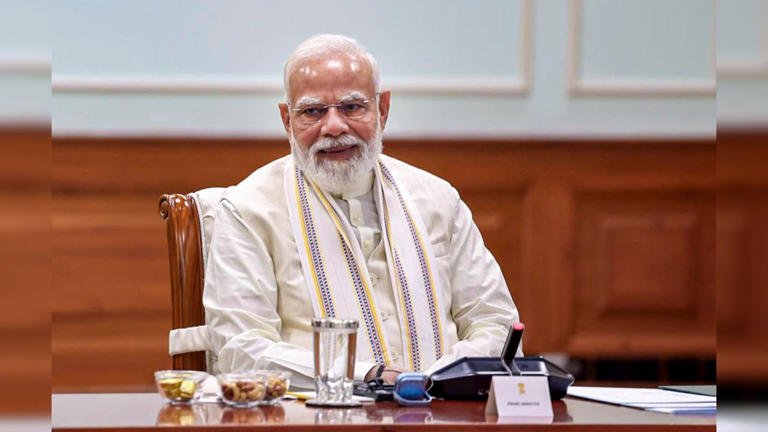
Prime Minister Narendra Modi has said that India is working in mission mode to strengthen its capabilities in critical minerals and semiconductor manufacturing, emphasizing that the country is determined to reduce its dependence on foreign sources for strategic resources and advanced technologies.
Addressing an event focused on India’s industrial and technological growth, the Prime Minister highlighted the importance of securing supply chains and building domestic capacities in sectors that are crucial for the country’s economic future. He noted that critical minerals and semiconductors have become indispensable components of modern industries, ranging from electronics and telecommunications to renewable energy, electric vehicles, and defense manufacturing.
According to Modi, India’s efforts in these sectors form a key part of the broader vision of achieving self-reliance while positioning the country as a major player in global manufacturing and technology ecosystems.
Critical Minerals Key to Future Growth
Prime Minister Modi emphasized that critical minerals have emerged as strategic resources in the modern global economy. Minerals such as lithium, cobalt, nickel, graphite, and rare earth elements are essential for manufacturing batteries, renewable energy systems, electronics, and advanced industrial equipment.
He pointed out that growing global demand for clean energy technologies and electric vehicles has significantly increased the importance of securing reliable supplies of these minerals. Countries around the world are investing heavily in exploration, processing, and supply chain development to ensure long-term access to critical resources.
India, the Prime Minister said, has recognized the strategic importance of critical minerals and is taking proactive measures to strengthen domestic capabilities. These efforts include exploration initiatives, international partnerships, and policies aimed at improving access to essential raw materials.
By developing a robust critical minerals ecosystem, India aims to support its industrial ambitions while reducing vulnerabilities associated with external supply disruptions.
Semiconductor Manufacturing Receives Major Push
Semiconductors have become the backbone of the digital economy, powering everything from smartphones and computers to automobiles, medical devices, and telecommunications networks. The Prime Minister noted that disruptions in global semiconductor supply chains over recent years have highlighted the need for countries to build domestic manufacturing capabilities.
Modi stated that India is making significant progress in establishing a semiconductor ecosystem through targeted policy support, investment incentives, and partnerships with global technology companies. The government has launched various initiatives to attract semiconductor manufacturers and encourage investments in chip fabrication, packaging, testing, and design facilities.
The Prime Minister emphasized that semiconductor manufacturing is not only important for technological self-reliance but also for economic growth, employment generation, and innovation. Building a domestic semiconductor industry can help India strengthen its position in global technology value chains.
He added that efforts are being made to create an enabling environment for companies operating in this sector, including infrastructure development, skilled workforce creation, and regulatory support.
Reducing Dependence on Foreign Supply Chains
One of the central themes of the Prime Minister’s remarks was the need to reduce dependence on foreign supply chains for strategic resources and technologies. Recent geopolitical developments and supply chain disruptions have underscored the risks associated with excessive reliance on external sources.
Modi said India is adopting a long-term strategy aimed at strengthening domestic production while diversifying international partnerships. The objective is to ensure that critical sectors remain resilient and capable of meeting future demand.
The government has been encouraging domestic manufacturing through initiatives such as Make in India, Production Linked Incentive (PLI) schemes, and investments in research and development. These measures are designed to create a competitive industrial ecosystem capable of supporting advanced manufacturing.
According to the Prime Minister, reducing foreign dependence does not mean isolation but rather building stronger domestic capabilities while remaining integrated with global markets.
Supporting Clean Energy and Electric Mobility
Critical minerals and semiconductors are closely linked to India’s clean energy and electric mobility ambitions. The country has set ambitious targets for renewable energy expansion and electric vehicle adoption as part of its commitment to sustainable development.
The Prime Minister noted that batteries, solar panels, wind energy systems, and electric vehicles all require reliable access to critical minerals. Therefore, strengthening domestic supply chains is essential for achieving energy transition goals.
Similarly, semiconductors play a crucial role in smart energy systems, electric vehicles, and advanced industrial technologies. A strong domestic semiconductor ecosystem can support innovation and improve the competitiveness of Indian industries.
Modi stressed that investments in these sectors will not only enhance self-reliance but also contribute to environmental sustainability and long-term economic growth.
Creating New Opportunities for Industry and Employment
The government’s push for critical minerals and semiconductor manufacturing is expected to create significant opportunities for industry and employment. Large-scale investments in exploration, processing, manufacturing, and research activities can generate jobs across multiple sectors.
The Prime Minister highlighted the importance of developing a skilled workforce capable of supporting emerging industries. Educational institutions, training centers, and industry partnerships are expected to play a key role in preparing talent for future opportunities.
He also noted that strengthening domestic manufacturing can attract investments, encourage innovation, and support the growth of startups operating in technology and advanced manufacturing sectors.
The expansion of these industries is expected to contribute to India’s broader economic development goals while enhancing the country’s competitiveness in global markets.
Global Partnerships and Strategic Cooperation
While emphasizing self-reliance, Modi acknowledged the importance of international cooperation in achieving India’s objectives. The country has been actively engaging with global partners to secure access to critical minerals and attract investments in semiconductor manufacturing.
India has entered into various agreements and collaborations aimed at strengthening supply chains and promoting technological cooperation. Such partnerships can help accelerate capacity building while ensuring access to expertise and resources.
The Prime Minister said that India remains committed to working with like-minded countries and industry stakeholders to create resilient and sustainable supply chains for the future.
Looking Ahead
Prime Minister Narendra Modi’s remarks underline India’s determination to strengthen its position in critical minerals and semiconductor manufacturing. With global competition intensifying and supply chain security becoming increasingly important, the country is adopting a mission-mode approach to reduce foreign reliance and build strategic capabilities.
Through investments, policy support, international partnerships, and industrial development initiatives, India aims to create a strong ecosystem that supports technological advancement and economic growth. The focus on critical minerals and semiconductors reflects the government’s broader vision of self-reliance, innovation, and global competitiveness.
As these efforts continue to gain momentum, they are expected to play a pivotal role in shaping India’s future as a leading manufacturing and technology hub while ensuring greater resilience in an increasingly interconnected world.