


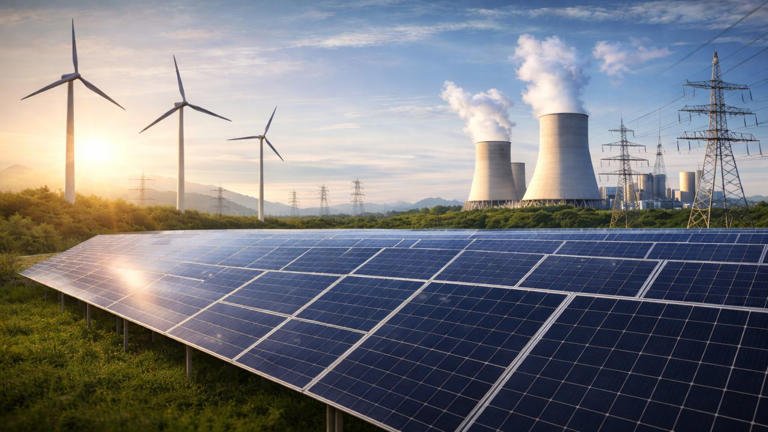
India is set to accelerate its clean energy transition as it prepares to sign power purchase agreements (PPAs) for 10–12 gigawatts (GW) of renewable energy capacity over the next three to four months. The move reflects the country’s continued push toward expanding its green energy portfolio and reducing dependence on conventional power sources.
Officials associated with the Ministry of Power indicated that multiple agreements are in advanced stages of discussion. These agreements will involve a mix of solar and wind energy projects, which will contribute significantly to India’s overall renewable capacity.
Read More: Assam Voting 2026: What to Expect, Stakes and Result Updates
Major Boost to Renewable Energy Capacity
The upcoming agreements will mark a substantial addition to India’s renewable energy capacity. With 10–12 GW of new projects expected to be tied up through PPAs, the country aims to maintain its rapid pace of expansion in the clean energy sector.
India has already emerged as one of the leading nations in renewable energy development. The government has consistently set ambitious targets to increase the share of green energy in the overall power mix.
Moreover, the signing of these agreements will provide clarity and financial security to developers, enabling them to proceed with project execution. This step will also attract further investments into the sector.
What Are Power Purchase Agreements?
Power purchase agreements play a critical role in the energy sector. These contracts define the terms under which electricity generated by producers is sold to distribution companies or other buyers.
Role of Policy and Government Push
The government has played a key role in driving renewable energy growth through supportive policies and initiatives. Agencies like the Solar Energy Corporation of India have facilitated the bidding and allocation of projects.
In addition, policy measures such as tariff-based competitive bidding and long-term contracts have helped create a stable environment for developers. These efforts have made India an attractive destination for renewable energy investments.
Furthermore, the government continues to streamline regulatory processes and address challenges related to land acquisition and grid connectivity. These steps aim to accelerate project implementation.
Mix of Solar and Wind Projects
The planned agreements will include a balanced mix of solar and wind energy projects. Solar power remains a dominant contributor due to its scalability and cost-effectiveness.
At the same time, wind energy projects are gaining traction, especially in states with favorable wind conditions. Combining both sources helps ensure a more stable and reliable supply of renewable energy.
Hybrid projects, which integrate solar and wind generation, may also form part of the agreements. These projects can optimize resource utilization and improve efficiency.
Strengthening India’s Climate Commitments
India’s push for renewable energy aligns with its international climate commitments. The country has pledged to reduce its carbon intensity and increase the share of non-fossil fuel energy sources.
The addition of 10–12 GW of renewable capacity will contribute significantly to achieving these goals. It will also help reduce greenhouse gas emissions and promote sustainable development.
Moreover, expanding renewable energy infrastructure supports India’s vision of energy security and independence. By relying more on domestic resources like sunlight and wind, the country can reduce its dependence on imported fuels.
Industry Response and Investment Outlook
The renewable energy sector has responded positively to the planned agreements. Developers and investors view PPAs as a critical factor in ensuring project viability.
With clear revenue streams guaranteed through long-term contracts, companies can secure financing more easily. This, in turn, accelerates the pace of project development.
Additionally, international investors have shown strong interest in India’s renewable energy market. The upcoming agreements are expected to further boost investor confidence and attract capital inflows.
Challenges and the Road Ahead
Despite the positive outlook, the sector faces certain challenges. Issues such as grid integration, transmission infrastructure, and land availability require continuous attention.
However, the government has been actively working to address these concerns. Investments in transmission networks and energy storage solutions are expected to play a key role in overcoming these challenges.
Furthermore, innovations in technology and policy reforms will continue to shape the future of the renewable energy sector.
What Lies Ahead
The signing of power purchase agreements for 10–12 GW of renewable energy capacity in the coming months will mark a significant milestone for India. It will reinforce the country’s position as a global leader in clean energy.
As the agreements move toward finalization, stakeholders across the sector will closely monitor developments. The successful execution of these projects will be crucial for achieving long-term energy goals.
Overall, India’s proactive approach to expanding renewable energy capacity highlights its commitment to sustainable growth. The upcoming PPAs will not only strengthen the power sector but also contribute to a greener and more resilient future.
Read More: Tripura tribal council polls: Security tightened for April 12 voting