


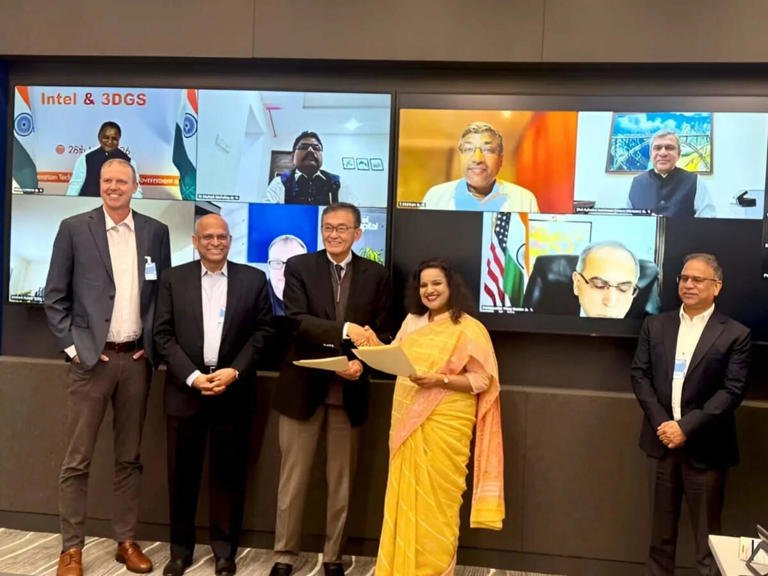
India’s efforts to emerge as a global semiconductor manufacturing hub have received a significant boost with a proposed $3.3 billion investment deal in Odisha involving global technology giant Intel and advanced packaging company 3D Glass Solutions. The project is expected to strengthen India’s semiconductor ecosystem, attract high-value investments, create skilled employment opportunities, and accelerate the country’s ambitions of becoming a key player in the global electronics supply chain.
The proposed investment marks another milestone in India’s semiconductor journey, which has gained momentum through policy reforms, financial incentives, and strategic partnerships with international technology companies. Officials believe the Odisha project could play a transformative role in strengthening domestic manufacturing capabilities and reducing dependence on imported semiconductor components.
The development aligns with the Centre’s broader vision of building a resilient and self-reliant semiconductor industry under the India Semiconductor Mission.
Major Investment for India’s Semiconductor Ecosystem
The proposed $3.3 billion investment represents one of the largest semiconductor-related commitments announced in eastern India. Industry experts believe the project could significantly enhance India’s semiconductor manufacturing and packaging capabilities.
Semiconductors form the backbone of modern technology, powering everything from smartphones and computers to automobiles, medical devices, telecommunications equipment, and advanced industrial systems.
As global demand for chips continues to rise, countries around the world are investing heavily in semiconductor infrastructure. India has increasingly positioned itself as an attractive destination for such investments through targeted policies and incentive programmes.
Officials stated that the Odisha project reflects growing international confidence in India’s manufacturing potential and policy environment.
Intel’s Growing Interest in India’s Technology Landscape
Intel’s association with the proposed project highlights the increasing importance of India within global technology and semiconductor strategies.
Over the years, Intel has expanded its presence in India through research, engineering, and innovation initiatives. The company’s involvement in a large-scale semiconductor-related investment underscores the country’s growing significance within international technology supply chains.
Industry observers note that India offers several advantages, including a large pool of engineering talent, a rapidly expanding digital economy, and supportive government policies.
The collaboration is expected to strengthen India’s integration into global semiconductor networks while encouraging further investments from international technology companies.
Experts believe such partnerships can accelerate technology transfer and capacity-building efforts within the domestic industry.
Role of 3D Glass Solutions
3D Glass Solutions is known for its advanced semiconductor packaging technologies and innovative manufacturing processes. The company’s participation in the Odisha project is expected to bring specialized expertise and cutting-edge capabilities to India’s growing semiconductor sector.
Advanced packaging has become increasingly important within the semiconductor value chain. As chip designs become more sophisticated, packaging technologies play a crucial role in improving performance, efficiency, and reliability.
Officials believe the project can help India strengthen its presence not only in semiconductor manufacturing but also in high-value segments such as advanced packaging and component integration.
This diversification is viewed as essential for building a comprehensive and competitive semiconductor ecosystem.
Odisha Emerges as a Technology Destination
The proposed investment also highlights Odisha’s growing reputation as an emerging destination for technology and industrial investments.
Traditionally known for its strengths in mining, metals, and manufacturing, Odisha has increasingly sought to diversify its economic base by attracting investments in electronics, information technology, and advanced manufacturing.
State authorities have focused on improving infrastructure, simplifying investment procedures, and creating a business-friendly environment. These efforts have helped position Odisha as a competitive location for large-scale industrial projects.
The semiconductor investment could further strengthen the state’s profile as a destination for high-technology industries and innovation-driven enterprises.
Officials expect the project to generate significant economic benefits for the region.
Boost for Employment and Skill Development
One of the most significant impacts of the project is expected to be job creation. Semiconductor manufacturing and related industries typically generate employment opportunities across multiple skill levels, including engineering, technical operations, research, logistics, and administration.
The project is likely to create both direct and indirect employment opportunities, benefiting local communities and supporting regional economic development.
Industry experts emphasize that semiconductor investments often stimulate the growth of supporting industries, including equipment suppliers, service providers, training institutions, and logistics networks.
Officials believe the project will also encourage greater investment in technical education and workforce development programmes.
Building a skilled talent pipeline remains essential for sustaining long-term growth in the semiconductor sector.
Strengthening India’s Semiconductor Mission
The Odisha investment aligns closely with the objectives of the India Semiconductor Mission, which seeks to establish a strong domestic semiconductor ecosystem.
The government has introduced a range of incentives aimed at attracting investments across semiconductor manufacturing, design, packaging, testing, and research activities.
Policymakers view semiconductors as a strategic sector due to their importance in national security, technological innovation, and economic competitiveness.
Reducing dependence on imports and strengthening domestic capabilities have become major priorities in recent years. Consequently, large-scale investments such as the Odisha project are seen as critical milestones in achieving these goals.
Officials believe continued collaboration between government and industry will be necessary to maintain momentum.
Strategic Importance in Global Supply Chains
The semiconductor industry has gained significant geopolitical importance in recent years. Global supply chain disruptions and rising demand for chips have prompted countries to invest heavily in domestic production capabilities.
India’s efforts to develop its semiconductor sector are partly aimed at improving supply chain resilience and securing access to critical technologies.
Experts note that participation in global semiconductor value chains can provide long-term economic and strategic benefits. It can also enhance India’s position as a trusted manufacturing and technology partner.
The Odisha project is expected to contribute to these objectives by strengthening domestic production capacity and attracting international expertise.
As global demand continues to grow, India hopes to capture a larger share of the semiconductor market.
Potential Impact on Electronics Manufacturing
A stronger semiconductor ecosystem can also benefit India’s broader electronics manufacturing industry. Domestic access to semiconductor technologies can support sectors such as consumer electronics, telecommunications, automotive manufacturing, renewable energy, and defence production.
Officials believe improved semiconductor capabilities will help strengthen supply chains and enhance competitiveness across multiple industries.
The project may also encourage additional investments in related sectors, creating a multiplier effect throughout the economy.
Industry leaders have repeatedly emphasized that semiconductor development is essential for achieving long-term technological self-reliance.
The Odisha investment therefore carries significance beyond the semiconductor sector itself.
Looking Ahead
The proposed $3.3 billion semiconductor investment in Odisha involving Intel and 3D Glass Solutions marks a significant step forward in India’s quest to become a global semiconductor powerhouse. By attracting international expertise and advanced manufacturing capabilities, the project has the potential to strengthen the country’s technology ecosystem and enhance its role in global supply chains.
The investment is expected to generate employment, support skill development, encourage innovation, and contribute to broader industrial growth. It also reinforces the momentum behind India’s semiconductor mission and highlights growing international confidence in the country’s technological ambitions.
As India continues to pursue self-reliance in critical technologies, projects such as the Odisha semiconductor initiative are likely to play a pivotal role in shaping the future of the nation’s digital and industrial economy.