


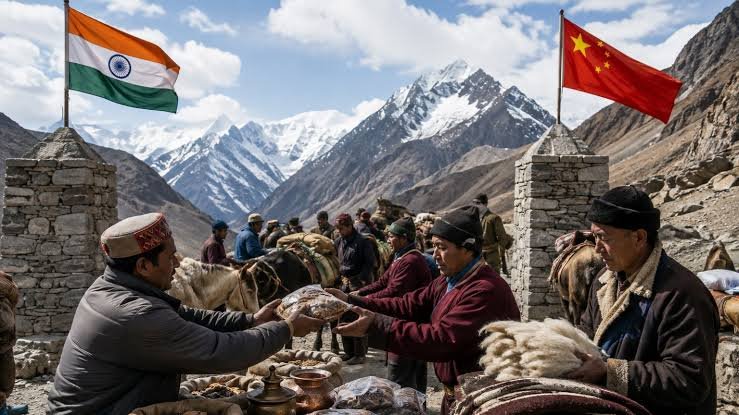
Trade operations have resumed at the Indo-Bangla Border Haat (TR) at the Kasba border market, with authorities maintaining tight customs checks during the reopening. The resumption restores cross-border trading activity at the local market and highlights the continued role of regulated border commerce between India and Bangladesh.
The reopening of the Indo-Bangla Border Haat (TR) marks a significant development for traders who rely on regulated cross-border markets for local commerce. Border haats provide designated spaces where communities on both sides of the international boundary can participate in approved trading activities.
The resumption at Kasba comes with increased customs scrutiny. Moreover, tighter checks can help authorities ensure that goods entering and leaving the market comply with applicable trade and customs requirements.
However, the information provided does not specify how long operations remained suspended, the exact volume of trade recorded after reopening, or the number of traders participating.
Indo-Bangla Border Haat (TR) Resumes Regulated Trade
The Indo-Bangla Border Haat (TR) at Kasba has resumed trading activity under tighter customs checks. The market operates within a regulated framework that allows eligible traders to conduct designated cross-border transactions.
Customs inspections play an important role in maintaining compliance at international border points. Furthermore, checks can help authorities verify goods and ensure that traders follow the applicable rules governing cross-border commerce.
The reopening therefore combines the restoration of trading activity with closer monitoring.
For local traders, the resumption can restore access to an established marketplace and provide an opportunity to restart commercial transactions.
Nevertheless, the available information does not provide details about the specific commodities currently permitted at the Kasba market or whether the list of eligible products has changed.
Consequently, traders must rely on official regulations and customs guidance for current requirements.
Indo-Bangla Border Haat (TR) Strengthens Local Commerce
The Indo-Bangla Border Haat (TR) has broader significance because border markets can support local economic interaction between communities on either side of an international boundary.
Moreover, designated markets provide a structured environment for cross-border trade while allowing authorities to regulate transactions.
The resumption of operations at Kasba can therefore provide traders with an established channel for conducting permitted business. Additionally, regular market activity can support commercial connections between border communities.
However, the current information does not provide figures for the market’s economic contribution, the number of participating traders, or the value of goods exchanged after operations resumed.
Therefore, the immediate economic impact cannot be quantified from the available information.
The reopening nevertheless represents a return to regular commercial activity at the border market.
Indo-Bangla Border Haat (TR) Faces Tighter Customs Checks
The Indo-Bangla Border Haat (TR) has resumed operations alongside tighter customs checks. This additional scrutiny indicates that authorities are placing particular emphasis on compliance as trade activity restarts.
Customs checks can involve examining goods and verifying whether transactions meet established regulations. Furthermore, stronger monitoring can help maintain transparency and prevent unauthorized movement of goods through the market.
However, the information provided does not explain the specific nature of the enhanced checks or identify any particular customs violations.
Therefore, the tighter scrutiny should not automatically be interpreted as a response to confirmed wrongdoing.
Instead, it represents the regulatory framework under which the market has resumed operations.
Clear communication between customs officials, market authorities, and traders can also help ensure that reopening proceeds smoothly.
Indo-Bangla Border Haat (TR) Brings Cross-Border Activity Back
The resumption of the Indo-Bangla Border Haat (TR) restores an important form of regulated commercial interaction at the Kasba border.
Furthermore, border markets can create opportunities for small-scale traders while maintaining a controlled system for cross-border transactions.
The reopening also demonstrates the importance of maintaining clear procedures for traders and authorities. When markets operate under defined customs requirements, participants can better understand what goods they can trade and what documentation they may need.
Meanwhile, continued monitoring will remain important as trading activity increases.
The available information does not indicate whether authorities have announced any changes to market schedules, trading limits, or participant eligibility following the reopening.
Further official updates could provide greater clarity on those issues.
Conclusion
The Indo-Bangla Border Haat (TR) at Kasba has resumed trade operations with authorities maintaining tight customs checks. The reopening restores regulated commercial activity and provides traders with access to the designated border marketplace.
Moreover, the combination of resumed trade and stronger customs scrutiny highlights the importance of balancing commercial activity with compliance at an international border. Effective checks can help authorities maintain the rules governing permitted cross-border transactions.
Overall, the Indo-Bangla Border Haat (TR) resumption represents a return to local border commerce at Kasba. Further information about trade volumes, participating traders, permitted goods, and market schedules will help assess the broader economic impact of the reopening.
FAQs
1. What is the Indo-Bangla Border Haat (TR)?
The Indo-Bangla Border Haat (TR) refers to the designated border market where approved traders from India and Bangladesh can conduct regulated cross-border commerce.
2. Where have trade operations resumed?
Trade operations have resumed at the Kasba border market, according to the information provided.
3. Why are customs checks being tightened?
Tighter customs checks aim to ensure that traders and goods comply with applicable cross-border trade and customs requirements.
4. Does tighter customs checking mean violations occurred?
Not necessarily. The available information does not identify specific violations. The checks indicate increased regulatory scrutiny as market operations resume.
5. Why is the Kasba border market important?
The market provides a regulated platform for cross-border commercial activity and can support economic interaction between communities located near the India-Bangladesh border.