


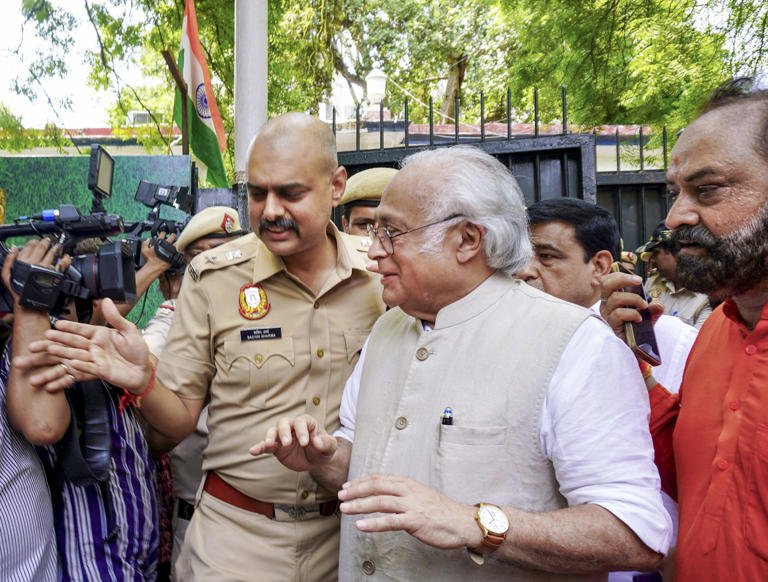
The Congress on Thursday, October 22, intensified its attack on the Election Commission of India (ECI), with party general secretary Jairam Ramesh alleging that electoral manipulation has become a serious concern and accusing Chief Election Commissioner (CEC) Gyanesh Kumar of centralising control over electoral rolls through the ECINET platform.
Ramesh claimed that the poll panel’s actions risk depriving millions of Indians of their constitutional right to vote. He also alleged that changes to voter registration procedures and restrictions on access to electoral records had weakened safeguards designed to protect the integrity of elections.
“Vote chori is a proven reality,” Ramesh said, arguing that data from the Election Commission itself indicated that more than 10 crore Indians faced the risk of losing their right to vote. These statements form part of the Congress’s broader campaign against alleged irregularities in the revision of electoral rolls.
The Election Commission has maintained that its decisions follow established legal procedures. The allegations raised by the Congress remain contested.
Jairam Ramesh Raises Questions Over ECINET
Ramesh’s latest remarks focused on ECINET, the Election Commission’s digital platform for managing election-related services and electoral records. The Congress leader alleged that the system had enabled the centralisation of control over voter registration and deletion processes.
According to Ramesh, the Election Commission had altered Form 6, which is used to apply for inclusion in electoral rolls, in ways that created additional barriers for new voters. He also accused the poll panel of facilitating the misuse of Form 7, which allows objections to the inclusion of names and applications for deletion from electoral rolls.
Ramesh argued that such changes could undermine the ability of eligible citizens to register as voters or remain on electoral rolls. He further accused the CEC of overriding legal safeguards by restricting the access of local election officials to important voter records.
The Congress has repeatedly maintained that Electoral Registration Officers (EROs) hold statutory responsibilities under election laws and should be able to exercise those powers without improper interference.
Audit Raises Questions About Access to Voter Records
The controversy gained fresh momentum following an audit of the ECINET portal by Charchagram, a civic-tech initiative. The audit examined the portal on October 2, 6, 7 and 9 and identified features that reportedly allow selected officials to enable or disable access to enumeration-form details across states.
The findings also pointed to a West Bengal-specific feature that could restrict Electoral Registration Officers and Assistant Electoral Registration Officers from accessing enumeration forms and the notice-and-hearing dashboard.
These findings have raised questions about how access to voter information is managed within the digital system. They have also renewed debate over the balance between centralised technology and the statutory authority of officials responsible for maintaining electoral rolls.
However, the reported technical features and their implications need to be assessed alongside the Election Commission’s explanations and the applicable legal framework. The existence of access controls alone does not establish that electoral manipulation has taken place.
For the Congress, the audit has strengthened its demand for greater transparency in the functioning of the poll panel and its information technology division.
Congress Questions Changes to Voter Registration Rules
The dispute over ECINET forms part of a wider controversy surrounding the Special Intensive Revision (SIR) of electoral rolls and changes to voter registration procedures.
The Congress has argued that additional documentation requirements and changes to registration forms could disproportionately affect young voters and other eligible citizens who face difficulties establishing the required family details.
Ramesh has also questioned the deletion of names from electoral rolls, alleging that the process could leave legitimate voters unable to exercise their franchise.
The party has demanded accountability from the Election Commission and called for safeguards to ensure that eligible voters are not excluded because of administrative or technical problems.
The issue is particularly significant because electoral rolls determine who can participate in elections. Any errors in the process can affect citizens’ voting rights and public confidence in the democratic system.
At the same time, allegations of deliberate voter suppression require evidence and independent scrutiny. Distinguishing between administrative errors, technical restrictions and intentional wrongdoing remains essential to resolving the controversy.
Election Commission Faces Pressure Over Transparency
The Election Commission has previously defended its procedures, maintaining that its orders carry legal authority and follow established statutory processes. It has also announced a review of the ECINET platform to examine its compliance with relevant laws and rules.
The dispute has drawn attention to reported differences within the Election Commission over decisions concerning electoral-roll revisions. Earlier media reports said Election Commissioners Sukhbir Singh Sandhu and Vivek Joshi had raised objections to several decisions and orders related largely to the SIR process.
The controversy has prompted the Congress and other opposition parties to demand greater transparency, stronger institutional accountability and a review of the poll panel’s functioning.
For the opposition, the central question is whether the digital infrastructure used to manage electoral rolls protects the authority of local officials and the rights of voters. The Election Commission, meanwhile, faces pressure to explain how access permissions work and what safeguards prevent misuse.
Electoral Integrity at the Centre of Political Debate
Ramesh’s latest remarks have placed electoral integrity back at the centre of the political debate. His allegations reflect the Congress’s growing concern over voter registration, electoral-roll revisions and the concentration of administrative control within the Election Commission’s digital systems.
The dispute also highlights the importance of transparent procedures and clear accountability in the management of voter data. Electoral technology can improve efficiency, but its operation must remain consistent with the law and protect citizens’ voting rights.
Whether the concerns surrounding ECINET point to unlawful interference or shortcomings in administration will depend on further evidence, technical scrutiny and the Election Commission’s response.
As political parties continue to challenge the process, the key test for the poll panel will be to demonstrate that electoral rolls are prepared fairly, eligible voters are protected and every decision can withstand independent examination.