


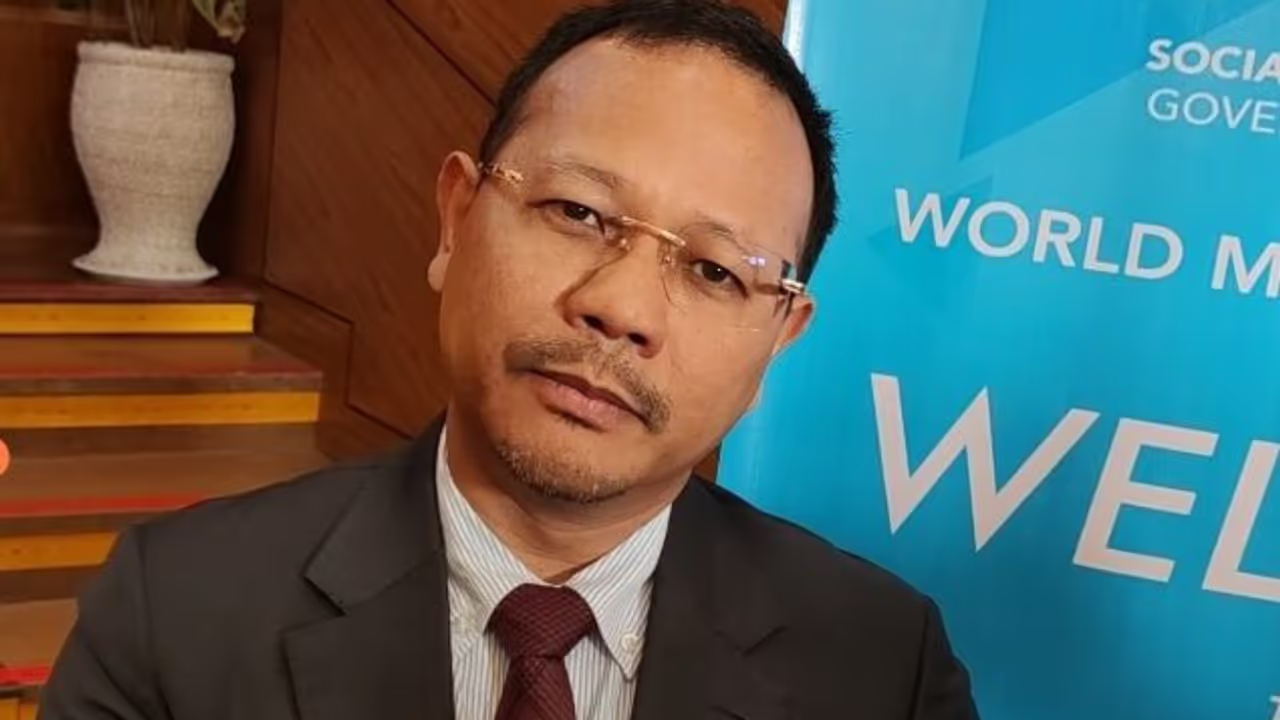
The James Sangma Rajya Sabha Victory appears set to become a significant political development in Meghalaya as the National People’s Party (NPP) candidate is poised for an uncontested election to the state’s lone Rajya Sabha seat. The absence of a rival candidate would allow Sangma to secure the seat without a competitive vote. Moreover, the development highlights the NPP’s organizational strength and its dominant position within Meghalaya’s current political landscape.
Manipur Hostage Release Breakthrough Ends 27-Day Detention Crisis
NPP Northeast Expansion Strategy Unveiled at Major National Meeting
James Sangma Rajya Sabha Victory Appears Uncontested
The James Sangma Rajya Sabha Victory has emerged as a likely outcome after indications that the National People’s Party candidate faces no rival contender for Meghalaya’s single Rajya Sabha seat. Consequently, the election is expected to proceed without a competitive contest.
Moreover, uncontested victories are relatively uncommon in parliamentary elections and often reflect strong political consensus or dominant legislative support. The development has therefore attracted considerable attention within Meghalaya’s political circles.
NPP Strengthens Its Parliamentary Presence
The expected uncontested result would strengthen the NPP’s representation in the Upper House. Therefore, the party is positioned to secure an additional parliamentary voice without the uncertainties of a contested election.
Additionally, Rajya Sabha representation provides parties with an important platform for participating in national legislative debates and policy discussions. For regional parties, such representation can enhance visibility and influence at the national level.
Meghalaya Has Only One Rajya Sabha Seat
The significance of the election is amplified by the fact that Meghalaya has only one Rajya Sabha seat in the current contest. Consequently, the outcome carries considerable symbolic and political weight for the state.
Furthermore, seats from smaller states often attract heightened attention because each parliamentary position represents a substantial share of the state’s voice in the Upper House.
Uncontested Election Reflects Political Alignment
The absence of an opposing candidate suggests a broader political alignment or lack of organized resistance to the NPP nomination. Therefore, observers see the development as an indicator of the party’s current standing within the state’s political framework.
Moreover, uncontested outcomes can result from strategic decisions by rival parties, coalition dynamics, or assessments regarding electoral viability.
James Sangma’s Political Profile Draws Attention
James Sangma is a prominent figure within the NPP and Meghalaya politics. Consequently, his expected entry into the Rajya Sabha has generated discussion about his future role in national-level parliamentary affairs.
Additionally, leaders with strong state-level profiles often bring regional priorities and local governance experience into parliamentary debates. This can influence how state interests are presented at the national stage.
Parliamentary Role Carries Broader Responsibilities
A Rajya Sabha member participates in legislative review, policy discussions, and parliamentary committee work. Therefore, Sangma’s expected elevation would involve responsibilities extending beyond state-level political considerations.
Furthermore, Upper House members contribute to scrutiny of legislation and national policy proposals, making the position significant for both party strategy and governance.
Meghalaya Politics Enters New Phase
The anticipated uncontested result also marks a new phase in Meghalaya’s parliamentary representation. Consequently, political observers are assessing how the development may shape future state and national political interactions.
Moreover, changes in parliamentary representation often influence political messaging, alliance discussions, and policy advocacy efforts.
NPP Consolidates Political Position
The James Sangma Rajya Sabha Victory reinforces perceptions that the NPP has consolidated a strong position within Meghalaya’s current political environment. Therefore, the party is likely to present the uncontested outcome as evidence of broad support for its candidate.
Additionally, organizational cohesion and legislative backing are often critical factors in securing uncontested parliamentary nominations.
Opposition Strategy Under Scrutiny
The absence of a challenger has also prompted questions regarding opposition strategy in the state. Consequently, analysts are examining whether rival parties chose not to contest for tactical reasons or because of broader political calculations.
Furthermore, uncontested outcomes sometimes reflect assessments that a competitive challenge would be unlikely to succeed under prevailing political conditions.
Formal Election Process Still Required
Despite the expectation of an uncontested outcome, the formal election process and official declarations must still be completed according to parliamentary procedures. Meanwhile, political attention remains focused on the final confirmation of the result.
Moreover, once formally declared, the James Sangma Rajya Sabha Victory will become an important milestone in Meghalaya’s current political cycle.
Conclusion
The James Sangma Rajya Sabha Victory appears set to become a notable political development for Meghalaya, with the National People’s Party candidate poised to secure the state’s lone Rajya Sabha seat without a contest. The absence of an opposing candidate reflects the NPP’s strong legislative position and suggests limited organized resistance to the nomination. The outcome also carries added significance because Meghalaya has only one seat in the current Rajya Sabha election cycle.
Moreover, the expected uncontested result strengthens the NPP’s parliamentary presence and gives the party another platform to represent Meghalaya’s interests at the national level. Rajya Sabha membership involves participation in legislative review, policy debates, and parliamentary committee work, making the position important for both regional advocacy and national governance.
Furthermore, the development has sparked discussion about opposition strategy, political alignment, and the future role James Sangma may play in national politics. As the formal election process concludes, the anticipated James Sangma Rajya Sabha Victory is likely to be viewed as a sign of the NPP’s consolidated influence within Meghalaya’s evolving political landscape.
FAQs
Q1. What is the James Sangma Rajya Sabha Victory?
The James Sangma Rajya Sabha Victory refers to the expected uncontested election of NPP candidate James Sangma to Meghalaya’s lone Rajya Sabha seat.
Q2. Why is the result considered uncontested?
The result is considered uncontested because no rival candidate is expected to challenge James Sangma for the seat.
Q3. Which party has nominated James Sangma?
James Sangma has been nominated by the National People’s Party (NPP).
Q4. Why is Meghalaya’s Rajya Sabha seat significant?
Meghalaya has only one Rajya Sabha seat in the current contest, making the election especially important for the state’s parliamentary representation.
Q5. Does the seat become official immediately?
No. The formal election process and official declaration must still be completed according to parliamentary procedures.