

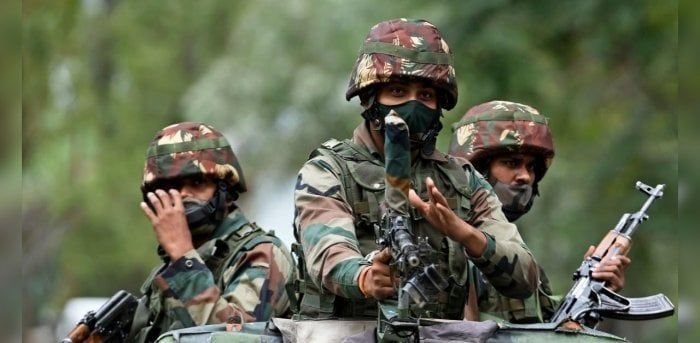
A Kuki insurgent clash in Tamenglong, Manipur has resulted in the deaths of five militants. This violent encounter involved two rival groups: the United Kuki National Army (UKNA) and the Chin-Kuki Militant Alliance (CKMA). The clash happened in the Tamei subdivision, a region known for insurgent activity.
In response, the central government extended President’s Rule in Manipur for six more months. The move comes amid growing ethnic tension and repeated outbreaks of violence.
What Caused the Kuki Insurgent Clash in Tamenglong, Manipur?
On the night of July 22, heavy gunfire broke out near Puiluan village in Tamenglong. Local residents heard gunshots and grenade blasts for nearly two hours. Security forces reached the site and recovered five bodies along with weapons and communication gear.
Officials believe the conflict was over territorial control and extortion routes. Intelligence reports had earlier flagged the area as a high-risk zone for insurgent activity.
“This was a direct turf war. These groups are trying to dominate areas rich in forest cover and escape routes,” said an officer from the Assam Rifles.
Why the Government Extended President’s Rule
The Kuki insurgent clash in Tamenglong, Manipur added to growing concerns over lawlessness in the state. With no stable government in place, the Union Ministry of Home Affairs announced another extension of President’s Rule. The decision was made under Article 356 of the Constitution.
This is the third such extension since January 2024. The state has seen recurring ethnic violence, protests, and armed conflict. The Centre cited the lack of civil order and ongoing insurgency as the main reasons.
“There’s no functioning administration. For now, central rule is necessary,” stated a ministry official.
Who Are the UKNA and CKMA?
Both the UKNA and CKMA claim to protect the interests of the Kuki-Zo tribal communities. However, the groups differ in ideology and strategy. Their rivalry often results in armed clashes, especially in Tamenglong, Churachandpur, and nearby districts.
The Kuki insurgent clash in Tamenglong, Manipur, shows that internal divisions among ethnic armed groups continue to destabilize peace talks. The groups operate outside formal ceasefire arrangements and often compete for control of forest zones and local networks.
Security Forces Increase Patrols in Tamenglong and Border Areas
After the incident, security forces increased patrols along the Manipur-Nagaland border. The Indian Army, Assam Rifles, and local police are now monitoring insurgent movements closely.
The Armed Forces (Special Powers) Act (AFSPA) remains active in the region. However, critics say that even with military authority, violence has not reduced significantly.
“AFSPA gives legal cover, but real peace needs dialogue, not just force,” said Prof. Lalthanpuia from NEHU.
Civil Groups Call for Peace and Political Leadership
Several tribal and civil society groups condemned the latest Kuki insurgent clash in Tamenglong, Manipur. They urged both factions to end violence and return to the negotiation table. The Kuki Inpi Manipur and Zeliangrong Baudi have demanded the revival of a peace process.
Locals say they feel abandoned by both militants and the government. With no state leadership, many communities rely on self-rule and local vigilante networks.
“We live in fear every day. There’s no government, only guns,” said a teacher from Tamei.
What Needs to Happen Now
Manipur cannot continue under President’s Rule indefinitely. While the extension may bring short-term control, long-term peace requires political engagement. Armed groups must be brought into formal talks. Elections must be held, and governance must return to the people.
The latest Kuki insurgent clash in Tamenglong, Manipur is a warning. Without meaningful action, the cycle of violence will continue.
READ MORE: