


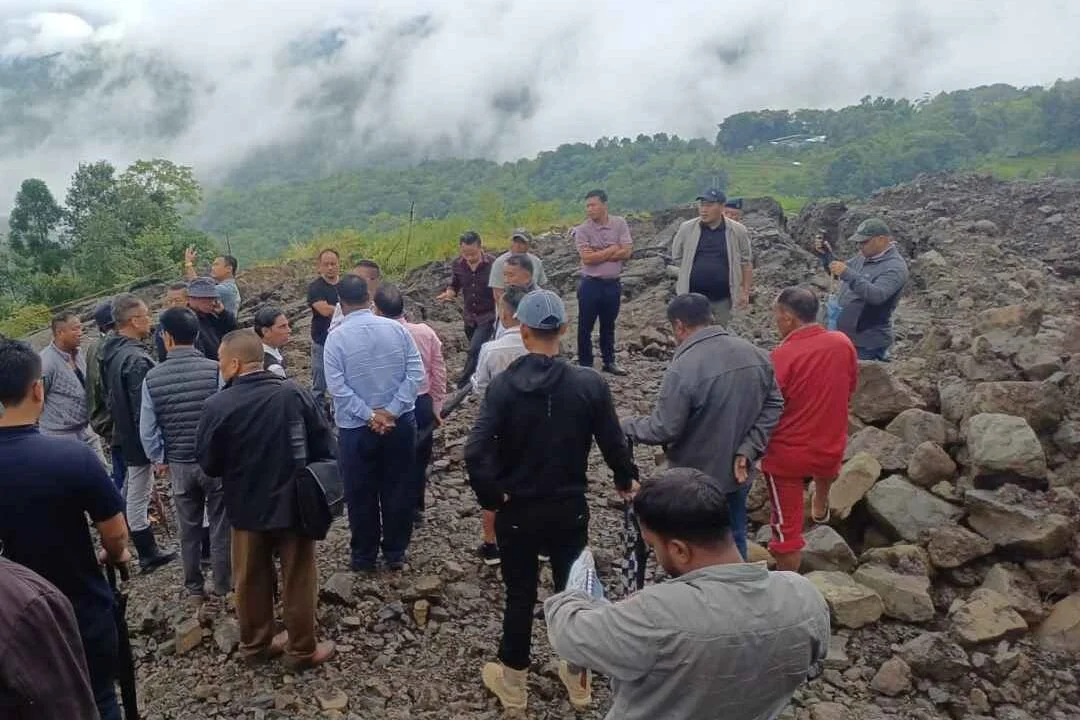
Southern Angami legislators have reportedly conducted a direct inspection of major landslide-affected stretches along a national highway, moving beyond routine political meetings to assess the damage on the ground. The MLAs directed officials to prioritise immediate emergency restoration and the reopening of critical road connectivity.
The inspection comes as landslides continue to create serious challenges for transportation in Nagaland’s mountainous terrain. Moreover, direct field assessments can help officials identify damaged sections, coordinate restoration work, and respond more quickly to the needs of affected communities.
The focus now remains on restoring safe movement while preventing further disruption along the highway.
Joi Barua NASA Project Makes a Powerful Leap From Assam to Space
Southern Angami MLAs Inspect Landslide Damage
The Southern Angami landslide inspection focused on highway sections affected by major landslides.
Instead of limiting their response to administrative meetings, the legislators reportedly visited the affected locations to assess conditions directly. Furthermore, the field inspection allowed them to observe the scale of the damage and identify areas requiring urgent attention.
The visit highlights the importance of rapid on-site coordination during infrastructure emergencies.
Emergency Highway Restoration Ordered
The MLAs reportedly directed authorities to begin immediate restoration measures.
Emergency work can include clearing debris, stabilising vulnerable sections, improving drainage, and creating temporary access where necessary. Additionally, engineers may need to assess whether damaged stretches can safely reopen before allowing normal traffic.
Safety considerations will remain essential throughout the restoration process.
Landslides Threaten Nagaland Connectivity
Nagaland’s mountainous geography makes several roads vulnerable to landslides, particularly during periods of heavy rainfall.
A major highway blockage can affect commuters, commercial vehicles, emergency services, and the movement of essential supplies. Moreover, prolonged disruptions can isolate communities and increase transportation costs.
Rapid restoration therefore has significance beyond routine road maintenance.
Direct Inspection Helps Identify Urgent Needs
Field inspections allow elected representatives and officials to understand conditions that may not become immediately apparent through reports.
They can examine road damage, blocked sections, unstable slopes, and access problems firsthand. Furthermore, direct interaction with local residents and workers can help authorities understand the immediate impact of the disruption.
Such information can support faster decisions.
Safety Must Guide Restoration
Restoring a landslide-hit road requires more than simply removing debris.
Engineers need to assess slope stability, drainage systems, retaining structures, and the possibility of additional landslides. Additionally, authorities may need to restrict traffic temporarily if conditions remain unsafe.
A rushed reopening could create further risks for motorists and workers.
Local Communities Face Disruption
Highway closures can significantly affect communities dependent on road connectivity.
Residents may face difficulties reaching schools, hospitals, markets, workplaces, and government offices. Moreover, businesses can experience delays when goods cannot move normally.
Emergency restoration can therefore help reduce the wider social and economic impact.
Coordination Between Agencies Needed
Effective restoration often requires cooperation between multiple government agencies.
Road authorities, district administration, disaster-management teams, police, and engineering personnel may all have different responsibilities. Furthermore, contractors and technical teams may need to work together to clear debris and stabilise damaged stretches.
Strong coordination can reduce delays.
Monsoon Conditions Add Complexity
Heavy rainfall can make landslide restoration particularly difficult.
Fresh rain can trigger additional slope failures and complicate debris-clearing operations. Additionally, saturated soil can undermine road edges and temporary structures.
Authorities may therefore need to combine immediate repairs with longer-term slope protection measures.
Long-Term Measures May Be Necessary
Emergency restoration can restore connectivity, but it may not permanently solve the underlying problem.
Authorities could require improved drainage, retaining walls, slope stabilisation, vegetation management, or redesigned road sections. Moreover, detailed geological and engineering assessments can help identify recurring risks.
Long-term planning can reduce the likelihood of repeated disruptions.
What Happens Next?
Officials are expected to continue monitoring the affected highway sections while restoration work progresses.
Emergency teams can prioritise the most severely damaged stretches and establish temporary traffic arrangements where possible. Furthermore, engineers may conduct additional assessments before authorities permit full traffic movement.
The success of the response will depend on both speed and safety.
Conclusion
The Southern Angami landslide inspection has brought elected representatives directly to major highway damage sites as authorities respond to serious connectivity challenges. The MLAs reportedly directed officials to prioritise immediate emergency restoration following their field assessment.
Moreover, rapid action could help restore transportation and reduce disruption for communities dependent on the highway. At the same time, engineers must carefully assess slope stability and road safety before reopening damaged sections.
Overall, direct political oversight and coordinated emergency restoration could help Nagaland respond more effectively to landslide-related highway disruptions.
FAQs
1. What did the Southern Angami MLAs inspect?
The MLAs reportedly inspected major landslide-affected sections along a national highway.
2. What action did they direct?
They directed authorities to prioritise immediate emergency restoration of the damaged highway sections.
3. Why are landslides a major concern in Nagaland?
Nagaland’s mountainous terrain and heavy rainfall can increase the risk of landslides and highway disruptions.
4. Why is direct inspection important?
It allows legislators and officials to assess damage firsthand and identify urgent restoration and safety requirements.
5. What is needed beyond emergency repairs?
Long-term solutions may include slope stabilisation, improved drainage, retaining structures, and engineering assessments to reduce future landslide risks.