


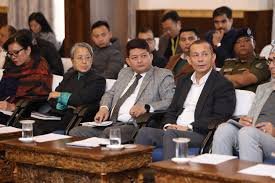
Sikkim MP Dr. Indra Hang Subba has formally urged the Central Government to reconsider the inclusion of Rai, Sherpa, Tamang, and Gurung languages in the CBSE curriculum. The demand seeks greater recognition of the state’s linguistic diversity within the national school education framework.
The request highlights concerns about preserving regional languages while providing students with opportunities to study their mother tongues in formal education. Moreover, curriculum inclusion could strengthen the visibility of these languages among younger generations.
The proposal also places Sikkim’s multilingual educational needs within the broader national discussion on language preservation and inclusive education.
Khneng Embroidery Wins National Spotlight as Air India Express Showcases Meghalaya Craft
Sikkim MP Raises Language Inclusion Demand
The Sikkim language inclusion demand centres on four languages: Rai, Sherpa, Tamang, and Gurung.
Dr. Indra Hang Subba has asked the Central Government to reconsider their inclusion in the CBSE curriculum. Furthermore, the request seeks to give students opportunities to learn languages that form an important part of Sikkim’s cultural and linguistic landscape.
The proposal could encourage further discussion between the Centre and education authorities.
Mother Tongue Education Gains Attention
Learning through or alongside one’s mother tongue can help students maintain connections with their cultural heritage.
Regional-language education can also encourage younger generations to understand traditional literature, oral histories, and cultural practices. Additionally, formal curriculum recognition can provide languages with greater institutional visibility.
For Sikkim’s diverse communities, these considerations carry particular significance.
Rai, Sherpa, Tamang and Gurung Languages
The four languages identified in the request represent communities with established cultural and historical connections to Sikkim.
Their inclusion in formal education could create greater opportunities for students to develop literacy in these languages. Moreover, curriculum support could encourage the creation of teaching materials, educational resources, and language-learning programmes.
Such measures can contribute to long-term language preservation.
CBSE Curriculum Could Expand Access
The Central Board of Secondary Education operates a large network of schools across India and abroad.
Inclusion within its curriculum framework could potentially give students in CBSE-affiliated schools greater access to these languages. Furthermore, standardised educational resources could support teachers and schools interested in offering them.
However, curriculum inclusion would require appropriate academic and administrative preparation.
Language Preservation Remains Important
Smaller languages can face challenges when younger generations increasingly use dominant regional or national languages.
Formal education can provide an additional space for maintaining linguistic knowledge. Additionally, schools can help connect language learning with literature, history, culture, and community traditions.
Institutional recognition could therefore complement efforts by communities to preserve their languages.
Government Response Will Matter
The MP’s request now places the issue before the Central Government.
Officials may need to examine curriculum requirements, teacher availability, learning materials, student demand, and other practical considerations. Moreover, consultation with linguistic and educational experts could help determine the most effective approach.
A detailed assessment could guide any future policy decision.
Teacher and Resource Requirements
Introducing additional languages into a national curriculum requires adequate educational infrastructure.
Schools would need qualified teachers and suitable textbooks or digital learning resources. Furthermore, examination structures and curriculum standards would need to accommodate the languages appropriately.
Developing these resources could require cooperation between education authorities and language communities.
Cultural Heritage and Education
Language represents more than a communication system.
It carries traditions, stories, cultural expressions, and historical knowledge from one generation to another. Moreover, incorporating regional languages into education can help students engage with their heritage in a structured academic environment.
This connection between education and cultural preservation forms a central element of the demand.
Sikkim’s Multilingual Identity
Sikkim has a distinctive multilingual social landscape.
The state’s communities use several languages alongside English, Hindi, Nepali, and other widely spoken languages. Additionally, recognising more regional languages within education could reflect this diversity more accurately.
The proposal therefore raises broader questions about inclusive curriculum design.
National Education Debate
The demand also fits into India’s wider discussion about multilingual education.
The National Education Policy has placed emphasis on Indian languages and multilingual learning. Furthermore, regional demands for greater representation can contribute to discussions about how national education frameworks accommodate linguistic diversity.
The Sikkim proposal could add another perspective to this debate.
What Happens Next?
The Central Government will need to consider the MP’s request and determine whether the four languages can receive greater representation within the CBSE framework.
Further consultations could involve education officials, language experts, community organisations, and representatives from Sikkim. Moreover, any decision would need to consider both cultural objectives and practical curriculum requirements.
The outcome could influence future opportunities for students seeking formal instruction in these languages.
Conclusion
The Sikkim language inclusion demand has placed Rai, Sherpa, Tamang, and Gurung languages at the centre of a discussion over greater representation in the CBSE curriculum. MP Dr. Indra Hang Subba’s request seeks renewed consideration from the Central Government.
Moreover, inclusion could support language preservation, cultural education, and greater recognition of Sikkim’s linguistic diversity. At the same time, successful implementation would require qualified teachers, educational materials, curriculum planning, and appropriate institutional support.
Overall, greater language representation in education could help preserve Sikkim’s linguistic heritage while making national education more inclusive.
FAQs
1. Which languages did Dr. Indra Hang Subba seek to include?
He requested reconsideration of Rai, Sherpa, Tamang, and Gurung for inclusion in the CBSE curriculum.
2. Why is language inclusion important?
It can support mother-tongue learning, cultural preservation, and linguistic representation in formal education.
3. Who was asked to reconsider the issue?
The request was directed to the Central Government.
4. What would schools need to introduce these languages?
Schools would require qualified teachers, suitable learning materials, curriculum frameworks, and potentially appropriate examination arrangements.
5. Could the proposal benefit Sikkim’s cultural heritage?
Yes. Formal education in regional languages could help younger generations maintain connections with their linguistic and cultural traditions.