


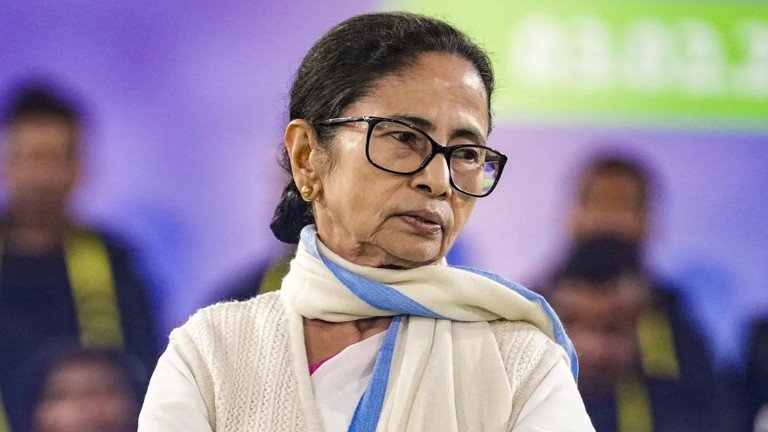
West Bengal Chief Minister Mamata Banerjee has called off her dharna against the Special Intensive Revision (SIR) process after the Supreme Court directed the setting up of tribunals to address concerns related to the issue. The decision marked the end of the protest that had drawn political attention across the state.
Banerjee announced the withdrawal of the dharna after the Supreme Court’s order, stating that the formation of tribunals would provide a platform to address grievances and ensure that people receive justice.
The chief minister said the court’s direction represented an important step toward resolving concerns raised by her party and supporters.
Her protest had focused on alleged irregularities and potential impacts of the SIR process on voters in the state.
Read More: Tripura Transport Minister Reviews Key Infrastructure Projects
Supreme Court orders setting up of tribunals
The Supreme Court directed authorities to establish tribunals that will examine disputes and complaints related to the Special Intensive Revision process.
These tribunals are expected to hear cases from individuals who believe they were wrongly affected during the revision of electoral rolls.
According to the court’s order, the tribunals will function as independent forums where people can present their grievances and seek legal remedies.
Legal experts said such mechanisms can help ensure transparency and fairness in the electoral roll revision process.
The establishment of tribunals also aims to reduce confusion and provide clarity regarding disputed voter records.
Banerjee stated that the court’s intervention had created an avenue for affected individuals to defend their rights.
Background of the SIR controversy
The Special Intensive Revision process became a major political issue in West Bengal in recent weeks. Opposition leaders raised concerns that the exercise could lead to the exclusion of genuine voters from electoral rolls.
Political parties engaged in heated debates over the purpose and implementation of the revision process.
Supporters of the SIR initiative argued that the exercise aims to ensure accuracy in voter lists by identifying duplicate or ineligible entries.
However, critics feared that the process might wrongly target certain communities or individuals.
Mamata Banerjee’s protest aimed to draw attention to these concerns and demand safeguards for voters.
Her dharna became one of the most visible political demonstrations related to the issue.
Dharna drew attention across the state
The protest led by Mamata Banerjee attracted significant public and political attention in West Bengal. Leaders and workers from her party participated in the demonstration, expressing support for the chief minister’s stand.
During the dharna, Banerjee repeatedly stated that the rights of voters must remain protected. She argued that electoral processes should never result in the unjust exclusion of citizens.
The protest also sparked responses from opposition parties, which accused the state government of politicizing the issue.
Despite the political exchanges, the demonstration remained a central point of discussion in the state’s political landscape.
Decision to end protest after court intervention
Following the Supreme Court’s order to set up tribunals, Mamata Banerjee announced that she would lift the dharna.
She said the court’s decision provided a path forward for addressing grievances through legal channels.
According to Banerjee, the formation of tribunals ensures that affected individuals will have an opportunity to present their cases and seek justice.
The chief minister also emphasized that her protest had always focused on protecting the rights of voters.
Ending the dharna, she said, reflects respect for the judicial process and confidence that the tribunals will function fairly.
Political reactions to the development
The Supreme Court’s order and the subsequent withdrawal of the dharna have triggered reactions from various political leaders.
Supporters of Mamata Banerjee welcomed the court’s intervention and praised the chief minister for raising the issue.
They argued that the protest played a role in bringing national attention to concerns about the SIR process.
Opposition leaders, however, offered mixed reactions. Some questioned the necessity of the protest, while others acknowledged the importance of ensuring fairness in electoral roll revisions.
Political analysts noted that the development could influence the broader political narrative in West Bengal.
Importance of electoral roll revisions
Electoral roll revisions are a routine part of the democratic process in India. These exercises aim to update voter lists by adding eligible voters and removing duplicate or ineligible entries.
Accurate voter lists help ensure fair elections and prevent irregularities in the voting process.
However, electoral revisions can sometimes become politically sensitive when concerns arise about the inclusion or exclusion of certain voters.
Authorities typically follow established procedures to verify voter information and maintain transparency.
The establishment of tribunals in the current case aims to address disputes in a structured legal framework.
Looking ahead after the protest
With the dharna now lifted, attention will shift to the functioning of the tribunals ordered by the Supreme Court.
These bodies will play a key role in examining complaints and resolving disputes related to the SIR process.
Officials are expected to outline the structure and procedures of the tribunals in the coming days.
For Mamata Banerjee and her supporters, the end of the protest marks a transition from street demonstrations to legal proceedings.
Observers say the outcome of the tribunal process could have significant implications for electoral administration and political debate in the state.
As the situation develops, political leaders and voters across West Bengal will closely watch how the issue unfolds in the months ahead.
Read More: Pulwama’s first IAS officer: How Tawseef Ahmad Ganie secured AIR 254 in UPSC