


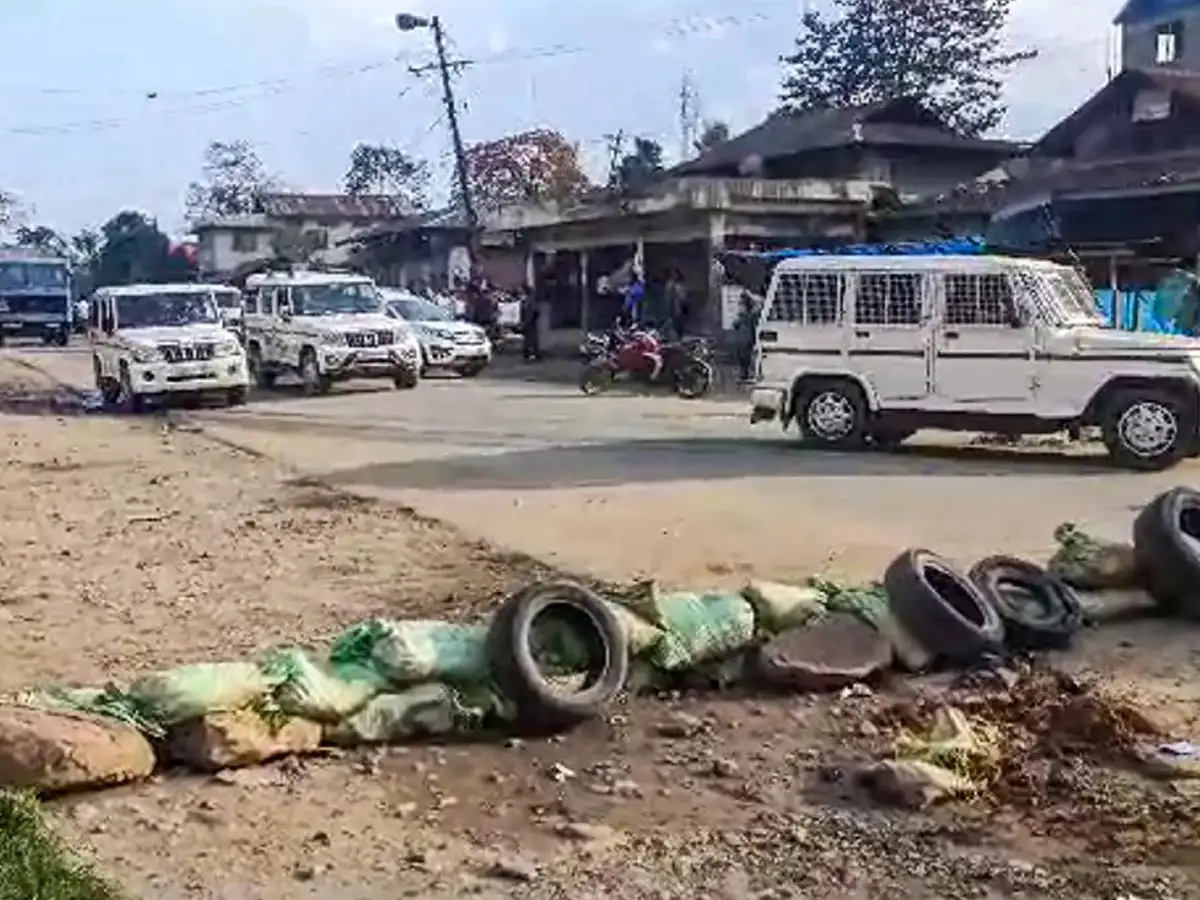
The Manipur economic blockade warning has intensified calls for impartial enforcement after the state government prohibited road blockades and warned that violators could face criminal prosecution. The directive, issued on August 28, 2026, came amid allegations of selective restrictions affecting movement and essential supplies in parts of the state. Meanwhile, the Committee on Tribal Unity has urged authorities to apply the order without discrimination.
Pashchim Kanchanmala Cattle Theft Leaves Three Livestock Farmers Distressed
Manipur Economic Blockade Warning Follows Fresh Tensions
The latest Manipur economic blockade warning emerged against a complicated backdrop of competing claims over restrictions on movement. The Committee on Tribal Unity, or CoTU, issued a fresh warning on September 9, alleging that a selective economic blockade was affecting Kuki-Zo residents. The organisation called on the government to intervene and enforce its August 28 directive.
According to CoTU, sections of the Liangmai and Tangkhul communities were allegedly involved in disruptions affecting the movement of Kuki-Zo residents and essential commodities. These remain allegations made by the organisation and have not been independently established as facts.
The organisation also claimed that emergency medical vehicles and essential commodities had faced obstruction despite the National Highways remaining officially open to general traffic. Therefore, CoTU argued that the government needed to ensure that the prohibition on road blockades applied consistently across communities.
The latest development is important because restrictions on the movement of essential goods can have consequences beyond the immediate areas where disruptions occur. Food, medicines and other necessities depend on reliable transport links. Consequently, authorities face pressure to maintain lawful movement while preventing further tensions.
Government Directive Puts Focus on Law Enforcement
The August 28 government directive provides the main legal backdrop to the current dispute. According to reporting on CoTU’s statement, the directive explicitly prohibits road blockades and warns that violators may face criminal prosecution. The organisation has therefore called for immediate and impartial enforcement.
The directive also changes the immediate focus from competing community claims to the responsibility of the administration. Rather than allowing different groups to impose restrictions independently, the government’s stated position is that road blockades are prohibited.
However, enforcing such an order in a conflict-affected environment can present significant administrative challenges. Authorities must distinguish between peaceful political expression and actions that obstruct public movement or essential services. Moreover, enforcement must avoid creating perceptions of selective treatment.
Earlier developments demonstrate how quickly restrictions can produce countermeasures. In July and August, the Kuki Civil Society Organisations Working Committee, Ukhrul, announced a counter-economic blockade after alleging that Kuki-Zo supplies were being selectively restricted along NH-202. The group later intensified the action into a total shutdown.
The situation changed on August 11, when the organisation lifted its counter-blockade and shutdown following talks with a Manipur government delegation. The group said the government had assured it that concerned groups would end the alleged selective blockade and that authorities would ensure safe and non-discriminatory movement along NH-202.
Calls for Reconciliation Accompany Legal Measures
The dispute demonstrates why legal enforcement alone cannot resolve every underlying issue. While the government can prohibit unlawful blockades, lasting stability also requires dialogue between communities and confidence in the administration.
The August 11 development offered one example of dialogue producing a temporary de-escalation. Government representatives met the Ukhrul civil society group, after which the counter-blockade was withdrawn. The arrangement reportedly included an assurance concerning the safety of NH-202 and uninterrupted movement of essential commodities.
Nevertheless, the September allegations show that concerns about selective restrictions have not disappeared completely. CoTU’s latest statement indicates that some groups continue to question whether authorities are applying restrictions uniformly. The organisation has consequently asked the government to act against unauthorised disruptions.
At the same time, CoTU warned that continued inaction could lead to retaliatory restrictions. Such statements underline the risk of a cycle in which one blockade produces another response. Therefore, maintaining open transport routes remains important not only for economic activity but also for preventing further escalation.
The government faces a delicate balance. It must uphold the law while also creating space for community-level dialogue. Furthermore, any enforcement action needs to remain consistent with established legal procedures and should not be presented as proof against an entire community based on allegations involving specific groups or individuals.
Essential Supplies and Public Movement Remain Central
The economic consequences of transport restrictions make the issue particularly significant. When roads become difficult to use, the movement of food, medicines and other essential commodities can slow down. Consequently, prolonged disruptions can place additional pressure on households, businesses and emergency services.
The current dispute has specifically involved allegations concerning essential commodities and medical vehicles. CoTU said such movement had been obstructed in areas it identified as affected by the alleged selective blockade. These claims require appropriate verification by authorities before any individual or organisation can be held responsible.
The restoration of vehicle movement along NH-202 after the August 11 agreement demonstrated the immediate importance of government intervention. EastMojo reported that more than 450 trucks were relieved after the counter-blockade was lifted, allowing essential goods movement to resume.
However, maintaining movement over the longer term requires more than a temporary agreement. Authorities must monitor sensitive routes, respond to verified violations and communicate clearly with affected communities. Similarly, community organisations can contribute to stability by using dialogue and lawful mechanisms rather than imposing restrictions on civilian movement.
The Manipur economic blockade warning therefore represents both a law-and-order issue and a broader reconciliation challenge. Strict enforcement may deter unauthorised blockades, but sustained peace will also depend on confidence-building and continued communication among communities and the government.
Conclusion
The Manipur economic blockade warning has brought renewed attention to the government’s responsibility to prevent unauthorised road blockades and protect the movement of essential goods. The August 28 directive provides for criminal prosecution against violators, while CoTU has demanded that authorities enforce it impartially.
The recent history of counter-blockades shows that restrictions can quickly trigger further restrictions. Therefore, authorities need to combine lawful enforcement with continued dialogue and reconciliation efforts. Transparent implementation, protection of essential movement and equal application of the law will remain important for preventing further escalation.
FAQs
What is the Manipur economic blockade warning?
The Manipur economic blockade warning refers to renewed demands for enforcement of the state government’s August 28 directive prohibiting road blockades and warning violators of criminal prosecution.
Who issued the latest warning?
The Committee on Tribal Unity issued a September 9 warning urging the Manipur government to act against what it described as a selective economic blockade affecting Kuki-Zo residents.
What did the August 28 government directive say?
According to reporting on CoTU’s statement, the directive prohibited road blockades and warned that violations could result in criminal prosecution.
Was the alleged selective blockade independently established?
The allegations concerning selective restrictions were made by CoTU and other community organisations. They should therefore be treated as claims unless independently established through official investigation or other reliable evidence.
Why is reconciliation important alongside enforcement?
Legal enforcement can address unlawful obstruction, but dialogue can help prevent retaliatory restrictions and rebuild confidence between communities. The August 11 agreement that led to the lifting of a counter-blockade illustrates the role of government-community negotiations.