


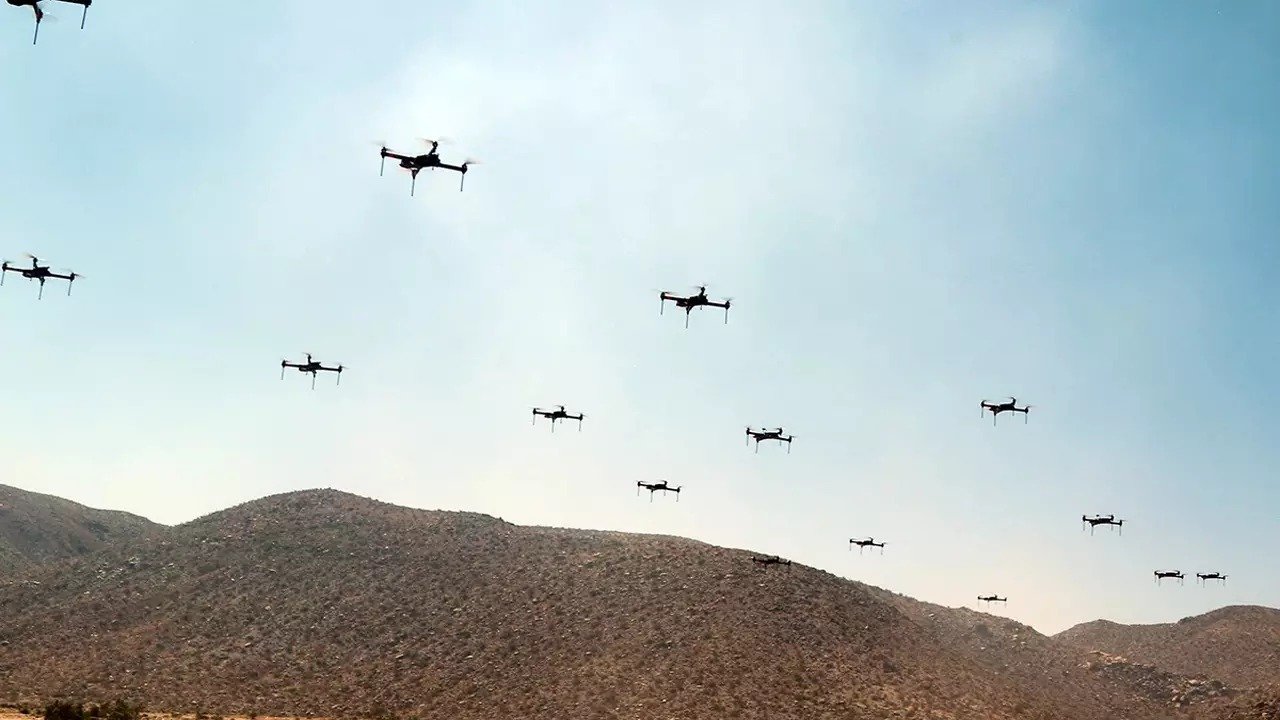
Manipur security forces have deployed advanced drone monitoring systems along vulnerable valley-hill boundaries to strengthen surveillance and improve real-time situational awareness. The initiative aims to enhance security in sensitive zones where terrain challenges often limit ground patrol efficiency. Moreover, officials stated that drone-based monitoring will support faster response to potential threats. The move reflects a significant upgrade in border and internal security operations across the state.
Assam State Disaster Management Authority Activates 24/7 Emergency Control Rooms Across 28 Districts
Nirmala Sitharaman Inaugurates Northeast’s Largest Organic Spice Processing Plant in Ri-Bhoi
Drone Surveillance Strengthens Monitoring in Sensitive Regions
Manipur security forces deploy advanced drone monitoring along vulnerable valley-hill boundaries to improve oversight of difficult terrain areas. Consequently, aerial surveillance is now being used to complement traditional ground patrols.
The drones are equipped with high-resolution imaging systems capable of covering large and inaccessible areas. Moreover, they provide real-time visuals to control rooms for immediate analysis. Therefore, security agencies can respond more quickly to emerging situations.
Officials stated that valley-hill boundary zones often present logistical challenges for patrolling units. Furthermore, dense vegetation and uneven terrain make continuous ground monitoring difficult. As a result, drone deployment significantly enhances operational coverage.
Meanwhile, coordinated monitoring teams are analyzing live feeds from multiple locations. Consequently, decision-making efficiency has improved in sensitive zones.
Enhanced Security Measures in Vulnerable Border Areas
The deployment of drones is part of broader efforts to strengthen security along Manipur’s vulnerable valley-hill boundaries. Moreover, these areas have historically required intensified monitoring due to geographical and security complexities. Therefore, advanced technology is being integrated into existing systems.
Security forces are using drones for routine surveillance as well as targeted operations. Consequently, suspicious movements can be tracked more effectively. Such capabilities help in preventing escalation of security incidents.
Furthermore, the integration of aerial data with ground intelligence improves accuracy. As a result, coordinated response mechanisms are becoming more efficient.
Meanwhile, authorities are also training personnel to operate drone systems effectively. Similarly, standard operating procedures are being updated for modern surveillance tools.
Technology-Driven Approach to Internal Security
Manipur security forces deploy advanced drone monitoring along vulnerable valley-hill boundaries as part of a technology-driven approach to internal security. Moreover, modern surveillance tools are increasingly replacing purely manual monitoring methods. Therefore, operational efficiency is significantly enhanced.
Drones allow continuous aerial coverage without the limitations of human patrolling. Consequently, security gaps in remote and inaccessible regions are reduced. Such improvements are critical in maintaining stability.
Furthermore, data collected through drones is being used for strategic planning. As a result, long-term security assessments are becoming more accurate.
Meanwhile, integration with command-and-control systems ensures real-time coordination. Similarly, intelligence-sharing between agencies has become faster and more structured.
Strengthening Stability in Valley-Hill Interface Zones
The valley-hill boundary areas in Manipur are considered sensitive due to their complex terrain and demographic distribution. Moreover, maintaining stability in these regions requires constant monitoring. Therefore, drone surveillance plays a key role in preventive security.
Increased visibility helps security forces deter unlawful activities. Consequently, early detection of risks becomes possible. Such proactive measures support peace maintenance efforts.
Furthermore, improved surveillance strengthens confidence among local communities. As a result, public safety perceptions are positively impacted.
Meanwhile, security agencies continue to evaluate the effectiveness of drone deployment. Similarly, expansion to additional zones is under consideration.
Conclusion
Manipur security forces deploy advanced drone monitoring along vulnerable valley-hill boundaries, marking a significant step toward modernizing surveillance infrastructure. Moreover, the initiative enhances real-time monitoring, operational efficiency, and response capabilities.
The use of drones strengthens security coverage in difficult terrain areas where traditional methods face limitations. Therefore, it contributes to improved stability across sensitive regions.
As Manipur security forces deploy advanced drone monitoring along vulnerable valley-hill boundaries, the move highlights a growing reliance on technology-driven solutions for internal security management.
FAQs
1. What has been deployed in Manipur?
Advanced drone monitoring systems.
2. Where are they being used?
Along vulnerable valley-hill boundary areas.
3. Why are drones being used?
To improve surveillance in difficult terrain.
4. What is the benefit of this system?
Real-time monitoring and faster response to threats.
5. Is this part of a larger strategy?
Yes, it is part of technology-driven security modernization.