


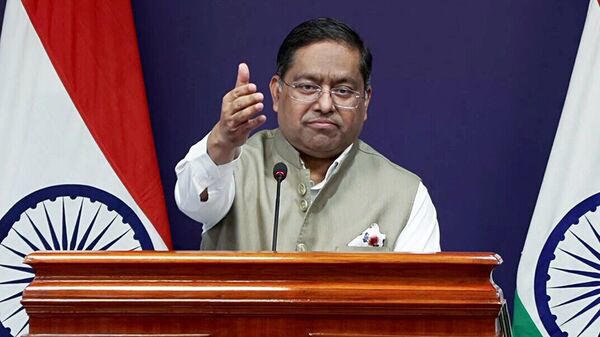
The Ministry of External Affairs (MEA) has issued a clarification after a viral social media post claimed that there was “no foreign funding for CJP,” describing the post as misleading and presenting what it said were the factual details of the matter.
The clarification comes amid widespread circulation of conflicting claims online, prompting the ministry to intervene with an official fact-check. The development has reignited discussions on the importance of verifying information before sharing it on social media platforms.
What did the viral post claim?
The viral post alleged that claims regarding foreign funding linked to CJP were baseless and asserted that the organisation had not received foreign funds. The post gained significant traction across social media, with users sharing and commenting on the claim.
As the post continued to circulate, questions emerged regarding its accuracy, leading to calls for an official clarification from the authorities.
The issue soon became the subject of public and political discussion, with differing interpretations of the available information.
MEA calls the claim misleading
Responding to the viral post, the Ministry of External Affairs stated that the claim was misleading and did not accurately represent the official position or the relevant facts.
According to the ministry, the viral content omitted important context and could create confusion among the public. The MEA urged citizens to rely on verified information issued through official government channels instead of unverified social media posts.
Officials reiterated that misinformation can spread rapidly online and stressed the importance of checking facts before sharing content.
Government emphasises fact-based communication
The clarification forms part of the government’s broader efforts to counter misinformation circulating on digital platforms. Authorities have repeatedly urged the public to verify sensitive or politically significant claims using authentic sources.
Officials said inaccurate or incomplete information can mislead the public, influence perceptions, and contribute to unnecessary confusion.
The government has maintained that official clarifications should be treated as the primary source of information whenever conflicting claims emerge.
Importance of official fact-checks
Fact-checks issued by government departments are intended to address misinformation and provide verified information on matters of public interest. In recent years, several ministries have used official communication channels to clarify viral claims relating to governance, public policy, and administrative decisions.
Experts say timely fact-checks can help reduce the spread of false or misleading information while promoting informed public discourse.
The latest clarification by the MEA reflects the increasing role of government agencies in addressing viral misinformation.
Social media and misinformation
The incident highlights the challenges posed by the rapid spread of information on social media platforms, where claims can quickly gain widespread attention before being independently verified.
Digital communication experts have emphasised the importance of media literacy and responsible sharing practices, encouraging users to verify claims through official sources before forwarding or commenting on them.
They note that misinformation can affect public understanding of important issues if left unchallenged.
Public urged to verify information
The MEA has advised citizens to exercise caution while consuming and sharing online content, particularly on issues involving government policy, official decisions, or matters of public significance.
Officials stressed that authentic government statements remain the most reliable source for confirming facts and understanding the context of developing issues.
The ministry reiterated that misinformation should be challenged through factual clarification rather than speculation.
Clarification aims to ensure accurate public understanding
The ministry’s intervention seeks to ensure that public discussions are based on verified information rather than misleading narratives circulating online. Observers believe such clarifications play an important role in maintaining transparency and promoting informed public debate.
As digital platforms continue to shape public discourse, official fact-checks are expected to remain an important tool for addressing misinformation.
MEA reiterates need for responsible information sharing
By describing the viral post on CJP’s alleged foreign funding as misleading and issuing an official clarification, the Ministry of External Affairs has reinforced the importance of relying on verified information from authentic sources. The development underscores the growing need for responsible information sharing in an era where social media can rapidly amplify unverified claims.
As discussions continue, the focus is expected to remain on factual reporting, official clarification, and the broader challenge of combating misinformation in the digital space.