

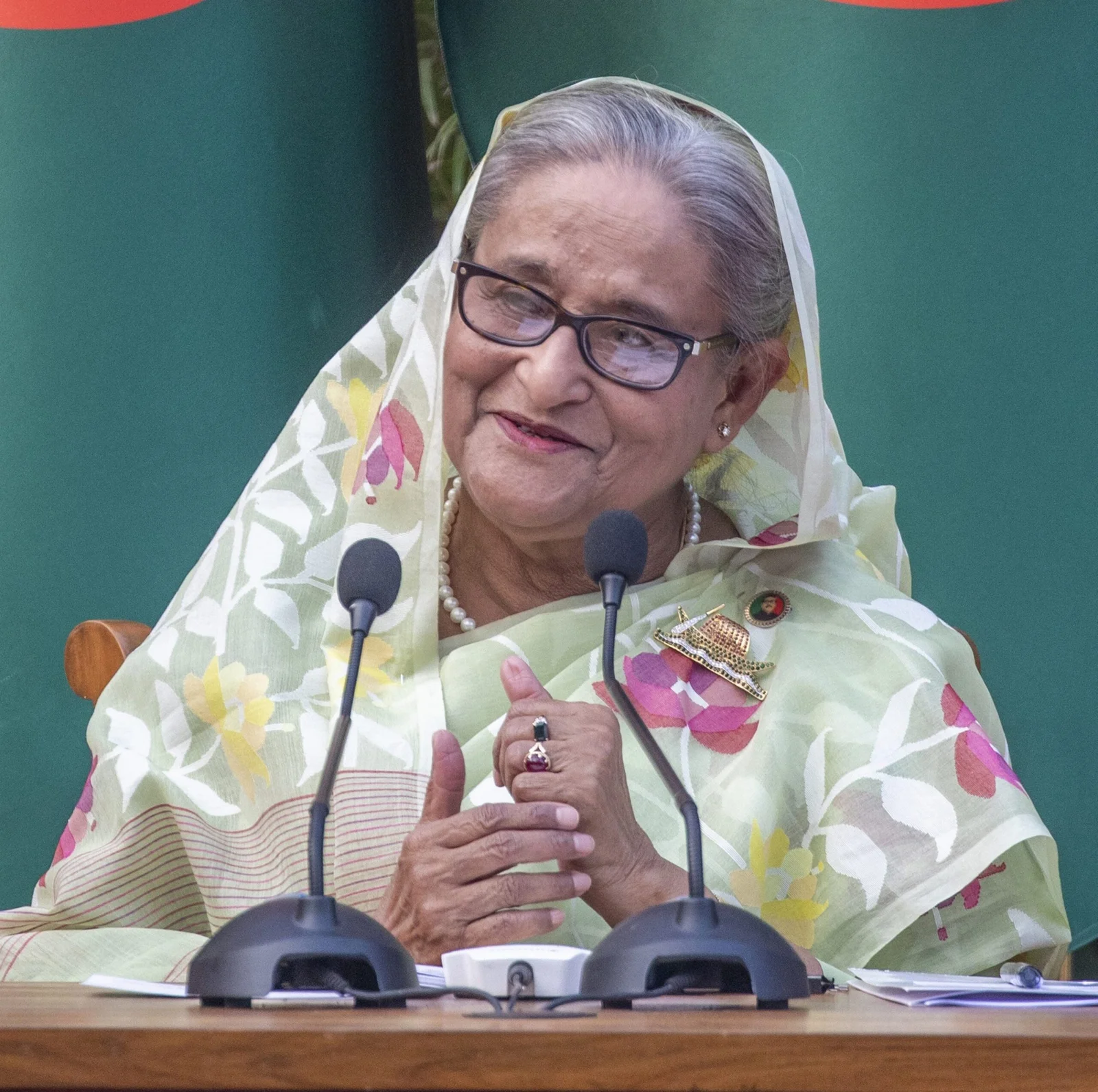
In its first public reaction to the landmark verdict delivered by the International Crimes Tribunal–Bangladesh (ICT-BD), India’s Ministry of External Affairs (MEA) underscored its commitment to regional stability and welfare. The tribunal had on November 17 sentenced former Bangladesh Prime Minister Sheikh Hasina to death for crimes against humanity. India’s response was measured yet firm, affirming its priority: the long-term interests of the Bangladeshi people.
In a carefully worded statement, the MEA said that it “has noted the verdict” but avoided direct commentary on the court’s legal findings. Instead, the ministry reiterated that India “remains committed to the best interests of the people of Bangladesh including in peace, democracy, inclusion, and stability.” It added that New Delhi “will always engage constructively with all stakeholders.”
A Delicate Diplomatic Balancing Act
India’s reaction comes amid heightened tensions between Delhi and Dhaka. Following the verdict, the interim Bangladeshi government called on India to extradite Hasina and other convicted officials. However, India has chosen not to repatriate her at least for now citing legal and diplomatic complexities.
Diplomatic experts say India is walking a tightrope. Granting extradition could be seen as supporting a decision that many view as politically charged. But refusing may also strain bilateral ties at a sensitive moment. Delhi’s careful response signals that it wants to avoid being drawn into a political maelstrom while maintaining its role as a neighbor committed to democratic stability.
Bangladesh Tensions Rise After the Verdict
The death sentence came from ICT-BD after a trial in absentia, convicting Hasina and her former home minister Asaduzzaman Khan. Hasina, currently in India, strongly rejected the verdict. She described the tribunal as “rigged” and politically motivated, stating she had no fair chance to defend herself.
Meanwhile, Bangladesh’s interim government, led by Nobel laureate Muhammad Yunus, praised the ruling. Yunus said the verdict affirmed that no one is “above the law.”
Voices from India: Mixed Reactions Emerge
Within India, reactions to the MEA’s statement have varied. Shashi Tharoor, a senior Congress leader, expressed discomfort with the death penalty. Speaking to news media, he said he doesn’t support capital punishment domestically or in other countries. Tharoor also questioned the fairness of Hasina’s trial, given that it was held without her presence.
What This Means for India-Bangladesh Relations
India’s statement underscores an approach that prioritises long-term regional stability. Rather than taking sides in Dhaka’s internal politics, New Delhi appears to be focusing on:
- Promoting democratic engagement and dialogue.
- Supporting peace and inclusion in Bangladesh.
- Maintaining economic and diplomatic ties to defend shared interests in the region.
India’s foreign policy doctrine when it comes to Bangladesh now seems to hinge on pragmatic engagement, even in the face of highly charged political decisions.
Looking Ahead: What Comes Next
India’s next steps will likely be closely watched:
- Will it respond formally to Bangladesh’s extradition request?
- Will it offer consular or humanitarian support for Hasina?
- How will it manage growing domestic and international pressure over its stance?
The outcome could affect not only bilateral relations but also regional political stability, especially with key elections on the horizon in Bangladesh. India’s commitment to constructive engagement suggests it is prepared for a long diplomatic process.
Call to Action
Stakeholders, analysts, and citizens should monitor updates via the official MEA India website and trusted news platforms. As the situation evolves, staying informed will be critical to understanding its regional impact and India’s diplomatic calculations.