


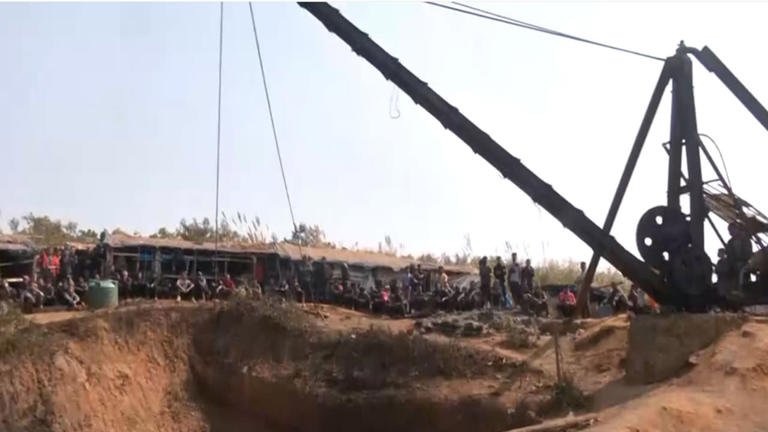
The Meghalaya coal mine blast has triggered an intensive search operation even as the Meghalaya High Court has taken cognizance of the incident, underlining the gravity of the tragedy and persistent concerns over illegal mining in the state. The blast, which occurred at an unauthorised coal mine, has once again exposed the deadly risks associated with rat-hole mining despite repeated bans and court directives.
Rescue teams continue operations at the site, while authorities have tightened monitoring across vulnerable mining belts. Meanwhile, the High Court’s intervention has added judicial pressure on the administration to ensure accountability and prevent recurrence of such incidents.
The Meghalaya coal mine blast has reignited debate on enforcement failures, worker safety, and the need for sustained action against illegal coal extraction.
Read More: Sikkim Prepares for 2026 Municipal Polls with New Wards
Meghalaya coal mine blast: search operation underway
Search and rescue teams remain engaged at the blast site following the Meghalaya coal mine blast. Officials said efforts continue to locate missing persons and recover bodies, despite difficult terrain and hazardous conditions inside the mine.
Specialised teams equipped with safety gear have been deployed to manage risks such as gas accumulation and unstable tunnels. Authorities said safety of rescuers remains a priority during the operation.
The administration said the search operation will continue until all affected individuals are accounted for.
High Court takes cognizance of the incident
Taking suo motu cognizance of the Meghalaya coal mine blast, the Meghalaya High Court sought detailed reports from the state government and concerned authorities. The court reportedly asked officials to explain how illegal mining activities continued despite clear prohibitions.
Legal observers said the court’s intervention reflects growing judicial concern over repeated mining-related deaths. By taking cognizance, the court has signalled that administrative explanations alone may not suffice.
The matter is expected to come up for further hearing as the search operation progresses.
Focus on illegal rat-hole mining
The Meghalaya coal mine blast has once again highlighted the persistence of rat-hole mining, a practice known for narrow tunnels, poor ventilation, and absence of safety measures. Despite bans and previous crackdowns, illegal mines continue to operate in remote areas.
Officials acknowledged that economic dependence and difficult geography complicate enforcement. However, they said the scale of recent tragedies demands stricter and more consistent action.
The High Court is expected to closely examine steps taken to curb illegal mining.
Government response and administrative action
Following the blast, the state government ordered a preliminary inquiry to ascertain the cause of the explosion. Officials said the probe would examine use of explosives, gas buildup, and possible negligence.
Authorities also said action would be taken against mine operators, facilitators, and any officials found complicit or negligent. The Meghalaya coal mine blast, they said, cannot be treated as an isolated accident.
The government has assured cooperation with the High Court and promised transparency in its submissions.
Rescue challenges and safety risks
Rescue operations face significant challenges due to the nature of rat-hole mines. Narrow shafts, lack of ventilation, and unstable structures slow progress and increase danger.
Experts said such conditions make accidents almost inevitable. The Meghalaya coal mine blast underscores the extreme vulnerability of workers who enter these mines without protection or training.
Rescue officials said they are proceeding cautiously to avoid secondary accidents.
Political reactions and public outrage
Political reactions intensified after the blast, with opposition parties accusing the government of failing to enforce mining bans. They demanded accountability and strict punishment for those responsible.
Civil society groups echoed these concerns, calling the incident a preventable tragedy. Public outrage has grown as similar incidents continue to claim lives.
The Meghalaya coal mine blast has therefore become a focal point of political and social criticism.
Impact on workers and families
Most victims of coal mine accidents in Meghalaya belong to economically vulnerable backgrounds, including migrant workers. Families often struggle to receive timely information, compensation, or legal support.
Following the blast, the government announced ex-gratia assistance for affected families. However, activists said compensation cannot substitute for prevention and systemic reform.
The High Court’s cognizance offers some hope for justice, families said.
Environmental and legal dimensions
Illegal coal mining causes severe environmental damage, including water pollution and land degradation. The Meghalaya coal mine blast has also raised concerns about long-term ecological impact.
Environmental experts urged the court to examine not only safety lapses but also environmental violations. Strong legal action, they said, remains essential to deter illegal mining.
The case may thus expand beyond criminal liability to environmental accountability.
Enforcement gaps under scrutiny
Repeated mining accidents have exposed enforcement gaps at multiple levels. Officials admitted that illegal operations often resume after temporary crackdowns.
The High Court’s involvement may force sustained monitoring and compliance. Legal experts said court oversight often leads to stronger enforcement mechanisms.
The Meghalaya coal mine blast could therefore become a turning point if followed by consistent action.
What lies ahead
As search operations continue, attention will focus on the findings of official inquiries and the High Court’s directions. Authorities are expected to submit detailed status reports on rescue efforts and enforcement measures.
Further hearings may result in stricter timelines and accountability frameworks. The government may also face directions on rehabilitation and alternative livelihoods for mining-dependent communities.
The outcome of the case could shape future mining governance in Meghalaya.
Conclusion
The Meghalaya coal mine blast has once again exposed the deadly consequences of illegal mining, prompting urgent search operations and judicial intervention. With the Meghalaya High Court taking cognizance, the incident has moved beyond administrative handling to judicial scrutiny.
Whether this tragedy leads to lasting reform will depend on how firmly authorities act against illegal mining networks and enforcement failures. For now, the Meghalaya coal mine blast stands as a grim reminder of the human cost of inaction and the urgent need for accountability and sustained governance.
Read More: Tripura CM Warns of Exposing ‘Unethical’ Conduct of TTAADC