


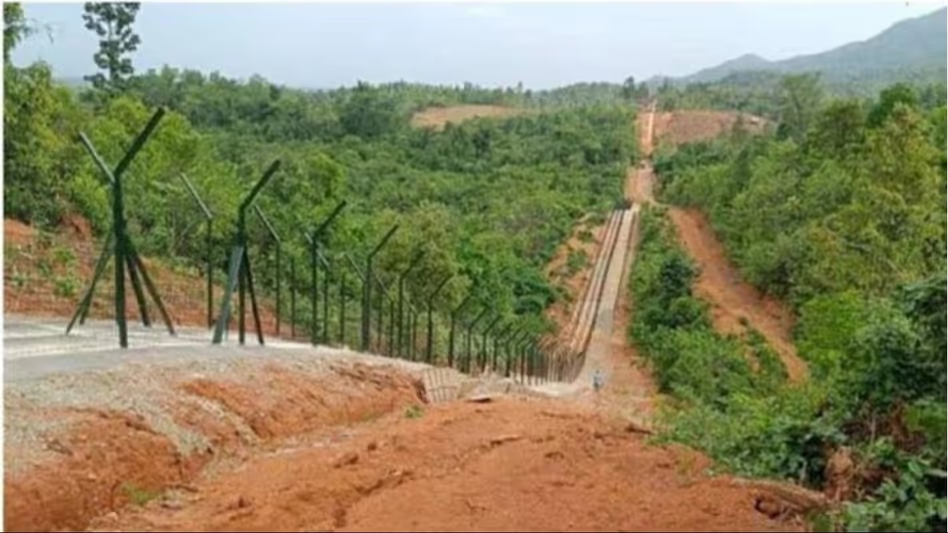
Meghalaya pushes for closer border fencing to protect villages from cross-border infiltration, urging the Centre for urgent action to secure border communities.
Meghalaya Pushes for Closer Border Fencing to Strongly Safeguard Villages from Infiltration
In a determined call for stronger national security and rural safety, Meghalaya pushes for closer border fencing along sensitive stretches of the India-Bangladesh boundary to protect villages from infiltration. The state government has urged the Centre to speed up and modify fencing projects so that they are constructed much closer to the zero line, ensuring better protection for border communities that often find themselves vulnerable to cross-border movements.
This move comes amid rising concerns from residents, village leaders, and security forces about illegal activities, smuggling, and infiltration in areas where gaps or long distances between the fencing and the actual border have left villages exposed.
Why Meghalaya is Urging for Closer Border Fencing
The demand for fencing closer to the actual border line is rooted in both security and livelihood concerns. At present, large stretches of border fencing in Meghalaya are set back by several hundred meters from the zero line due to objections from Bangladesh or geographical constraints.
Unfortunately, this means that several Indian villages fall outside the fenced area, making them susceptible to:
- Illegal infiltration from across the border.
- Smuggling of contraband, including cattle and narcotics.
- Security risks for villagers living beyond the fencing.
By pushing for closer fencing, the Meghalaya government aims to bring these vulnerable villages within the protected zone.
Government’s Stand
Chief Minister Conrad K. Sangma has publicly stated that protecting the lives and livelihoods of border residents is a top priority. In a recent meeting with Union Home Ministry officials, he stressed that the Meghalaya pushes for closer border fencing not to restrict legitimate movement, but to safeguard against threats.
“We have a duty to ensure that our citizens feel safe in their homes. Closer fencing will help keep infiltration and illegal activities in check while allowing us to protect agricultural lands and property,” Sangma said.
Role of the Border Security Force (BSF)
The BSF, which guards the India-Bangladesh border, has also expressed concerns over the current fencing arrangement. Officers point out that long gaps between the zero line and the fence create a “no man’s land” where law enforcement is difficult.
A senior BSF officer posted in Meghalaya explained:
“When villages lie outside the fence, our personnel cannot respond quickly to infiltration attempts. Bringing the fence closer will make patrolling more effective and security tighter.”
Villagers’ Plight and Demands
For villagers living between the zero line and the current fence, daily life is fraught with challenges:
- They must cross BSF gates daily to reach their fields or homes.
- There is constant fear of cross-border criminals.
- Agriculture is disrupted due to the need for permits and security checks.
Local village heads have been vocal in supporting the move. A farmer from South Garo Hills said:
“We feel abandoned. If the fence is brought closer to the border, our homes will be safe, and our children can play without fear.”
Balancing Security and Diplomacy
While the Meghalaya pushes for closer border fencing, the process is not without challenges. The India-Bangladesh border agreement requires careful consideration of diplomatic ties. Bangladesh has in the past objected to fencing right on the zero line, citing treaty provisions.
Officials note that closer fencing will require bilateral negotiations to ensure both countries agree on the new alignment.
Economic Impact on Border Communities
Aside from security, the fencing issue also has economic implications. Many farmers have lost access to their fertile lands that now lie outside the fence. Bringing the fence closer would restore access without daily hassles.
Economists believe that improving border security can also promote legitimate trade and tourism, reducing illegal cross-border commerce that undercuts local markets.
Ongoing and Planned Fencing Projects
Currently, several stretches of fencing in Meghalaya are under construction or renovation. However, many of these still follow the older setback design. The state government is pushing for revisions in these projects to incorporate closer alignments.
Central funding and approvals will be crucial to making these changes, and officials are hopeful that the Centre will recognise the urgency of the matter.
Political Consensus and Public Support
Interestingly, the demand for closer border fencing has found bipartisan support in Meghalaya’s political landscape. Opposition leaders have backed the government’s stance, recognising that border safety is a non-partisan issue.
Public rallies and petitions from civil society groups have further strengthened the case for immediate action.
Lessons from Other Border States
States like Punjab and Rajasthan have faced similar issues in their international borders, where fencing is set back from the actual boundary. In some cases, closer fencing has led to a significant drop in infiltration and smuggling incidents. Meghalaya officials believe the same results can be achieved here.
Centre’s Response So Far
The Union Home Ministry has acknowledged the state’s concerns and assured that technical and diplomatic feasibility studies will be conducted. While there is no final decision yet, sources indicate that the Centre is open to considering closer fencing in particularly vulnerable stretches.
Villages at the Forefront of the Demand
Several villages, particularly in West Jaintia Hills, South West Khasi Hills, and South Garo Hills, have been identified as priority zones for closer fencing due to high infiltration and smuggling risks. The Meghalaya pushes for closer border fencing primarily for these communities that live with constant threats.
Looking Ahead
If implemented, closer border fencing could transform the security and daily life of thousands of residents in Meghalaya’s border belt. While diplomatic hurdles remain, the growing public and political consensus suggests that the push for change will only get stronger.
For now, villagers continue to wait—hoping that the state’s determined stance will soon result in tangible safety measures.
Read More: SKM Govt Launches Shravan Kumar Award to Celebrate Acts of Filial Devotion in Sikkim