


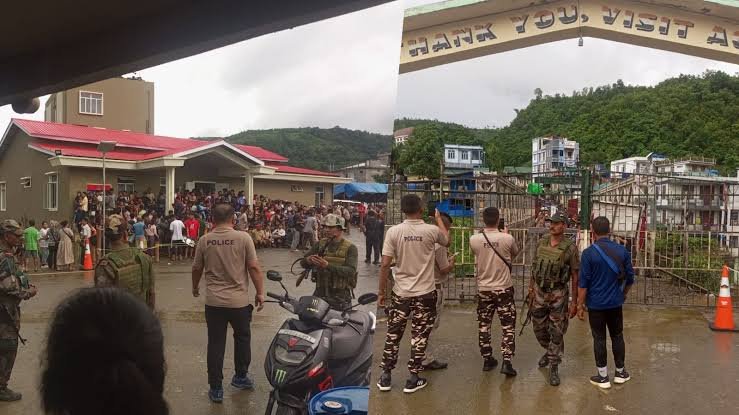
Mizoram civil society groups have continued to oppose measures that could restrict movement across the India-Myanmar border, stressing the humanitarian needs of displaced people. The Mizoram open border humanitarian aid debate has gained importance as refugees from Myanmar continue to depend on support from local communities and organisations.
The state shares strong ethnic, cultural and familial ties with communities across the Myanmar border. Consequently, civil society groups have argued that humanitarian considerations must remain central to border management.
At the same time, authorities have increased monitoring and enforcement along the international boundary. The debate therefore involves balancing humanitarian assistance, border regulation and security requirements.
Teesta River Muck Dumping Faces Major Crackdown by Sikkim High Court
Mizoram Open Border Humanitarian Aid Debate Grows
The Mizoram open border humanitarian aid issue is closely connected to the movement of displaced people from Myanmar into the state. Conflict following Myanmar’s 2021 military coup has pushed thousands of people into Mizoram.
According to a 2025 Mizoram Assembly statement cited by PTI, more than 29,000 Myanmar nationals were staying across the state’s districts at that time. Many belong to the Chin community, which shares close ethnic ties with Mizos.
More recently, fresh arrivals have continued during periods of intensified conflict in Myanmar’s Chin State. In May 2026, officials reported that at least 822 Myanmar nationals entered the Zokhawthar area of Champhai district within two days. Local organisations helped coordinate shelter and humanitarian assistance.
Therefore, civil society groups view continued access to essential assistance as an important humanitarian concern. They have argued that border policies should not prevent displaced families from receiving basic support when conflict forces them to seek safety.
However, the state’s position also involves border security and legal controls. Authorities have continued biometric registration and other verification measures for people entering Mizoram.
Civil Society Groups Oppose Border Fencing
The Mizoram open border humanitarian aid discussion has also been linked to the Centre’s proposal to fence the India-Myanmar border. Prominent civil society organisations have opposed the proposed fencing, citing concerns about its impact on communities living on both sides.
In January 2026, the Mizo Zirlai Pawl and the Zo Re-Unification Organisation jointly wrote to Prime Minister Narendra Modi seeking reconsideration of the proposed fencing. The organisations also held a protest in Aizawl.
The groups argued that a physical barrier could affect social, cultural and economic ties among Indigenous Zo communities. Such concerns carry particular weight in Mizoram because families and communities have longstanding connections across the international boundary.
Furthermore, civil society organisations have played an important role in assisting people displaced from Myanmar. The Young Mizo Association and other local organisations have provided humanitarian support alongside government agencies and NGOs.
For displaced families, however, humanitarian needs remain significant. A 2026 academic study found that refugee communities in Mizoram continued to face shortages of food, healthcare, shelter materials and other essential services.
The study also noted that humanitarian assistance from some NGOs and community support systems had declined over time. Consequently, local networks remain important for many displaced people.
Border Management Faces Humanitarian and Security Concerns
The Mizoram open border humanitarian aid debate does not mean that all border controls have been removed. Instead, Mizoram continues to operate within India’s broader security and immigration framework.
Authorities have increased documentation and verification of people crossing the border. Police and other security agencies have also monitored movement in border districts.
Meanwhile, civil society organisations have sought policies that recognise the humanitarian realities of the region. Their position reflects the close relationships between communities on both sides of the border.
The debate has become more complex because Mizoram also faces concerns involving illegal trade and unauthorised movement. In September 2026, officials and civil society representatives in Lawngtlai discussed stronger enforcement along the international border. The meeting called for closer verification of goods and greater coordination among government agencies and voluntary organisations.
Therefore, humanitarian access and enforcement have increasingly become parallel concerns rather than mutually exclusive issues. Authorities can strengthen documentation while still coordinating relief for displaced communities.
The approach also requires cooperation between government departments, security agencies, local organisations and community representatives. Such coordination can help address humanitarian needs without weakening lawful border management.
Refugee Assistance Remains a Major Concern
The Mizoram open border humanitarian aid discussion comes as refugee assistance faces continuing pressure. Mizoram has hosted large numbers of displaced people for several years, placing additional demands on local communities and government resources.
A 2026 study on Myanmar refugees in Mizoram found that prolonged displacement had reduced access to humanitarian assistance in several areas. Researchers reported difficulties involving food security, healthcare, livelihoods and other basic needs.
The situation has also required local administrations to coordinate with voluntary organisations. In May, officials in Champhai reviewed humanitarian assistance through a project supporting refugees and vulnerable members of host communities.
Such efforts demonstrate the importance of maintaining humanitarian channels during periods of renewed displacement. When conflict intensifies across the border, new arrivals can place additional pressure on existing relief systems.
At the same time, Mizoram’s civil society organisations have remained involved in the response. Their participation provides a community-level support network that complements official assistance.
However, long-term humanitarian support requires sustained resources. Temporary assistance may address immediate needs, while prolonged displacement creates continuing demands for healthcare, education, shelter and livelihoods.
Calls Continue for a Balanced Border Policy
The Mizoram open border humanitarian aid debate is likely to remain relevant as India considers its approach to the Myanmar border. Civil society groups want humanitarian considerations protected, while authorities must also address security, documentation and illegal cross-border activity.
Recent developments show that both concerns remain active. On one side, organisations continue to oppose measures that they believe could disrupt traditional community connections. On the other, district authorities are strengthening enforcement and verification along sensitive border routes.
Additionally, the continuing presence of displaced Myanmar nationals means humanitarian assistance remains an immediate concern. Mizoram’s close social links with Chin communities have shaped the state’s response since the Myanmar crisis began.
Therefore, future border policies will need to address several issues simultaneously. These include lawful entry procedures, security monitoring, humanitarian assistance and the longstanding social relationships shared by border communities.
The discussion is not simply about keeping a border open or closed. It also concerns how authorities can manage an international boundary while protecting vulnerable people affected by conflict.
Conclusion
The Mizoram open border humanitarian aid debate reflects the difficult balance between humanitarian responsibilities and border management. Civil society groups have opposed measures such as border fencing that they believe could disrupt longstanding ties between communities.
Meanwhile, Mizoram continues to host thousands of people displaced by conflict in Myanmar. Local organisations, government agencies and NGOs have supported these communities, although studies indicate that humanitarian needs remain substantial.
Authorities have also strengthened verification and enforcement along the international border. Consequently, the challenge for policymakers remains finding an approach that protects security while ensuring vulnerable people can access essential humanitarian assistance.
FAQs
What is the Mizoram open border humanitarian aid issue?
The Mizoram open border humanitarian aid issue concerns calls from civil society groups to protect humanitarian access for people displaced by conflict while maintaining appropriate border controls.
Why do Mizoram groups oppose border fencing?
Civil society organisations have raised concerns that fencing could disrupt social, cultural and economic ties between Zo communities living on both sides of the India-Myanmar border.
How many Myanmar nationals have taken shelter in Mizoram?
Mizoram’s Home Minister reported more than 29,000 Myanmar nationals in the state in August 2025. The number has fluctuated as fresh arrivals have crossed during periods of conflict.
Who provides humanitarian assistance to displaced people?
Government agencies work with civil society groups, NGOs and community organisations. The Young Mizo Association has also played a significant role in supporting displaced communities.
Does Mizoram have border enforcement measures?
Yes. Authorities conduct verification and documentation, while district administrations and security agencies continue monitoring movement and trade along the international border.