


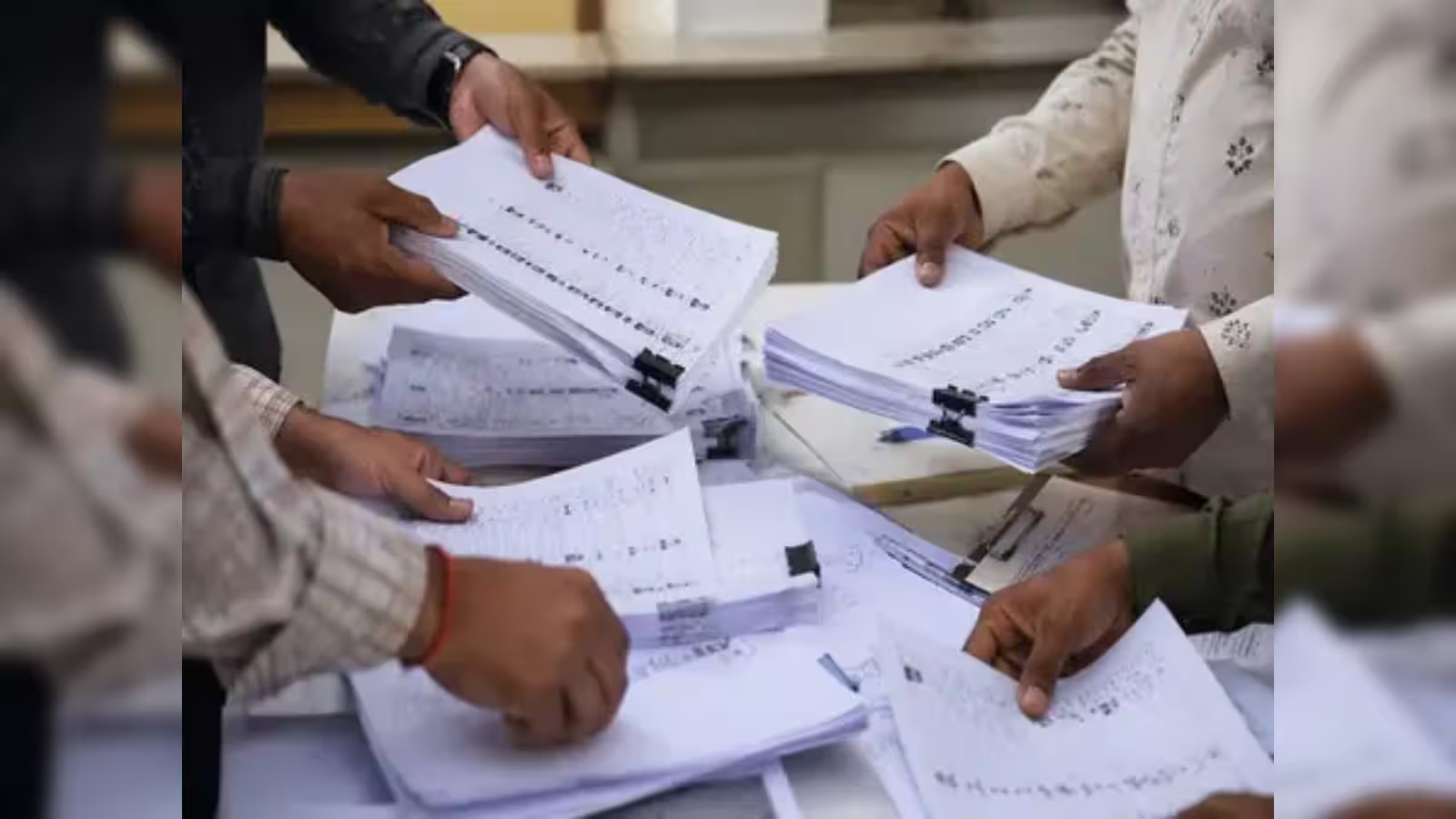
The Mizoram Electoral Reforms have advanced after the state election cell introduced strict transparency mandates for localized booth-level agents. The new directives are intended to enhance accountability, improve electoral oversight, and promote greater confidence in election management at the grassroots level.
The Mizoram Electoral Reforms have entered a new phase with the state election cell issuing stricter transparency mandates for localized booth-level agents. The latest directives focus on strengthening accountability and ensuring that election-related responsibilities at the grassroots level are carried out with greater clarity and adherence to established procedures. Moreover, the initiative reflects the continued emphasis on maintaining transparency throughout the electoral process.
Booth-level agents play an important role in supporting election administration by facilitating communication between election authorities and local communities. Therefore, updated transparency measures are expected to reinforce public confidence in electoral management.
VPP Ideological Defense Highlights Policy Transparency Amid Public Demonstration Debate
Mizoram Electoral Reforms Introduce New Transparency Mandates
The state election cell announced stricter transparency requirements for localized booth-level agents as part of the ongoing Mizoram Electoral Reforms. The new mandates seek to improve procedural accountability while ensuring that election-related activities remain consistent with established electoral guidelines.
Moreover, the directives emphasize clear documentation and greater openness in the functioning of booth-level agents. Consequently, election authorities aim to strengthen institutional credibility through improved administrative practices.
The announcement demonstrates the state’s continued efforts to enhance the integrity of election management by refining operational standards at the local level.
Booth-Level Agents Play a Key Role in Election Administration
Booth-level agents serve as an important link between election authorities and voters during various stages of the electoral process. Their responsibilities often involve assisting with voter-related information, supporting administrative coordination, and helping implement election procedures in accordance with applicable rules.
Furthermore, transparency requirements help ensure that these responsibilities are performed consistently and fairly. Therefore, strengthening operational guidelines can contribute to greater efficiency and accountability in election management.
The Mizoram Electoral Reforms recognize the significance of these local-level functions by introducing measures aimed at improving oversight and procedural compliance.
Mizoram Electoral Reforms Focus on Accountability and Public Confidence
The latest transparency mandates reflect broader efforts to reinforce public trust in democratic institutions. Moreover, election management authorities frequently review operational procedures to ensure that administrative practices remain transparent and effective.
Clear guidelines also help booth-level agents better understand their responsibilities and maintain compliance with established electoral standards. Similarly, transparent procedures support consistent implementation across different polling areas.
Meanwhile, stronger accountability measures can contribute to smoother election administration by reducing uncertainty and promoting uniform practices throughout the electoral system.
Transparency Measures Support Democratic Processes
The Mizoram Electoral Reforms highlight the importance of transparency as a fundamental principle of election administration. Electoral institutions regularly update operational procedures to respond to evolving administrative requirements while maintaining fairness and credibility.
Moreover, transparent election processes help strengthen voter confidence by ensuring that administrative responsibilities are carried out according to clearly defined standards. Consequently, the latest directives reinforce the commitment to responsible electoral governance.
As future electoral activities are planned, the implementation of these transparency mandates is expected to become an important component of local election administration across Mizoram.
Conclusion
The Mizoram Electoral Reforms have progressed with the introduction of strict transparency mandates for localized booth-level agents. The new guidelines reflect the state election cell’s commitment to improving accountability and strengthening the integrity of election administration.
Moreover, the updated directives underscore the importance of transparent procedures in supporting efficient and credible electoral management. By reinforcing operational standards at the grassroots level, the reforms aim to enhance public confidence in democratic processes.
Overall, the latest initiative represents another step toward improving election governance in Mizoram. As the transparency mandates are implemented, they are expected to contribute to more consistent administrative practices and stronger institutional accountability.
FAQs
1. What are the Mizoram Electoral Reforms?
The Mizoram Electoral Reforms refer to the latest measures introduced by the state election cell to strengthen transparency and accountability in election administration.
2. What new directives have been issued?
The state election cell has introduced strict transparency mandates for localized booth-level agents to improve procedural accountability.
3. Who are booth-level agents?
Booth-level agents are local election functionaries who assist in election-related administrative activities and help coordinate voter-related processes in accordance with electoral guidelines.
4. Why are transparency mandates important?
Transparency measures help improve accountability, strengthen public confidence, and ensure that election procedures are implemented consistently and fairly.
5. What is the objective of these reforms?
The reforms aim to enhance the integrity of election administration by promoting clear procedures, responsible governance, and effective oversight at the grassroots level.