

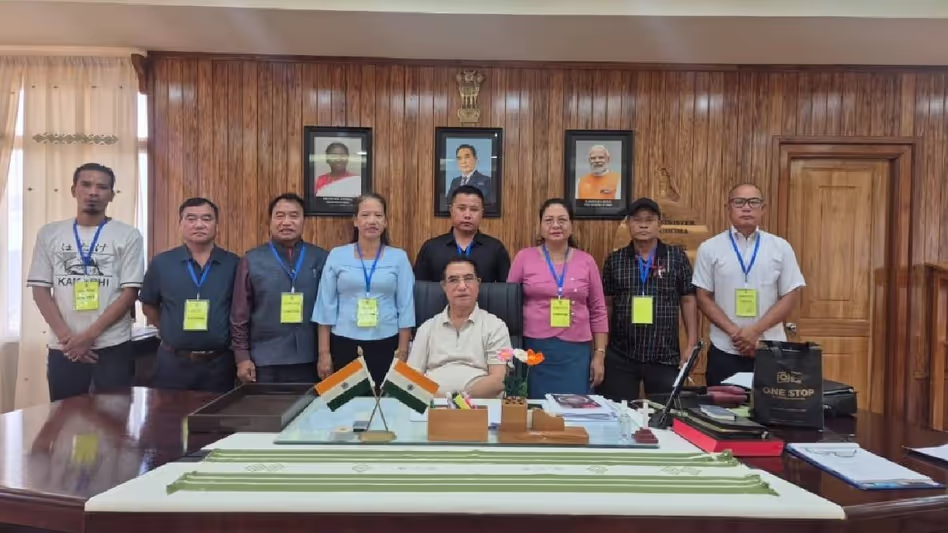
Mizoram expands rubber mission under second phase, approving 173 hectares to boost economic growth, empower farmers, and strengthen sustainable agriculture.
Positive Growth: Mizoram Expands Rubber Mission with 173 Hectares Approved Under Second Phase
In a significant step toward strengthening sustainable agriculture and rural livelihoods, Mizoram expands rubber mission under its second phase, approving an additional 173 hectares of cultivation. This expansion marks a milestone in the state’s journey to harness its agro-climatic potential, diversify income sources for farmers, and build a more resilient agricultural economy.
The move has been hailed as a powerful development, not only for Mizoram’s rubber sector but also for its broader goals of economic self-reliance and environmental sustainability.
Mizoram Expands Rubber Mission: A Vision for Farmers
The announcement that Mizoram expands rubber mission under the second phase with 173 hectares approved has sparked optimism among the state’s farming community. Rubber cultivation offers:
- Steady income for small farmers
- Employment opportunities in rural areas
- Support for agro-based industries
- Long-term economic stability
By investing in rubber, Mizoram is addressing both the income insecurity of farmers and the need for crop diversification.
Why Mizoram Expands Rubber Mission is a Positive Move
1. Boosting Farmer Incomes
Rubber plantations provide a sustainable source of income. With Mizoram expanding rubber mission, farmers will have greater opportunities to secure their livelihoods.
2. Driving Economic Growth
The expansion of 173 hectares will strengthen Mizoram’s position in the rubber market, creating potential for industrial tie-ups and trade.
3. Promoting Sustainable Agriculture
Rubber cultivation in Mizoram aligns with eco-friendly farming practices that improve soil fertility, prevent erosion, and balance biodiversity.
Mizoram Expands Rubber Mission: Details of the Second Phase
The state government confirmed that under the second phase of Mizoram expands rubber mission, 173 hectares of new plantations have been approved. The project aims to:
- Encourage farmers to take up rubber as a cash crop
- Provide technical and financial support
- Establish better supply chain management for rubber marketing
- Build stronger linkages between farmers and industries
This phase follows the success of the first phase, where hundreds of hectares were already brought under cultivation, delivering tangible benefits to the farming community.
Mizoram Expands Rubber Mission – Empowering Rural Communities
The fact that Mizoram expands rubber mission highlights the government’s focus on empowering rural communities. The initiative is expected to generate:
- Employment opportunities for local youth
- Women participation in plantation and processing activities
- Better standard of living for marginalized groups
Rubber plantations are labor-intensive, creating job avenues beyond farming, including processing, transportation, and marketing.
Environmental Impact of Mizoram Expanding Rubber Mission
With Mizoram known for its rich biodiversity, concerns often arise around large-scale plantations. However, the Mizoram expands rubber mission project has been designed to maintain ecological balance.
- Farmers are trained to adopt sustainable farming methods
- Rubber plantations prevent soil erosion in hilly areas
- The mission encourages mixed cropping models to protect biodiversity
This eco-conscious approach ensures that economic growth and environmental conservation go hand in hand.
National Context – Rubber in India
The news that Mizoram expands rubber mission also reflects India’s broader goals. India is one of the largest consumers of natural rubber globally, but domestic production often falls short.
By expanding rubber cultivation in northeastern states like Mizoram:
- The country reduces dependence on imports
- Strengthens domestic rubber supply chains
- Encourages balanced regional development
Mizoram Expands Rubber Mission – Role of Farmers
The success of this initiative depends on the active participation of farmers. With Mizoram expanding rubber mission, farmers are being supported with:
- Subsidized planting materials
- Training in modern cultivation techniques
- Assured market linkages
- Financial assistance for maintenance
These measures ensure farmers can overcome the initial challenges of rubber cultivation and reap long-term rewards
Economic Benefits of Mizoram Expands Mission
When Mizoram expands rubber mission, it directly contributes to the state’s economy. Some benefits include:
- Export potential: Rubber from Mizoram can tap international markets.
- Industry linkages: Rubber-based industries create value addition.
- Revenue generation: The state earns through taxes and trade.
With global demand for natural rubber rising, Mizoram’s expansion underlines a strategic economic move.
Challenges Ahead Despite Expansion
While the Mizoram expands mission news is positive, challenges remain:
- Initial gestation period: Rubber trees take 6–7 years to mature.
- Market fluctuations: Farmers need protection against price drops.
- Infrastructure gaps: Better processing and storage facilities are essential.
- Climate risks: Changing rainfall patterns can affect plantations.
Addressing these issues will ensure the mission delivers sustainable benefits.
Government’s Commitment
Officials reaffirmed that the Mizoram expands rubber mission is not just about land expansion but about building a robust ecosystem. They stressed the importance of training, market access, and financial inclusion to ensure that farmers genuinely benefit.
“This expansion reflects our commitment to empowering farmers and promoting sustainable development in Mizoram,” a senior official stated.
Mizoram Expands Rubber Mission – A Step Toward Self-Reliance
By approving 173 hectares under the second phase, Mizoram expands rubber mission and contributes to the broader vision of Atmanirbhar Bharat (Self-Reliant India). This initiative reduces import dependency, boosts exports, and strengthens the domestic economy while empowering grassroots communities.
Read More: Manipur Police Arrest Three with Heroin in Kakching District