


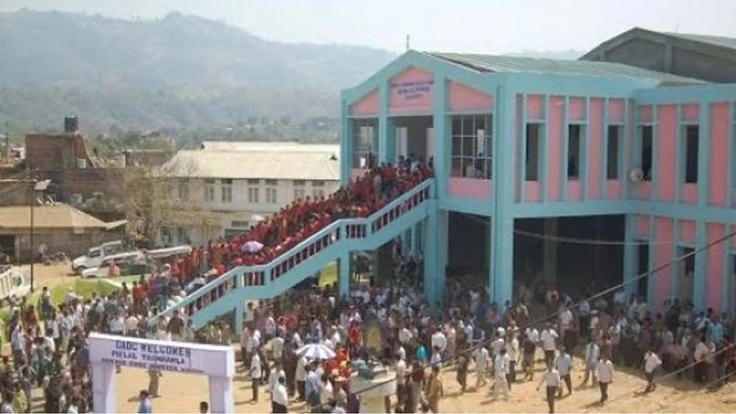
Mizoram’s three Autonomous District Councils (ADCs) are facing a combined salary shortfall of Rs 159.59 crore, prompting their leaders to seek urgent intervention from the state government. The Mara, Lai and Chakma councils have said that rising employee costs and limited allocations for non-salary expenditure are putting increasing pressure on their finances.
The issue has raised concerns about the ability of the councils to meet salary obligations while continuing development activities and other essential services in their respective areas.
Mara, Lai and Chakma Councils Face Major Deficits
According to Mara ADC Chief Executive Member (CEM) M. Laikaw, the salary deficit stands at Rs 25.88 crore for the Mara Autonomous District Council, Rs 69.93 crore for the Lai ADC and Rs 63.78 crore for the Chakma ADC.
Together, the three councils face a financial gap of Rs 159.59 crore.
The council leaders said more than 90 per cent of their budgets are now being spent on salaries, leaving very little money for development programmes and other non-salary expenditure.
The growing salary burden has become a major concern for the autonomous bodies, which are responsible for administration and development across their respective council areas.
Pay Revisions and Allowances Add to Financial Pressure
The three ADC leaders attributed the increasing financial burden to several factors, including successive pay revisions, dearness allowance, annual increments, promotions and the regularisation of employees.
While salary-related expenses have continued to rise, they said allocations for non-salary expenditure have remained largely stagnant.
The funding system has also changed. Until 2023-24, the state government provided funds under separate salary and non-salary heads. From 2024-25 onwards, funding has been provided under the Grant-in-Aid (General) head.
The council leaders argued that the current arrangement has made it difficult for the ADCs to accommodate rising salary requirements.
Councils Seek Additional Funding
The ADC leaders have pointed to differences in funding arrangements between the first and second State Finance Commission periods.
They said that during the first State Finance Commission period, additional salary requirements were generally addressed through Revised Estimates. However, during the second commission period, covering 2021-22 to 2025-26, such additional funding was reportedly provided only in 2022-23.
The councils have therefore requested the state government to release additional funds through Revised Estimates to help meet their outstanding salary liabilities.
The leaders said the financial pressure was affecting not only employees but also churches and the general public in the council areas.
Concerns Over Development and Administrative Powers
The financial crisis has also revived broader concerns about the functioning and powers of Mizoram’s autonomous councils.
The three council leaders said that 20 departments were entrusted to the ADCs in 1993, but the corresponding development works and schemes have not been fully transferred to the councils.
Departments including Agriculture, Veterinary, Public Works and Fisheries have been entrusted to the ADCs. However, the leaders alleged that the state government continues to implement departmental functions and development schemes in areas under the councils.
They argued that this has resulted in what they described as a system of parallel or dual administration.
Appeal to Mizoram Government and Governor
The ADC leaders have submitted representations to Mizoram Governor Vijay Kumar Singh and Chief Minister Lalduhoma, seeking immediate intervention to address the financial crisis.
They have also called for steps to ensure that the councils receive adequate funding and are able to exercise their constitutional powers and responsibilities effectively.
The leaders further referred to recommendations made by a Gupta Commission constituted by the state government in 2011. The commission had recommended that departments entrusted to the ADCs, along with their development works and schemes, should be fully transferred to the councils.
According to the council leaders, that recommendation has not yet been fully implemented.
Financial Support Crucial for Council Functioning
The Rs 159.59-crore salary shortfall has placed the three autonomous councils at a critical financial juncture. With most of their budgets being consumed by employee salaries, the councils have warned that development and other essential activities could face increasing constraints.
Their appeal now puts the focus on how the Mizoram government responds to the funding gap and the broader question of financial and administrative powers of the autonomous councils.
For the Mara, Lai and Chakma councils, securing additional funds is not only about clearing salary liabilities but also about ensuring that they can continue carrying out their administrative and developmental responsibilities.