


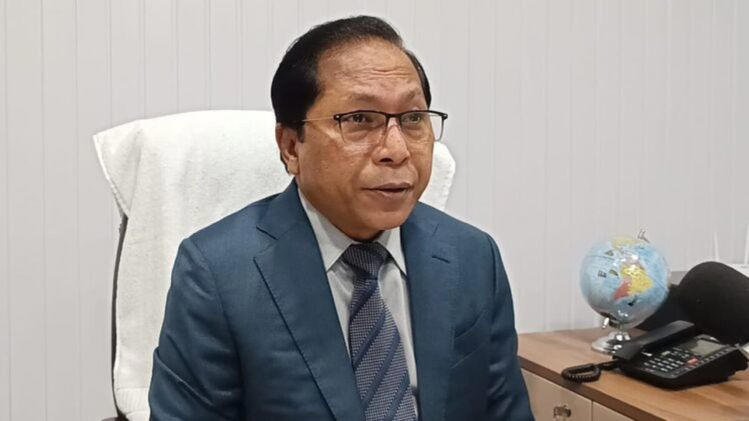
Former Meghalaya Chief Minister and Leader of the Opposition Mukul Sangma has strongly criticised the state government over the recent violence in Shillong, describing the incident and its aftermath as a “complete failure” of governance and law and order.
Sangma alleged that the Meghalaya government failed to take adequate preventive measures despite warnings and growing concerns raised by civil society organisations. The violence followed a black-flag bike rally organised by the Khasi Students’ Union (KSU) on August 19, which later escalated into incidents of unrest, vandalism and arson in Shillong.
Questioning the government’s handling of the situation, the opposition leader said the unrest should not be viewed as an unexpected development. According to him, the authorities had sufficient time, information and administrative machinery to assess the situation and take steps to prevent violence.
Sangma Blames Government for Law and Order Breakdown
Speaking about the incident, Mukul Sangma accused the Meghalaya government of failing to respond adequately to concerns that had been raised by different sections of society.
He argued that the violence did not occur suddenly but was linked to growing frustration over issues that civil society organisations had repeatedly highlighted. Sangma said the government should have taken note of these concerns and acted before the situation escalated.
He described the incident as a serious administrative failure and questioned whether the authorities had properly assessed the possible consequences of allowing the rally to go ahead.
According to Sangma, the state government had access to the necessary intelligence and administrative resources to anticipate potential trouble and put preventive measures in place. He questioned why stronger safeguards were not implemented to prevent the violence.
Questions Raised Over Preventive Measures
One of Sangma’s main criticisms centred on the government’s preparedness before the rally.
He questioned whether the authorities had taken sufficient steps to inform the public and maintain security after permission was granted for the event. Sangma argued that if the government had information indicating the possibility of unrest, it should have issued appropriate advisories and strengthened preventive arrangements.
The Leader of the Opposition maintained that the state administration had enough time to prepare for possible disturbances.
The violence, he said, raised serious questions about the government’s ability to manage law and order in the state capital.
Sangma’s criticism has added to the political pressure on the Meghalaya government as authorities continue to deal with the aftermath of the unrest and work to restore normalcy in affected areas.
Violence Followed KSU Black-Flag Bike Rally
The unrest in Shillong followed a black-flag bike rally organised by the Khasi Students’ Union. The situation later turned violent, with reports of vandalism, arson and damage to property.
Reports said statues of Swami Vivekananda and Netaji Subhas Chandra Bose were allegedly vandalised, while government vehicles were also set on fire during the unrest. The incidents triggered heightened security concerns in Shillong and surrounding areas.
The violence also contributed to tensions between Meghalaya and Assam, with reports of blockades and counter-blockades emerging along parts of the inter-state border. Five companies of the Central Armed Police Forces were deployed as authorities sought to manage the situation and prevent further escalation.
Sangma Warns Against Giving Incident a Meghalaya-Assam Colour
Mukul Sangma also cautioned against portraying the violence as a confrontation between the people of Meghalaya and Assam.
He said the incident should not be given a communal or inter-state colour, arguing that such a narrative could create further tension and damage the image of Meghalaya.
According to Sangma, the violence should instead be examined as a failure of governance and law and order. He stressed that portraying the incident as a conflict between communities or neighbouring states could have wider consequences for peace and social harmony.
The opposition leader said it was important to prevent the situation from being interpreted in a way that could deepen divisions between communities or create long-term tensions along the Meghalaya-Assam border.
Growing Political Pressure on Meghalaya Government
The Shillong violence has now become a major political issue in Meghalaya, with the opposition questioning the state government’s response and preparedness.
Sangma’s remarks reflect a broader criticism of the handling of law and order during the rally and the events that followed.
The opposition leader has maintained that public grievances and warnings from civil society groups should not be ignored. According to him, governments have a responsibility to recognise signs of growing frustration and respond before they develop into a larger law and order crisis.
He argued that effective governance requires authorities to engage with stakeholders and address concerns at an early stage rather than waiting for a situation to escalate.
The incident has therefore renewed the focus on the relationship between civil society groups, student organisations and the state administration in Meghalaya.
KSU Steps Up Outreach After Violence
Meanwhile, the Khasi Students’ Union has continued its political and public outreach following the unrest.
The organisation submitted a memorandum to the 36 public representatives from the Khasi-Jaintia region, highlighting its concerns and seeking attention to issues raised by the group. The move reflects continuing efforts by the student body to take its demands to elected representatives amid the tense political atmosphere.
The developments have placed greater focus on the concerns that led to the rally and the government’s response to issues raised by student and civil society organisations.
For the Meghalaya government, restoring normalcy will involve not only strengthening security arrangements but also addressing the underlying concerns that have contributed to public dissatisfaction.
Meghalaya and Assam Leaders Call for Peace
The violence has also prompted efforts to prevent tensions from escalating between Meghalaya and Assam.
Meghalaya Chief Minister Conrad K. Sangma and Assam Chief Minister Himanta Biswa Sarma held discussions following the incidents and stressed the importance of cooperation and maintaining peace between the two neighbouring states.
The two leaders emphasised the need to prevent the situation from affecting the broader relationship between Assam and Meghalaya, particularly in areas along the shared border where tensions and disruptions can quickly affect local communities and businesses.
The appeal for cooperation comes amid concerns that the Shillong violence could have wider regional implications if misinformation, political accusations or retaliatory actions are allowed to intensify the situation.
Focus Shifts to Accountability and Restoring Normalcy
As Shillong recovers from the recent violence, the focus is likely to remain on restoring peace, ensuring accountability and preventing similar incidents in the future.
Mukul Sangma’s description of the episode as a “complete failure” of the Meghalaya government has sharpened the political debate surrounding the handling of the situation.
His criticism centres on the alleged failure to listen to warnings, assess the level of public frustration and use available administrative and intelligence mechanisms to prevent violence.
The Meghalaya government now faces the challenge of addressing security concerns while ensuring that the situation does not develop into a wider conflict between communities or neighbouring states.
The coming days are expected to remain crucial as authorities continue efforts to maintain law and order and restore normal movement and public confidence.
For Sangma, however, the central issue remains clear: the Shillong violence, in his view, was not an unavoidable or sudden development but a situation that could have been prevented through timely intervention and better governance. His remarks are likely to keep the government’s handling of the crisis at the centre of Meghalaya’s political debate in the days ahead.