


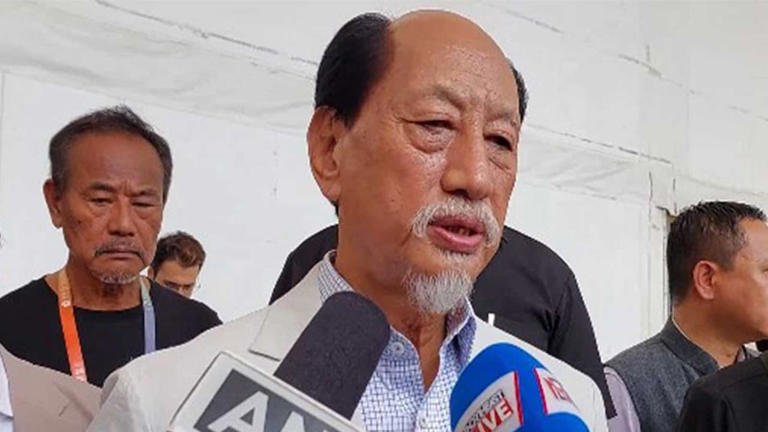
The revised Frontier Nagaland Territorial Authority (FNTA) Bill is set to be tabled in the Nagaland Legislative Assembly on September 1, Chief Minister Neiphiu Rio has said, marking a significant development in the state’s efforts to address long-standing concerns over development and greater administrative empowerment in its eastern districts.
The proposed legislation is linked to the government’s efforts to create an institutional mechanism for addressing the socio-economic and infrastructure challenges of the eastern region of Nagaland.
The decision to bring the revised Bill before the Assembly comes after consultations and discussions surrounding the proposed territorial authority and the demands of stakeholders in the region.
Revised FNTA Bill to Be Tabled on September 1
Chief Minister Neiphiu Rio said the revised FNTA Bill will be introduced in the Nagaland Assembly on September 1.
The Bill has undergone changes following discussions between the state government and stakeholders, with the objective of creating a framework that addresses the aspirations of people in the eastern districts.
The government is expected to explain the provisions of the revised legislation when it is introduced in the House.
Once tabled, the Bill will be subject to legislative discussion and scrutiny before any final decision is taken.
The development is being closely watched in Nagaland because the FNTA proposal has been regarded as an important mechanism for addressing regional disparities.
What Is the Frontier Nagaland Territorial Authority?
The Frontier Nagaland Territorial Authority is a proposed institutional arrangement aimed at providing greater administrative and developmental attention to the eastern districts of Nagaland.
The region comprises six districts: Mon, Tuensang, Longleng, Kiphire, Noklak and Shamator.
These districts have historically faced challenges related to infrastructure, connectivity, education, healthcare and economic opportunities.
The FNTA proposal emerged from demands for greater autonomy and a stronger role for local communities in deciding development priorities.
The proposed authority is intended to improve governance and accelerate development while remaining within the constitutional framework of the state.
Demand for Greater Development in Eastern Nagaland
The demand for the FNTA has its roots in concerns over the relative underdevelopment of eastern Nagaland.
Communities in the region have argued that inadequate infrastructure and limited economic opportunities have contributed to a significant development gap between the eastern districts and other parts of the state.
Poor road connectivity has been one of the major challenges, particularly for remote villages.
Limited access to healthcare and higher education has also affected residents, while employment opportunities remain comparatively restricted.
The proposed authority is expected to provide a mechanism for directing greater resources and administrative attention towards these issues.
Stakeholders Have Played Key Role
The development of the revised Bill has involved discussions between the state government and stakeholders representing the eastern districts.
The Eastern Nagaland Peoples’ Organisation (ENPO) has been at the centre of the demand for greater administrative empowerment for the region.
The organisation has advocated a political and administrative arrangement that would allow the people of eastern Nagaland to have a greater say in matters affecting their development.
The revised legislation is expected to reflect some of the concerns and suggestions raised during consultations.
Need to Balance Autonomy and State Unity
One of the major challenges surrounding the FNTA proposal has been balancing the demand for greater autonomy with the territorial and administrative unity of Nagaland.
The state government has maintained that development concerns in eastern Nagaland need to be addressed while ensuring that the proposed arrangement remains compatible with the existing constitutional and administrative structure.
The revised Bill could therefore seek to provide greater decision-making powers to the proposed authority without creating a separate political entity outside the state.
The exact extent of powers and responsibilities will become clearer when the legislation is formally introduced.
Focus on Infrastructure Development
Infrastructure development is expected to remain a major priority under any FNTA framework.
Eastern Nagaland continues to require improvements in roads, bridges, telecommunications and other basic infrastructure.
Better connectivity can have a direct impact on economic activity by allowing farmers and businesses to access markets more easily.
Improved roads can also make it easier for residents to reach schools, hospitals and government offices.
The proposed authority could potentially help coordinate development projects and ensure that local priorities receive greater attention.
Education and Healthcare Among Key Concerns
Education and healthcare are other major areas where the eastern region has sought greater government intervention.
Many remote communities face difficulties accessing higher educational institutions and specialised healthcare facilities.
Strengthening schools, colleges, hospitals and primary healthcare centres could help improve human development indicators in the region.
Greater administrative involvement at the regional level could also make it easier to identify local requirements and implement targeted programmes.
Employment and Economic Opportunities
The FNTA proposal is also connected with the broader need to create employment opportunities in eastern Nagaland.
The region has considerable potential in agriculture, horticulture, forestry, tourism and small-scale enterprises.
Developing value chains around locally produced goods could help increase incomes and create jobs.
Tourism could also become an important source of economic activity if connectivity and visitor infrastructure improve.
A stronger regional development framework could help attract investment and encourage entrepreneurship among young people.
Importance of the Revised Legislation
The decision to table the revised Bill represents an important stage in the long-running discussion over the future administrative structure of eastern Nagaland.
The revised version will be closely examined by legislators and stakeholders to determine whether it adequately addresses the concerns that led to the demand for the FNTA.
The government’s ability to build consensus around the legislation will be important for ensuring its smooth implementation.
Stakeholder acceptance will also be crucial because the effectiveness of any new authority will depend on cooperation between the state government, local institutions and communities.
Assembly Debate to Provide Clarity
The introduction of the Bill in the Assembly will provide an opportunity for elected representatives to debate its provisions.
Legislators can examine the proposed powers, administrative structure, financial arrangements and responsibilities of the FNTA.
The debate could also provide greater clarity about how the authority would interact with existing state government departments and local bodies.
Any amendments suggested during the legislative process could further shape the final framework.
Regional Development Remains Central
At the heart of the FNTA debate is the issue of balanced development across Nagaland.
Residents of eastern districts have long argued that they have not received a level of infrastructure and economic development comparable to other parts of the state.
The government will therefore need to ensure that the revised framework produces measurable improvements in people’s lives.
Better roads, healthcare, education, employment and connectivity will ultimately determine whether the initiative succeeds.
Challenges Ahead
Despite the proposed legislation, several challenges remain.
The government will need to determine the authority’s financial resources, administrative capacity and relationship with existing institutions.
Ensuring adequate funding will be particularly important because regional development programmes require sustained investment.
There may also be differences among stakeholders over the extent of powers that should be given to the proposed authority.
Addressing these issues through dialogue and legislative debate will be essential.
September 1 Bill Introduction Marks Key Moment
The planned tabling of the revised FNTA Bill on September 1 marks a significant moment in Nagaland’s efforts to address the development concerns of eastern districts.
Chief Minister Neiphiu Rio’s announcement has set the stage for detailed discussion of the proposed framework in the Assembly.
The revised Bill is expected to incorporate changes arising from consultations with stakeholders and could provide a clearer roadmap for regional development.
For the people of eastern Nagaland, the focus will now be on whether the legislation delivers meaningful administrative empowerment and faster development.
Eastern Nagaland Awaits Legislative Outcome
The FNTA issue has remained one of the most significant regional development and governance questions in Nagaland.
The proposed authority seeks to address concerns over economic opportunities, infrastructure and administrative representation in the state’s eastern districts.
With the revised Bill scheduled to be tabled on September 1, attention will now shift to the Assembly’s deliberations and the government’s ability to build consensus around the proposal.
If successfully implemented, the framework could provide a stronger institutional mechanism for addressing regional disparities.
However, its long-term success will depend on adequate funding, effective administration, stakeholder participation and tangible improvements in the lives of people across eastern Nagaland.