


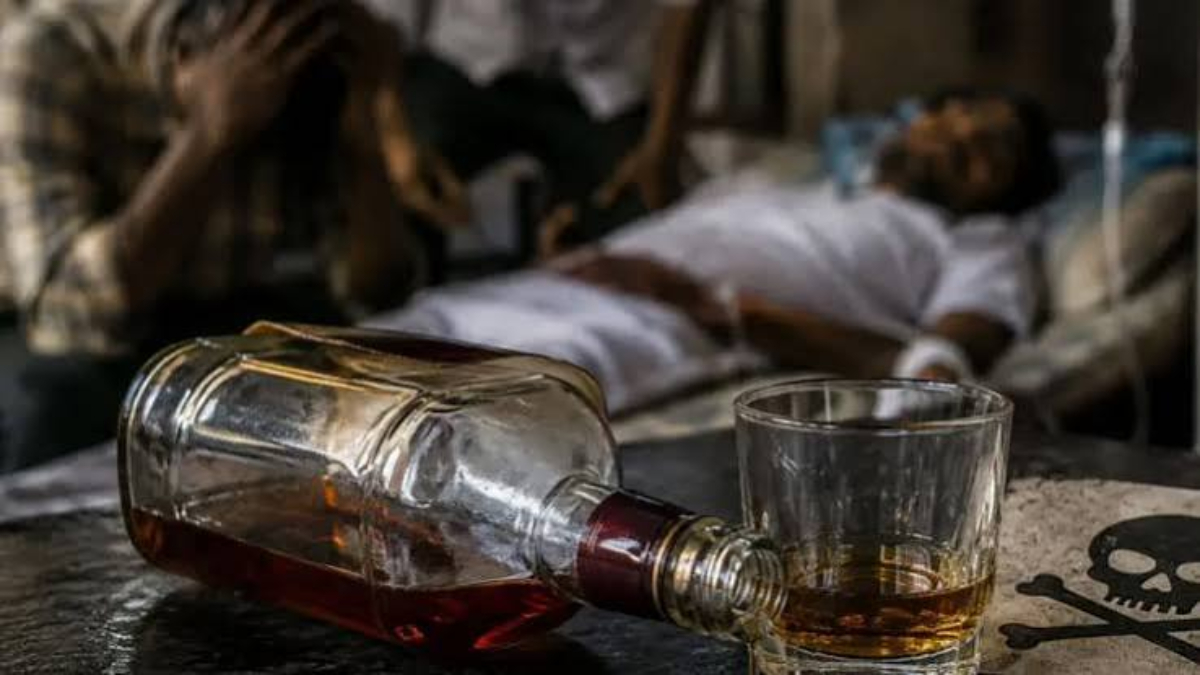
Nagaland spurious liquor deaths have triggered a major police and Excise investigation after nine people died in Tuensang district over two days, with authorities examining a possible link to contaminated or adulterated liquor. The deaths were reported in Tuensang town and Chendang Saddle on September 10 and 11. Police have stressed that spurious liquor has not yet been scientifically established as the definitive cause.
Nine deaths reported in Tuensang
The deaths came to light after authorities noticed a pattern among people admitted to Civil Hospital in Tuensang. According to preliminary enquiries, most of the deceased had reportedly consumed liquor before developing symptoms including blurred vision, severe headache, dizziness, nausea and vomiting.
Nagaland Director General of Police Rupin Sharma issued a public alert after the deaths were reported. He urged people to refrain from consuming liquor, particularly in Mon, Mokokchung, Tuensang, Longleng, Kiphire, Shamator and Noklak districts. Residents in other parts of the state were also advised to abstain as a precaution while the investigation continues.
Early reports had pointed to a suspected tainted batch of rum, with “MC Rum” mentioned in the initial police advisory. However, authorities have not confirmed that a particular brand or batch caused the deaths. Police are continuing to establish the source and nature of the liquor involved.
Police seize liquor during investigation
The Nagaland spurious liquor deaths investigation has expanded beyond the hospital cases, with police conducting searches and raids in Tuensang town and Chendang Saddle. Around 470 bottles of Indian-made foreign liquor and beer cans were seized from different locations as authorities looked for unauthorised or suspected adulterated liquor.
The seizure is an important part of efforts to determine whether a particular supply of illicit liquor was connected to the deaths. Police are also examining available medical records and other evidence gathered during preliminary enquiries.
Three of the deceased were reportedly members of the same family. Other reports have said that a police personnel and a couple were among the victims. Police have also separately examined the death of a person reportedly linked to a liquor seller, who died by hanging. That case is being investigated separately and should not automatically be attributed to suspected spurious liquor.
Why the cause remains unconfirmed
Despite the circumstances surrounding the Nagaland spurious liquor deaths, police have cautioned against drawing a final conclusion before scientific evidence is available.
Tuensang Police said the deaths have a direct or indirect circumstantial connection with alcohol consumption based on medical records, preliminary enquiries and other information. However, the consumption of spurious or adulterated liquor has not been scientifically and conclusively established as the cause.
Another challenge is that post-mortem examinations were not conducted in most cases because the bodies had already been taken for funerals before police became aware of the pattern. Scientific and forensic procedures are therefore being used to establish the exact circumstances surrounding the deaths.
Excise Department begins separate probe
The Nagaland Excise and Prohibition Department has also launched an inquiry into the source and nature of the suspected spurious liquor. The department said it was coordinating with other authorities and undertaking enforcement action as part of the investigation. It has warned the public about the serious risks associated with illicit and unregulated liquor.
The incident has also renewed attention on Nagaland’s liquor prohibition framework. The Nagaland Liquor Total Prohibition Act, 1989 prohibits the possession, sale, consumption, manufacture, import and export of liquor in the state. Despite the prohibition, illicit liquor continues to pose enforcement and public-safety challenges.
Public urged to remain cautious
Authorities have asked residents to avoid liquor from unknown or unauthorised sources and to report suspected manufacture, possession, sale or distribution of illicit liquor to the nearest Excise office. The warning remains in place while investigators work to determine whether a common source or contaminated supply was responsible for the deaths.
The Nagaland spurious liquor deaths case remains under investigation, and officials have yet to establish a definitive medical cause for all nine fatalities. For now, the focus is on tracing the liquor supply, completing forensic procedures and determining whether adulterated alcohol played a direct role in the Tuensang deaths. Any further enforcement action is expected to follow the findings of the ongoing probe.
Lumsey Jan Sewa Bhawan set for major public service boost in Sikkim