


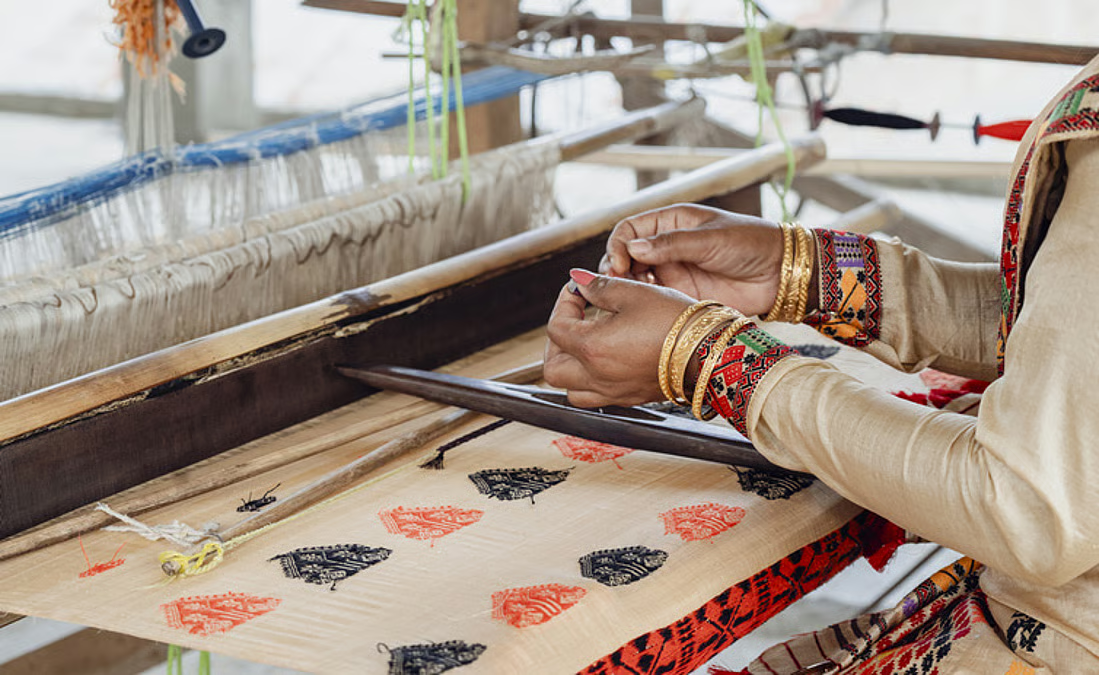
The National Handloom Day celebrations in Dibrugarh attracted large crowds as coordinated state exhibitions showcased Assam’s indigenous Muga silk and traditional handloom products. The events highlighted the cultural and economic importance of handloom craftsmanship while giving artisans a platform to present their work to wider audiences.
The exhibitions brought attention to Muga silk, one of Assam’s most distinctive traditional textiles. Moreover, public showcases can help connect artisans with consumers, retailers, designers, and potential buyers while encouraging greater appreciation for indigenous weaving traditions.
The strong public response also underlines continued interest in Assam’s handloom heritage. However, the available information does not provide official attendance figures, the number of participating artisans, or the total value of products displayed or sold.
Medical Infrastructure: Guwahati Medical College Hospital Opens 50-Bed Japanese Encephalitis Wing
National Handloom Day Highlights Assam’s Muga Silk Heritage
The National Handloom Day exhibitions in Dibrugarh placed Muga silk at the centre of the celebrations.
Muga silk has a distinctive place in Assam’s textile tradition and supports generations of artisans and weaving communities. Furthermore, exhibitions allow visitors to learn about traditional textiles while viewing finished products directly from producers and sellers.
The Dibrugarh events therefore combined cultural promotion with opportunities for commercial engagement.
However, the available information does not specify the number of Muga silk producers who participated.
National Handloom Day Promotes Indigenous Handloom Products
The National Handloom Day programme also provided a platform for other indigenous handloom products alongside Muga silk.
Traditional textiles reflect local skills, designs, weaving techniques, and cultural identities. Additionally, public exhibitions can help younger audiences understand the craftsmanship behind products that communities have preserved over generations.
Such exposure can strengthen interest in locally produced textiles.
However, the available information does not identify the complete range of handloom products displayed during the Dibrugarh exhibitions.
National Handloom Day Gives Artisans Greater Market Visibility
The National Handloom Day exhibitions can help artisans reach consumers beyond their usual local markets.
Direct interaction allows craftspeople and buyers to discuss product quality, designs, production methods, and pricing. Moreover, such events can create opportunities for artisans to develop relationships with retailers, designers, and other commercial buyers.
Greater market visibility can support the sustainability of traditional weaving communities.
However, the available information does not provide sales figures or details about commercial partnerships established during the events.
National Handloom Day Supports Muga Silk Artisans
The National Handloom Day celebrations highlight the importance of supporting artisans involved in Muga silk production.
Muga silk production involves several stages, including silkworm rearing, silk processing, weaving, and finishing. Furthermore, maintaining demand for finished Muga products can help sustain the wider network of people involved in the textile value chain.
Exhibitions can therefore contribute to greater recognition of artisan skills.
However, the available information does not provide estimates of the number of households dependent on Muga silk production in the region.
National Handloom Day Connects Culture With Commerce
The National Handloom Day exhibitions demonstrate how cultural events can also create commercial opportunities.
Visitors can experience traditional textiles while purchasing products directly from participating exhibitors. Additionally, stronger consumer demand can encourage artisans to maintain traditional techniques while developing products suited to contemporary preferences.
This balance can help traditional handloom industries remain economically relevant.
However, the available information does not indicate how much revenue participating exhibitors generated.
National Handloom Day Encourages Preservation of Traditional Skills
The National Handloom Day events also support efforts to preserve traditional weaving knowledge.
Handloom techniques often pass from one generation to another through family and community-based learning. Moreover, continued consumer interest can encourage younger people to view traditional weaving as a viable cultural and economic activity.
Public exhibitions can therefore contribute to awareness and appreciation of these skills.
However, the available information does not specify whether the Dibrugarh programme included dedicated workshops or demonstrations for young participants.
National Handloom Day Strengthens Cultural Tourism
The National Handloom Day exhibitions could also contribute to Dibrugarh’s cultural tourism potential.
Visitors interested in Assam’s heritage can explore traditional textiles and learn more about regional craftsmanship. Furthermore, handloom events can complement other cultural and tourism attractions by offering visitors a direct connection with local traditions.
Such activities can benefit artisans and businesses linked to tourism.
However, the available information does not provide figures showing whether the exhibitions increased tourist arrivals in Dibrugarh.
National Handloom Day Builds Public Awareness
The National Handloom Day celebrations help increase public awareness about the importance of indigenous textiles.
Large exhibitions give visitors opportunities to see traditional products and understand the work involved in producing them. Additionally, greater awareness can encourage consumers to support authentic handloom products and local artisans.
The reported crowds suggest strong public interest in the exhibitions.
However, the available information does not provide an official attendance figure.
National Handloom Day Can Expand Future Handloom Markets
The National Handloom Day events could create momentum for future promotion of Assam’s traditional textiles.
Regular exhibitions, digital marketing, design collaborations, and access to wider markets can help artisans expand their customer base. Moreover, stronger branding around authentic Muga silk can improve consumer recognition of Assam’s indigenous textile heritage.
However, long-term market growth will depend on product quality, pricing, supply consistency, and effective marketing.
The available information does not indicate whether organizers have announced follow-up exhibitions or market initiatives.
Conclusion
The National Handloom Day celebrations in Dibrugarh attracted large crowds as coordinated state exhibitions promoted Assam’s indigenous Muga silk and traditional handloom products. The events provided artisans with greater visibility while highlighting the cultural importance of the state’s textile heritage.
Moreover, exhibitions can connect artisans with consumers and commercial buyers while encouraging the preservation of traditional weaving skills. However, the available information does not provide official attendance figures, participant numbers, sales data, or details of future promotional programmes.
Overall, the National Handloom Day celebrations demonstrate the continuing public interest in Assam’s handloom heritage. Sustained market access, artisan support, quality promotion, and younger-generation participation can help preserve and strengthen the Muga silk tradition.
FAQs
1. What did the National Handloom Day exhibitions showcase?
The exhibitions in Dibrugarh showcased indigenous Muga silk and traditional handloom products from Assam.
2. Where were the exhibitions held?
The coordinated state exhibitions took place in Dibrugarh, Assam.
3. Why is Muga silk important?
Muga silk represents an important part of Assam’s textile heritage and supports traditional weaving and silk-production communities.
4. How can exhibitions help artisans?
Exhibitions can increase visibility, connect artisans with consumers and buyers, and create opportunities to sell traditional handloom products.
5. How can Muga silk traditions be preserved?
Strong consumer demand, artisan support, skill transmission, market access, and continued promotion can help preserve Muga silk production and traditional weaving practices.