

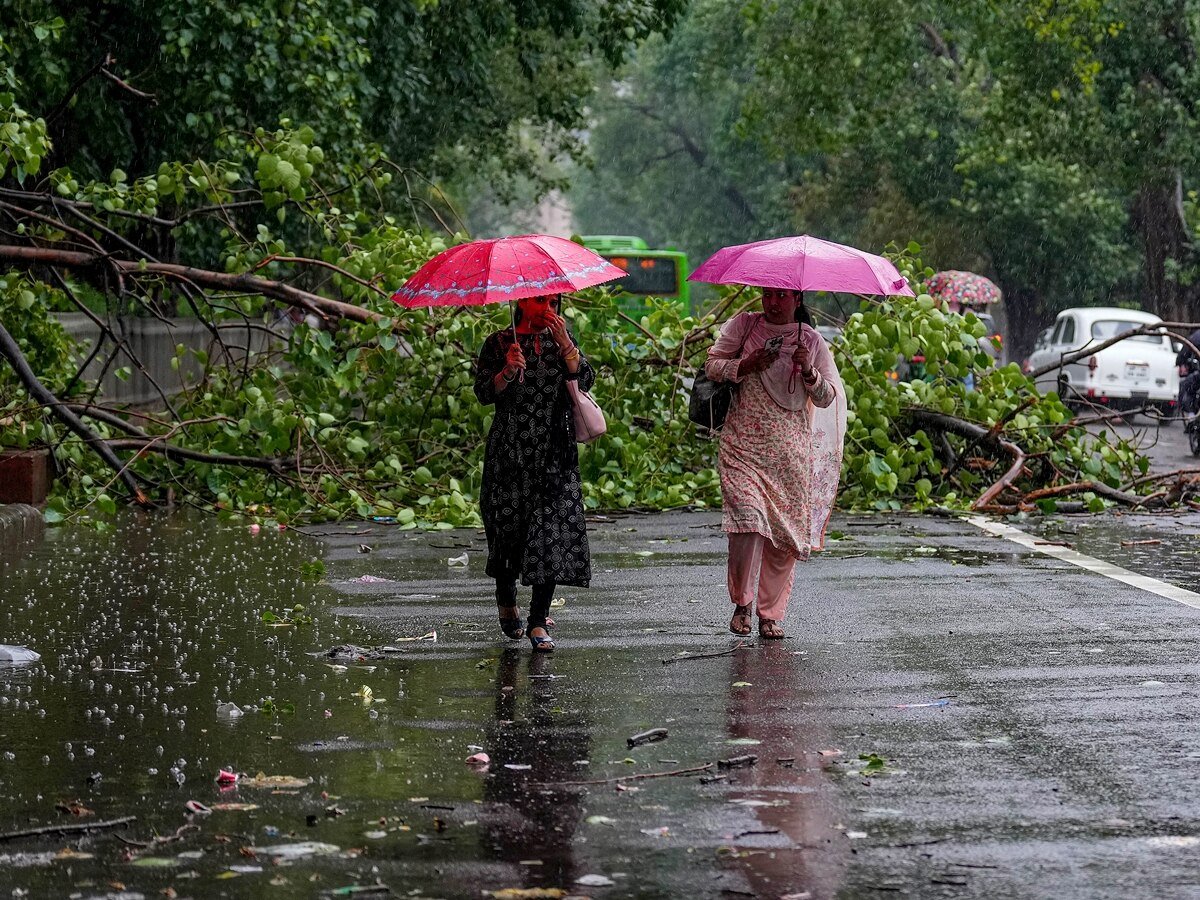
Natural Disasters & Rainfall Alerts: IMD Warns Northeast India of Heavy Showers
Guwahati, Assam: The India Meteorological Department (IMD) has issued a fresh alert for heavy to very heavy rainfall across Northeast India and adjoining eastern states, warning that persistent monsoon disturbances could trigger natural disasters & rainfall alerts of serious concern. The forecast covers Assam, Meghalaya, Arunachal Pradesh, Nagaland, Manipur, Mizoram, Tripura, and parts of West Bengal, signaling possible floods, landslides, and infrastructure damage in the coming days.
IMD’s Detailed Rainfall Forecast
According to the IMD, a combination of monsoon trough activity and a low-pressure system over the Bay of Bengal is causing intensified moisture incursion into Northeast India. This has resulted in a significant increase in rainfall intensity across the region. The IMD has placed several districts under a red alert, warning of rainfall exceeding 200 mm in 24 hours in certain locations.
Districts Under High Alert
In Assam, districts such as Dibrugarh, Dhemaji, Lakhimpur, Golaghat, and Cachar are expected to receive extremely heavy rainfall. In Meghalaya, areas like Cherrapunji and Mawsynram known for record-breaking rainfall are forecast to witness intense downpours. Arunachal Pradesh’s Papum Pare, East Siang, and Lower Subansiri districts are also under watch for potential flooding and landslides.
Potential Natural Disasters Due to Rainfall
The IMD has warned that the upcoming spell of heavy rainfall could lead to multiple hazards:
- Flash Floods: Rapid water level rise in rivers and streams, endangering low-lying settlements.
- Landslides: Hill slopes in Meghalaya, Nagaland, and Arunachal Pradesh at high risk.
- Riverbank Erosion: Especially in Assam’s Brahmaputra and Barak river basins.
- Infrastructure Damage: Roads, bridges, and power lines vulnerable to collapse.
- Urban Flooding: Towns like Guwahati and Imphal could face severe waterlogging.
IMD Advisory for Public and Authorities
The IMD has urged both residents and local administrations to take immediate precautionary measures. Authorities are advised to activate disaster management teams, prepare relief shelters, and stock emergency supplies. Citizens are urged to avoid unnecessary travel, especially in flood-prone and landslide-prone zones.
Travel Disruptions Expected
Railway authorities have issued warnings about potential disruptions in train services due to track submergence in certain flood-prone stretches. Road travel in hilly regions may become hazardous due to rockslides and slope failures.
Impact on Agriculture and Livelihoods
Heavy rainfall during the peak monsoon season is both a boon and a bane for Northeast India’s agriculture. While paddy cultivation thrives on sufficient water, excess rainfall can destroy standing crops, damage seeds, and lead to soil erosion. Farmers in Assam’s Barpeta and Jorhat districts have expressed concern about potential crop loss if the rain continues at the predicted intensity.
Preparedness by State Governments
State disaster management authorities across the Northeast have been placed on high alert. The Assam State Disaster Management Authority (ASDMA) has issued detailed instructions to district officials, while Meghalaya’s administration has deployed extra personnel in landslide-prone areas. Arunachal Pradesh has requested additional National Disaster Response Force (NDRF) units for rapid deployment.
Monsoon Pattern Analysis
Weather scientists explain that the current rainfall pattern is linked to a strong monsoon trough extending from Rajasthan to the Bay of Bengal, coupled with cyclonic circulation over the northeast Bay. This setup has enhanced moisture feed into the northeastern states, leading to the issuance of natural disasters & rainfall alerts across the region.
Why Northeast India is Vulnerable
Northeast India’s unique topography — with its mix of floodplains, steep hills, and fast-flowing rivers — makes it highly susceptible to rain-induced disasters. The Brahmaputra and its tributaries are prone to overflow during intense monsoon spells, while hilly areas face regular landslides.
Community Response and Local Initiatives
Communities in flood-prone districts have already begun moving livestock and valuables to higher ground. Local NGOs are distributing essential supplies like food packets, tarpaulins, and water purification tablets. Volunteers in Guwahati are helping residents clear clogged drains to prevent urban flooding.
Economic Consequences of Heavy Rainfall
Past records show that prolonged heavy rainfall in Northeast India leads to significant economic losses — from damaged crops and disrupted transport to loss of tourism revenue. In 2022, similar weather conditions caused damages exceeding ₹4,000 crore in Assam alone. Experts fear that a repeat of such losses could occur if the IMD’s warnings materialize fully.
Safety Tips for Residents
- Stay updated with official IMD bulletins and local weather reports.
- Avoid crossing swollen rivers or streams.
- Stock essential items like medicines, dry food, and drinking water.
- Switch off electrical appliances during heavy downpours to prevent short circuits.
- Move to higher ground if water levels rise rapidly.
Role of Technology in Disaster Management
States are increasingly relying on real-time weather apps, satellite data, and drone surveys to monitor flood situations. The Assam government has deployed river sensors to measure water levels and alert communities in advance. The IMD’s Doppler radar network is also helping improve the accuracy of rainfall predictions.
Comparisons with Previous Years
While heavy monsoon showers are not new to Northeast India, climate experts note that extreme rainfall events are becoming more frequent and intense due to climate change. Comparing IMD data from the last decade reveals a 15% increase in very heavy rainfall days in the region.
Coordination Between States
Given that rivers in Northeast India often flow across state borders, effective flood management requires strong inter-state coordination. Assam and Arunachal Pradesh have already begun joint monitoring of the Siang River to detect early signs of flooding.
Long-Term Solutions to Mitigate Impact
Experts recommend a combination of short-term disaster response and long-term infrastructure development. These include:
- Strengthening embankments along the Brahmaputra and Barak rivers.
- Building more flood shelters in rural and semi-urban areas.
- Expanding forest cover to reduce soil erosion.
- Upgrading drainage systems in cities like Guwahati and Shillong.
For real-time weather updates, visit the India Meteorological Department official website.
READ MORE : Appalling Crime in Assam: Convict Arrested for Dibrugarh Child Murder