


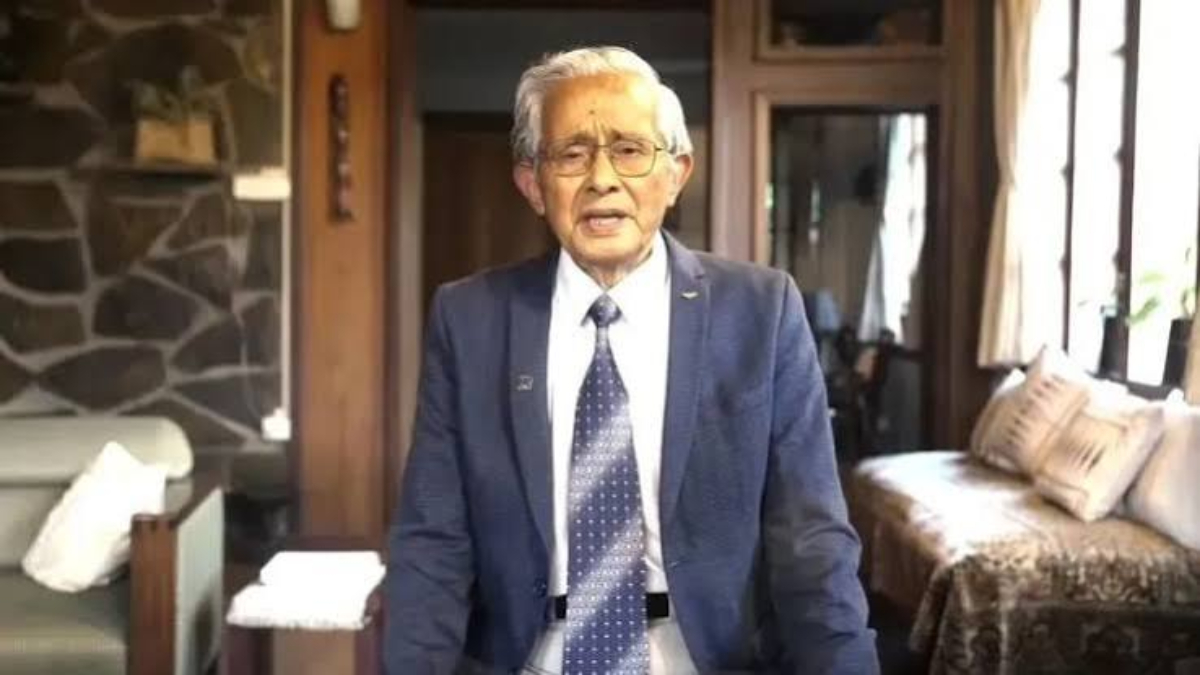
Niketu Iralu died in New Delhi on August 18, 2026, bringing to an end the life of one of Nagaland’s most respected voices for peace, reconciliation and social healing. The veteran Naga peacebuilder and reconciliation advocate, who was in his 80s, passed away after suffering a cardiac arrest while undergoing treatment at a private hospital in Delhi. His death has triggered widespread mourning across Nagaland and among organisations associated with his decades-long work for dialogue and trust-building.
Niketu Iralu’s decades-long peace mission
Niketu Iralu devoted more than six decades to promoting peace, reconciliation and human dignity, particularly in the conflict-affected Northeast. His approach was rooted in dialogue, personal transformation and the belief that lasting peace requires communities to rebuild trust across political, social and ethnic divisions.
His association with Initiatives of Change, formerly known as Moral Re-Armament, began during his university years at Madras Christian College in 1955. Iralu later became deeply involved in the organisation’s work and served in several capacities connected with its peacebuilding initiatives. His work took him to different parts of India and abroad, where he engaged with efforts aimed at reconciliation and community transformation.
He also served as director of Asia Plateau, the Initiatives of Change centre in Panchgani, Maharashtra. In Nagaland, he held important roles connected with reconciliation efforts, including serving as chairman of the Naga Reconciliation Commission and as a member and later chairman of the Peace Committee of the Nagaland Baptist Church Council.
A respected voice across Naga society
Iralu’s influence extended beyond formal political negotiations. He was widely regarded as a moral voice who could communicate with people across different communities and generations.
His work became particularly significant in a region shaped by decades of political conflict and competing aspirations. Rather than advocating violence, he consistently stressed the importance of dialogue, humility, trust and reconciliation.
In 2019, Iralu spoke about the importance of understanding the history and aspirations behind the Naga political struggle while addressing young people at a Naga Independence Day programme in Kohima. His public interventions frequently encouraged younger generations to understand the past while preparing responsibly for the future.
His contribution to social harmony was also recognised outside Nagaland. In 2023, he received the Bhupen Hazarika Integration Award (Xomonnoy Bota) from the Bhupen Hazarika Cultural Trust in Golaghat, Assam. The award recognises individuals whose work has made a significant social impact across cultural boundaries.
International recognition for peacebuilding
One of the most recent recognitions of Niketu Iralu came in November 2025, when Initiatives of Change International conferred its Lifetime Achiever Award on him for his lifelong contribution to trust-building and reconciliation.
The award was presented during the organisation’s annual lecture and Trustbuilding Awards ceremony at the University of South Africa in Pretoria. Iralu could not travel to South Africa after being denied a visa and instead delivered a recorded acceptance message.
In that message, he reflected on his long journey and emphasised that meaningful change begins with personal transformation. Initiatives of Change described him as a trusted moral and spiritual voice in a region that has experienced prolonged conflict and division.
His final public messages remained focused on the future
Even in 2026, Niketu Iralu remained engaged with public discussions in Nagaland. At the 43rd general conference of the Angami Gazetted Officers’ Krotho in Meriema on February 27, he warned that Nagas were facing an “immense crisis” and urged society to prepare for challenges of increasing complexity.
He argued that local and regional problems were connected to wider continental and global developments. Iralu also called for collective thinking, new approaches and action as society responds to rapid changes.
The address reflected the themes that had defined much of his public life: responsibility, preparedness, collective action and the need to look beyond immediate divisions.
Tributes mark the loss of a Naga peacebuilder
The news of his death on August 18 has prompted tributes from Naga organisations, public figures and civil society groups. The Naga Legislative Assembly Speaker and several organisations mourned his passing, remembering his contribution to reconciliation and peacebuilding.
For many in Nagaland, Iralu’s significance went beyond his formal positions or awards. He represented a generation that witnessed profound political and social changes in the Northeast and chose dialogue and reconciliation as tools for addressing conflict.
His passing leaves a significant gap in Nagaland’s public life. Yet the principles he promoted—trust, humility, dialogue and respect for human dignity—remain relevant to the region’s continuing search for peace. His decades of service have left behind a powerful legacy that is likely to influence future generations of Naga leaders, peacebuilders and community workers.
Manipur CM Calls for Greater Role of Art in Promoting Peace, Backs NRC Implementation