


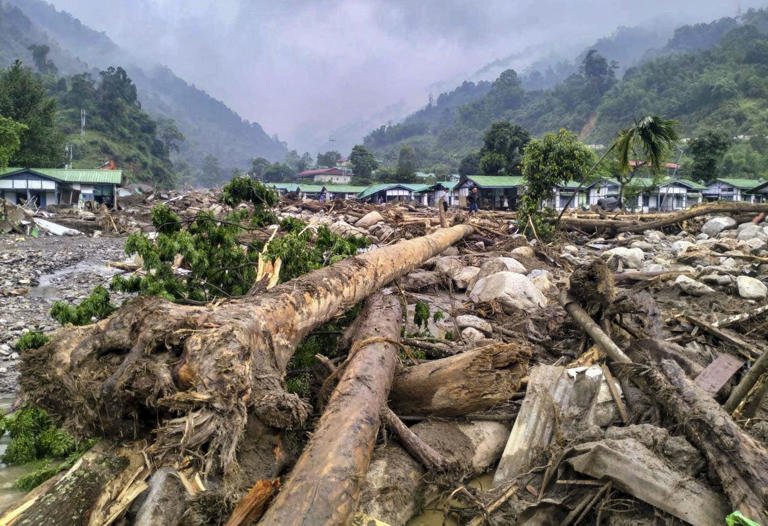
A delegation from NITI Aayog visited Arunachal Pradesh to assess the impact of the recent floods that affected several parts of the state. The team’s visit focused on evaluating the extent of damage caused by heavy rainfall and floods, reviewing ongoing relief operations, and understanding the rehabilitation requirements of the affected communities.
The visit comes as the state continues recovery efforts following widespread flooding that disrupted normal life, damaged infrastructure, and affected thousands of residents across multiple districts. Officials from the state government accompanied the NITI Aayog delegation during the assessment, providing updates on the current situation and the measures undertaken to restore normalcy.
The assessment is expected to help identify priority areas requiring support for long-term recovery and disaster resilience.
Team Reviews Damage to Infrastructure
During the visit, the NITI Aayog delegation inspected flood-affected areas to examine the damage caused to public infrastructure.
The team reviewed the condition of roads, bridges, public buildings, schools, healthcare facilities, power infrastructure, and water supply systems that were impacted by the floods. Officials briefed the delegation on restoration work already undertaken and highlighted the challenges faced in reconnecting remote and inaccessible regions.
Special attention was given to infrastructure damaged in hilly and border areas, where heavy rainfall, landslides, and overflowing rivers caused extensive disruption to connectivity.
The delegation also assessed the progress of ongoing repair and reconstruction efforts.
Assessment of Relief and Rehabilitation Measures
Apart from evaluating physical damage, the NITI Aayog team reviewed relief measures implemented by the Arunachal Pradesh government.
Officials provided detailed information on the distribution of food supplies, drinking water, temporary shelter, medical assistance, and other emergency relief provided to affected families. The delegation interacted with district authorities to understand the effectiveness of the response mechanism and identify areas requiring additional support.
The review also focused on rehabilitation initiatives aimed at restoring livelihoods, rebuilding damaged infrastructure, and assisting families affected by the natural disaster.
The team appreciated the coordinated efforts of various departments involved in disaster response and recovery.
Interaction With State Government Officials
The delegation held meetings with senior officials of the Arunachal Pradesh government to discuss the overall flood situation and the state’s response strategy.
During the discussions, officials presented updates on damage assessments, restoration of essential services, infrastructure reconstruction, and ongoing disaster management efforts. They also highlighted the unique geographical challenges faced by Arunachal Pradesh during natural disasters due to its mountainous terrain and remote settlements.
The meetings provided an opportunity to exchange views on strengthening disaster preparedness, improving emergency response systems, and enhancing long-term resilience against future floods.
The delegation reviewed reports prepared by various departments involved in relief and rehabilitation work.
Focus on Disaster Preparedness and Resilience
The visit also emphasised the importance of improving disaster preparedness to reduce the impact of future floods.
Officials discussed strategies for strengthening early warning systems, improving drainage infrastructure, enhancing river management, constructing disaster-resilient public infrastructure, and increasing community awareness regarding emergency preparedness.
The NITI Aayog delegation highlighted the need for integrated planning that combines infrastructure development with climate resilience and disaster risk reduction.
Experts noted that proactive planning can significantly minimise the economic and social impact of extreme weather events in vulnerable regions such as Arunachal Pradesh.
Special Attention to Remote and Border Areas
The delegation paid particular attention to remote and border districts, where difficult terrain often complicates relief operations and infrastructure restoration.
Officials explained that many villages remain accessible only through limited road networks, making emergency response and supply distribution more challenging during natural disasters.
The assessment examined the need for strengthening road connectivity, communication systems, healthcare access, and emergency logistics in these regions.
The delegation recognised that improving infrastructure in remote areas is essential for ensuring faster disaster response and reducing the vulnerability of isolated communities.
Long-Term Rehabilitation Remains a Priority
Beyond immediate relief, discussions also focused on long-term rehabilitation and sustainable reconstruction.
Officials emphasised that rebuilding damaged infrastructure should incorporate disaster-resilient construction practices capable of withstanding future floods and landslides. Investments in resilient roads, bridges, schools, healthcare facilities, and public utilities were identified as critical components of long-term recovery.
The delegation also reviewed initiatives aimed at restoring livelihoods, supporting agriculture, and helping affected families recover economically from the disaster.
Long-term planning, officials noted, remains essential for ensuring sustainable development in flood-prone areas.
Assessment to Support Future Planning
The findings from the NITI Aayog team’s visit are expected to contribute to future policy planning and disaster management strategies for Arunachal Pradesh.
The assessment will help identify infrastructure priorities, evaluate the effectiveness of existing disaster response mechanisms, and recommend measures to strengthen resilience against future natural calamities.
Officials believe that close cooperation between the central and state governments will play an important role in accelerating recovery efforts and enhancing preparedness for extreme weather events.
The NITI Aayog team’s visit underscores the importance of coordinated efforts in assessing flood damage, supporting rehabilitation, and strengthening disaster resilience in Arunachal Pradesh. As recovery work continues across the state, the assessment is expected to provide valuable inputs for improving infrastructure, enhancing emergency response systems, and building long-term resilience to protect vulnerable communities from the impact of future floods.