


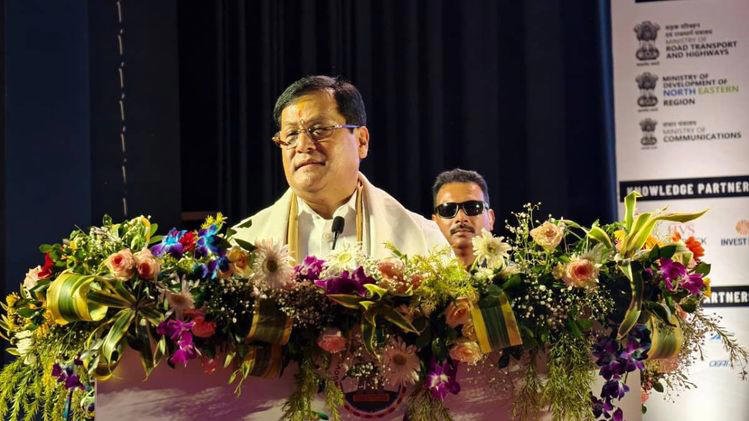
Union Minister Sarbananda Sonowal has said that the Northeastern region is rapidly emerging as a crucial trade and connectivity corridor linking South Asia and Southeast Asia, highlighting the transformative impact of infrastructure development, strategic investments, and regional cooperation initiatives. Speaking at a major infrastructure and development forum, Sonowal emphasized that the Northeast is no longer viewed as a peripheral region but as a vital gateway connecting India with neighboring countries and broader international markets.
The minister noted that unprecedented investments in roads, railways, waterways, airports, and digital infrastructure have significantly enhanced connectivity across the region. These developments, he said, are laying the foundation for stronger economic integration, increased trade opportunities, and sustainable growth.
Sonowal’s remarks reflect the growing importance of the Northeast within India’s Act East Policy and its evolving role in shaping regional economic and strategic partnerships.
Northeast Emerging as a Strategic Gateway
According to Sonowal, the Northeast occupies a unique geographical position that gives it immense strategic and economic significance. Sharing borders with several neighboring countries, the region serves as a natural bridge between India and Southeast Asia.
For decades, geographical challenges and inadequate infrastructure limited the region’s connectivity and economic potential. However, recent investments and policy initiatives have transformed the Northeast into a key component of India’s regional development strategy.
The minister stressed that the region’s strategic location provides opportunities for cross-border trade, cultural exchange, tourism, and economic cooperation, making it an important driver of India’s engagement with neighboring nations.
Connectivity at the Core of Transformation
A central theme of Sonowal’s address was the role of connectivity in driving regional transformation. Over the past several years, the government has undertaken large-scale infrastructure projects aimed at improving transportation and communication networks across the Northeast.
Major investments in highways, railway lines, bridges, airports, and inland waterways have improved accessibility and reduced travel times. Enhanced connectivity has enabled businesses, farmers, tourists, and entrepreneurs to access new opportunities while facilitating the movement of goods and services.
The minister noted that modern infrastructure is not merely about transportation but also about creating economic linkages and improving quality of life.
Act East Policy Driving Regional Growth
Sonowal highlighted the significance of India’s Act East Policy in accelerating the Northeast’s development. The policy seeks to strengthen economic, cultural, and strategic ties with countries in East and Southeast Asia while leveraging the Northeast’s geographical advantages.
Under this framework, the region has witnessed increased attention from policymakers and investors. Infrastructure projects, border trade initiatives, and regional cooperation programmes have contributed to stronger integration with neighboring economies.
The minister stated that the Northeast has become a focal point in India’s efforts to deepen engagement with Southeast Asian nations and expand economic partnerships across the region.
Trade Opportunities Expanding
Improved connectivity is expected to create significant opportunities for trade and commerce. Sonowal emphasized that better transportation networks allow businesses to access markets more efficiently and reduce logistical costs.
The Northeast possesses considerable potential in sectors such as agriculture, horticulture, handicrafts, tourism, food processing, and natural resources. Improved infrastructure enables producers to connect with domestic and international markets, thereby enhancing economic prospects for local communities.
Experts believe that the region’s proximity to international borders can position it as a major trade hub in the coming years.
Infrastructure Investments Reshaping the Region
The minister pointed to substantial investments in transportation infrastructure as evidence of the government’s commitment to Northeast development. New highways, upgraded rail networks, modern airports, and inland waterway projects have significantly improved connectivity across the region.
These investments have strengthened links between Northeastern states and the rest of India while creating new opportunities for regional integration. Enhanced infrastructure is also attracting private investment and supporting industrial development.
Officials believe that continued infrastructure expansion will further boost economic activity and enhance the region’s competitiveness.
Inland Waterways Offer New Potential
Sonowal, who has played a key role in promoting inland waterways, highlighted the importance of river-based transportation in strengthening regional connectivity. The Northeast’s extensive river network presents opportunities for cost-effective and environmentally sustainable transport solutions.
Inland waterways can support trade, tourism, and cargo movement while reducing pressure on road transportation networks. Investments in river ports, terminals, and navigation infrastructure are expected to improve logistics efficiency and enhance regional economic integration.
The minister described waterways as a critical component of a multimodal transportation ecosystem for the Northeast.
Tourism Sector Poised for Growth
Tourism is another sector expected to benefit significantly from enhanced connectivity. The Northeast is renowned for its natural beauty, cultural diversity, wildlife, and adventure tourism opportunities.
Improved transportation infrastructure has made travel more accessible and convenient, attracting increasing numbers of domestic and international visitors. Better roads, airports, and supporting facilities are helping unlock tourism potential across the region.
Sonowal noted that tourism not only generates revenue but also creates employment opportunities and supports local businesses, contributing to broader economic development.
Strengthening Regional Cooperation
The emergence of the Northeast as a connectivity corridor is closely linked to efforts aimed at strengthening regional cooperation. Cross-border infrastructure projects and trade agreements are expected to facilitate greater interaction between India and neighboring countries.
Enhanced connectivity can promote economic integration, cultural exchange, and collaborative development initiatives. The minister emphasized that regional partnerships are essential for realizing the full potential of connectivity investments.
Improved cooperation is also expected to support stability, prosperity, and shared growth across South and Southeast Asia.
Creating Employment and Economic Opportunities
Infrastructure development and expanding trade networks are generating new economic opportunities across the Northeast. Construction projects, logistics services, tourism activities, and industrial investments are contributing to job creation and income generation.
Sonowal emphasized that the transformation of the region is creating opportunities for youth, entrepreneurs, and local communities. Improved connectivity enables businesses to expand operations, attract investment, and access new markets.
The minister highlighted the importance of ensuring that development benefits are inclusive and reach communities across all Northeastern states.
Vision for a Connected Future
Looking ahead, Sonowal outlined a vision of the Northeast as a vibrant economic corridor that serves as a bridge between India and Southeast Asia. Continued investments in transportation, logistics, digital infrastructure, and trade facilitation are expected to strengthen the region’s role in regional and global commerce.
The government remains focused on completing ongoing projects, attracting investment, and enhancing connectivity through a multimodal approach that integrates roads, railways, waterways, and air transport.
Officials believe that the region’s transformation will play a crucial role in India’s broader economic and strategic objectives.
Northeast’s Rise as a Regional Growth Engine
Sarbananda Sonowal’s remarks underscore the remarkable transformation taking place across the Northeast. Once viewed primarily through the lens of geographical challenges, the region is increasingly being recognized as a key driver of connectivity, trade, and economic growth.
Improved infrastructure, strategic investments, and regional cooperation are positioning the Northeast as a vital corridor linking South Asia and Southeast Asia. This transformation is creating opportunities for businesses, communities, and governments while strengthening India’s engagement with neighboring countries.
As connectivity projects continue to progress and trade networks expand, the Northeast is poised to play an even more significant role in shaping the economic future of the region. Sonowal’s vision reflects a broader aspiration to transform the Northeast into a dynamic hub of commerce, connectivity, and sustainable development, benefiting both India and its regional partners.