


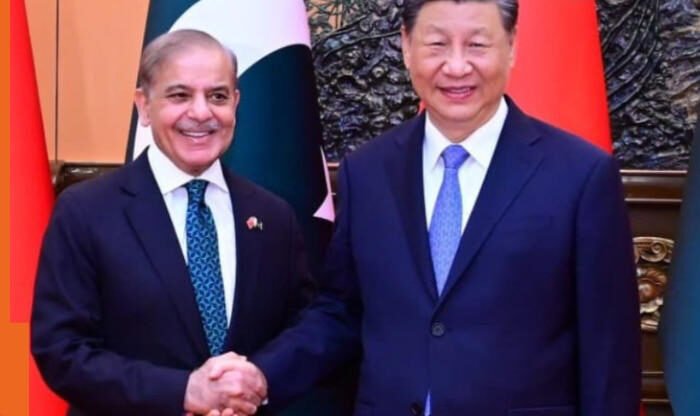
Pakistan has publicly supported China’s position on Arunachal Pradesh, repeating Beijing’s claim over the Indian state and sparking fresh political reactions in New Delhi. Islamabad’s statement, which referred to Arunachal Pradesh using Chinese terminology, aligned closely with Beijing’s long-held stance on the region. As tensions between India and China continue along the Line of Actual Control, Pakistan’s move adds another layer to the already delicate geopolitical environment. The development has intensified discussions on regional diplomacy and the Pakistan backs China on Arunachal stance.
Officials in Pakistan framed their position as consistent with Beijing’s view, stating that the territorial dispute falls under China’s sovereignty claims. Analysts say the statement was not unexpected given Pakistan’s close strategic and economic ties with China. However, the timing drew special attention, especially as India continues to assert that Arunachal Pradesh is an integral part of the country.
Read More: 150m Manipur Border Fence Cut, Authorities Launch Probe
India has repeatedly dismissed such claims as baseless. New Delhi maintains that Arunachal Pradesh has always been and will remain an essential part of the Indian Union. Whenever China issues statements or releases maps that include Arunachal under its territory, India formally protests. Pakistan’s alignment with China on this matter has therefore deepened diplomatic friction between New Delhi and Islamabad.
Islamabad Echoes Beijing’s Position
Pakistan’s comment came soon after Beijing reiterated its claim over Arunachal Pradesh. Chinese officials have used similar language for years, calling the region “South Tibet,” a term India strongly rejects. Pakistan’s endorsement of this terminology appears to reflect its expanding strategic partnership with China, particularly in the areas of defence, diplomacy, and infrastructure.
Observers believe Pakistan’s decision signals more than routine alignment. It underscores Islamabad’s consistent approach of supporting Beijing on issues related to India. The Pakistan backs China on Arunachal move also indicates a willingness to position itself firmly alongside China during periods of Indo-China tension.
Foreign policy experts noted that Pakistan rarely comments directly on India-China territorial issues. Therefore, the statement marks a noticeable shift in tone, one that may influence regional diplomatic calculations. It also illustrates how international geopolitical relationships shape territorial narratives.
India Reaffirms Its Position on Arunachal Pradesh
Indian officials responded by reiterating the country’s clear and firm stance. They emphasised that Arunachal Pradesh is an inseparable part of India, both historically and culturally. The region holds strategic importance and is home to thriving communities with deep ties to the Indian nation.
India’s Ministry of External Affairs has consistently stated that no external country’s statements can alter the facts on the ground. New Delhi has also pointed out that the residents of Arunachal Pradesh participate fully in India’s democratic processes, reinforcing the state’s unquestionable status.
Political leaders in India criticised Pakistan’s remarks, calling them an attempt to interfere in India’s internal matters. They argued that Islamabad should focus on its own domestic challenges instead of commenting on unrelated territorial issues. The Pakistan backs China on Arunachal stance drew strong responses from parliamentarians and strategic analysts alike.
Regional Implications and Strategic Context
The development highlights the complex network of alliances and rivalries in South Asia. China and Pakistan share a long-standing strategic partnership strengthened through the China-Pakistan Economic Corridor, defence cooperation, and diplomatic coordination. India, meanwhile, continues to manage tensions along the border while also navigating broader geopolitical dynamics.
Pakistan’s support for China’s claim may not change the territorial reality, but it reinforces the China-Pakistan alignment on issues involving India. Experts say this could lead to stronger cooperation between the two countries on regional and international platforms. It may also affect future diplomatic engagements involving India, China, and Pakistan.
India, however, remains firm in its stance. Officials maintain that territorial integrity is non-negotiable and that the international community recognises Arunachal Pradesh as part of India. New Delhi also continues to strengthen infrastructure and connectivity in the region to support development and bolster national security.
As geopolitical tensions evolve, statements like these highlight how regional powers position themselves on sensitive issues. The Pakistan backs China on Arunachal development may not alter official boundaries, but it underscores shifting alliances and the importance of diplomatic vigilance.
Read More: 5 Ayurvedic Winter Recipes for Digestion and Warmth