

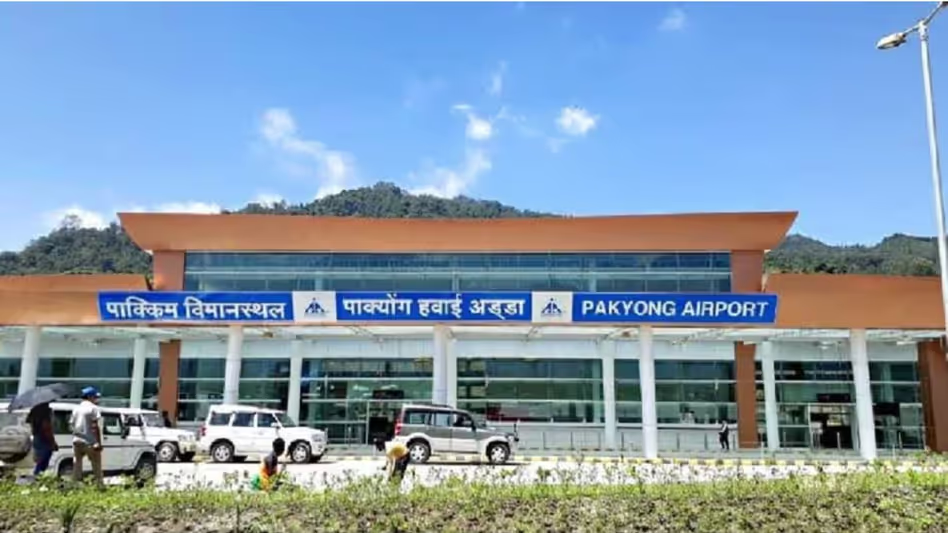
“Pakyong airport revival gains fresh momentum as the Centre and airlines engage in high-level talks to restore operations, boosting Sikkim’s tourism and connectivity.”
Pakyong Airport Revival Gains Momentum as Centre, Airlines Hold Crucial Talks
The picturesque state of Sikkim may soon witness the return of regular flight operations as the Pakyong airport revival takes center stage in high-level discussions between the Union government and airline representatives. The talks, held in New Delhi earlier this week, aimed to address the challenges that led to the suspension of flights and to create a sustainable operational plan for the strategically significant airport.
Officials are optimistic that this renewed focus could see the airport once again becoming a vital hub for tourism, trade, and connectivity in the Himalayan region.
Why Pakyong Airport Matters
The Pakyong airport revival is not just about restoring flights — it’s about reconnecting Sikkim to the national aviation network. As the state’s only airport, located 30 km from Gangtok, Pakyong is a lifeline for both residents and the tourism industry.
Before operations were halted in 2019 due to technical and weather-related issues, Pakyong airport served as a crucial entry point for visitors to Sikkim, dramatically reducing travel time compared to road journeys from Siliguri or Bagdogra in West Bengal.
Background: Why Flights Were Suspended
The need for the Pakyong airport revival stems from its troubled operational history. Shortly after its inauguration in September 2018 by Prime Minister Narendra Modi, the airport faced challenges including:
- Weather Constraints – Frequent low visibility due to fog and clouds.
- Operational Limitations – Limited runway length and steep terrain made landings difficult.
- Airline Viability Issues – Low passenger loads during off-peak seasons.
By October 2019, SpiceJet, the primary airline operating from Pakyong, suspended flights citing “operational constraints,” effectively halting all commercial activity at the airport.
The Recent High-Level Meeting
In the latest push for the Pakyong airport revival, the Civil Aviation Ministry convened a meeting with key stakeholders, including representatives from multiple airlines, the Airports Authority of India (AAI), and the Sikkim state government.
Sources present at the meeting revealed that discussions focused on:
- Deploying smaller aircraft better suited for high-altitude runways.
- Upgrading navigational aids to improve safety during low-visibility conditions.
- Introducing seasonal schedules to maximize tourist traffic.
- Offering financial incentives under the UDAN (Ude Desh ka Aam Naagrik) regional connectivity scheme.
Centre’s Commitment to the Pakyong Airport Revival
Union Civil Aviation Minister expressed strong support for the project, noting:
“The Pakyong airport revival is not just a matter of convenience; it’s about integrating Sikkim into the mainstream aviation map and boosting the local economy.”
The ministry has reportedly directed the AAI to expedite technical assessments and complete any necessary upgrades before the next tourist season.
Airlines Show Interest
While no official announcements have been made, industry insiders say that several airlines, including Alliance Air and IndiGo, have shown interest in resuming operations at Pakyong once infrastructure and operational challenges are addressed.
Smaller turboprop aircraft, like the ATR-72, are being considered as they are more suitable for the airport’s short runway and variable weather conditions.
Impact on Sikkim’s Tourism Sector
The Pakyong airport revival is expected to be a major boost for Sikkim’s tourism industry, which has been recovering from the double blow of the COVID-19 pandemic and reduced accessibility.
Tour operators believe that direct flights to Pakyong could:
- Increase domestic tourist arrivals.
- Attract high-value international visitors seeking Himalayan experiences.
- Encourage longer stays and higher spending in local economies.
Economic Benefits Beyond Tourism
Apart from tourism, the Pakyong airport revival could also stimulate other sectors in Sikkim, including:
- Trade – Easier movement of goods, particularly organic produce for which Sikkim is famous.
- Healthcare – Faster access to medical facilities outside the state.
- Education – Improved connectivity for students traveling to and from universities.
Experts believe that a functioning airport could also encourage investments in hospitality, retail, and logistics in and around Gangtok.
Local Sentiment
Residents near Pakyong have welcomed the news of possible revival. Many recall the pride they felt when the airport was first inaugurated and the disappointment when operations ceased.
A local shop owner in Pakyong said:
“The Pakyong airport revival will bring life back to our town. When flights were running, we saw more customers and better business.”
Technical Upgrades Under Consideration
For the Pakyong airport revival to succeed, certain technical improvements are essential:
- Installation of Advanced Instrument Landing Systems (ILS) – To handle low-visibility landings.
- Runway Surface Enhancements – To improve safety during adverse weather.
- Expansion of Apron Area – Allowing for more aircraft parking and operations.
- Better Weather Monitoring Systems – To give pilots real-time data.
AAI engineers have already conducted preliminary site visits to assess feasibility.
Government Incentives and UDAN Scheme
The Centre is considering providing additional incentives under the UDAN scheme to make the Pakyong airport revival financially viable for airlines. This could include:
- Subsidized fuel costs.
- Waiver of certain airport fees.
- Guaranteed minimum seat occupancy subsidies.
Such measures have been used successfully to revive other regional airports in India.
Challenges Ahead
Despite the positive momentum, the Pakyong airport revival faces hurdles:
- Weather Reliability – Sikkim’s mountainous location means year-round weather unpredictability.
- Operational Costs – Small aircraft on short routes may struggle with profitability.
- Passenger Confidence – Convincing travelers to choose Pakyong over Bagdogra will require competitive fares and reliable service.
Addressing these challenges will be key to ensuring the long-term success of the airport.
Looking Ahead
If all goes as planned, trial flights could begin within the next six to eight months, with commercial operations resuming before the next peak tourist season.
The Pakyong airport revival could mark a turning point for Sikkim’s connectivity, providing residents and visitors alike with a faster, more comfortable alternative to long road journeys through challenging mountain terrain.
Read More: Arunachal Power Project Gets Big Boost as Amit Shah Calls It a Catalyst for Northeast’s Growth